
Mark Kimsey, the Director of the Intermountain Forestry Cooperative, discusses the benefits of harvest residue and vegetation control on conifer seedling survival and growth
Abstract
A 10-year study examined the interactive effects of site productivity, slash loading, and vegetation control on soil properties, microclimate, and Douglas-fir (Pseudotsuga menziesii) seedling performance within a warm, moist grand fir (Abies grandis) vegetation series of the Inland Northwest, U.S.. The experiment compared basalt- and metasedimentary-derived soils with and without volcanic ash influence under varying slash retention and vegetation control regimes.
Results demonstrate that slash retention and sustained vegetation control significantly improve soil moisture, moderate temperature extremes, and enhance seedling growth and survival, particularly on ash-influenced soils. Management strategies that emphasize the protection of volcanic ash soils, slash retention, and multi-year vegetation control are critical for optimizing reforestation success.
Introduction
Forest regeneration success in the Inland Northwest, U.S., depends on effective post-harvest management of slash, soil, and competing vegetation. Volcanic ash-influenced soils are particularly important to site productivity because of their high water-holding capacity.
However, operational disturbance, excessive vegetation competition, and poor slash management can compromise this advantage. This study evaluates how slash loading and vegetation control interact with soil type to influence soil moisture, temperature, and Douglas-fir seedling growth and mortality over 10 years (Fig. 1).
Methods
The study was installed across multiple sites within the grand fir vegetation series, representing a productivity gradient based on soil parent material (basalt versus metasedimentary) and presence or absence of volcanic ash. Treatments followed a randomized block design with six 1/20-acre fixed circular plots per block representing combinations of slash loading and vegetation control. Slash treatments included 1) slash removed, 2) whole-tree harvest, and 3) bole-only harvest. Vegetation control treatments consisted of no control or annual control for five years following planting.
Soil microclimate was monitored with temperature loggers (iButton™ Data Loggers) and soil moisture probes (Meter Em5b, EC-5). Soil disturbance, vegetation cover, and seedling height, caliper, and mortality were measured periodically. Statistical analyses evaluated main and interactive effects of soil type, slash loading, and vegetation control on soil conditions and seedling performance.
Results Soil disturbance and slash effects Soil disturbance varied by harvest method and surface soil characteristics. Sites with volcanic ash were more sensitive to disturbance; however, when protected, they provided superior growing conditions due to enhanced water availability. Slash retention reduced soil disturbance, moderated microclimate fluctuations, and limited vegetative encroachment. Slash removal exposed mineral soil, increasing disturbance and promoting competing vegetation.
Vegetation cover and soil Microclimate
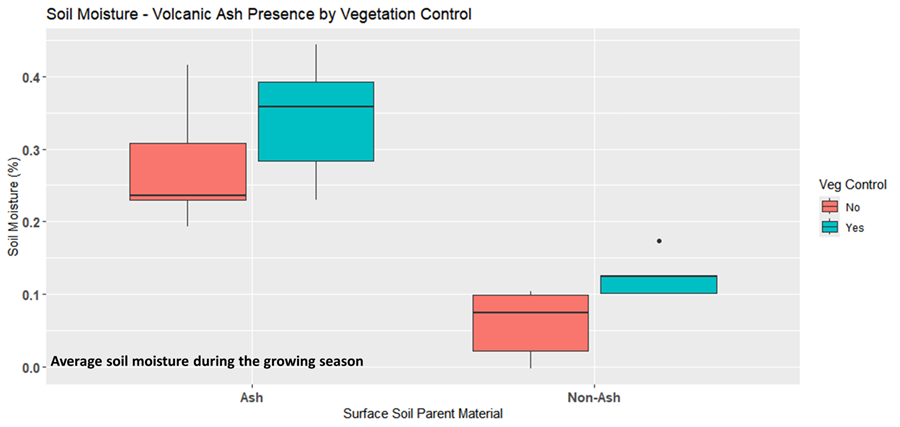
Vegetation cover was inversely related to slash retention. Plots with reduced slash had greater forb and grass cover, leading to lower soil moisture and higher temperatures. Slash-retained sites maintained cooler and moister conditions throughout the growing season. Vegetation control further increased soil water availability by reducing transpiration demand from competing plants (Fig. 2).
Seedling growth and mortality
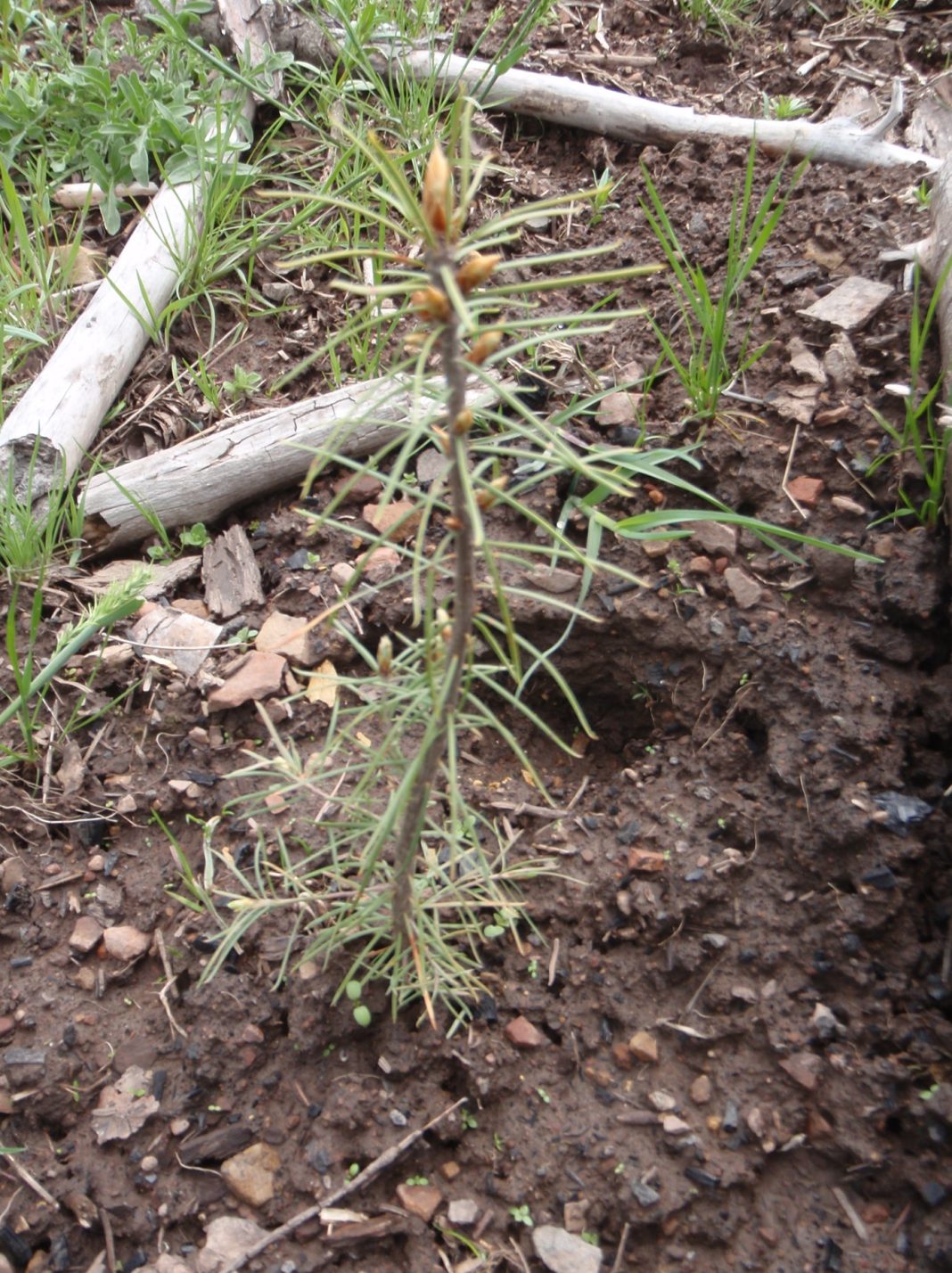
Seedling response was strongly influenced by the interaction of volcanic ash presence, slash retention, and vegetation control. Volcanic ash soils supported greater height and caliper growth and lower mortality rates. Vegetation control markedly improved survival and growth across all sites, while lack of control led to 30–60% mortality, particularly on non-ash metasedimentary soils.
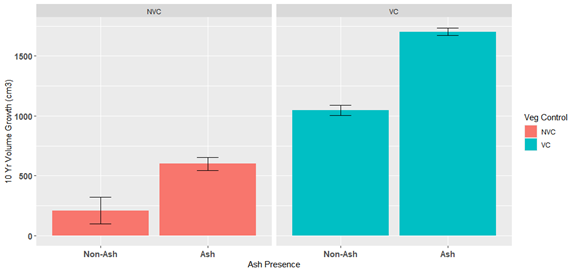
Slash retention further enhanced seedling performance by improving soil moisture and suppressing competing vegetation. Total 10-year volume growth was greatest on ash-influenced soils with both slash retention and repeated vegetation control (Fig. 3).
Discussion
The results highlight the pivotal role of volcanic ash soils in maintaining high site productivity. Fine-textured ash layers increase plant-available water and buffer seedlings against drought stress. Protecting these soils from rutting and compaction during harvest operations is essential. Slash management also proved critical: maintaining and scattering slash minimized soil disturbance, reduced weed establishment, and improved growing-season moisture. Vegetation control was a dominant factor influencing stand establishment, with forb and grass cover beyond 15–20% substantially reducing seedling vigor and increasing mortality.
Effective vegetation management should include not only initial site preparation but also at least one follow-up release treatment during the first or second year post-planting.
Conclusions
This 10-year slash x vegetation management study demonstrates that coordinated management of slash, vegetation, and soil conditions significantly improves reforestation outcomes. Key management recommendations include:
- Protect volcanic ash soils from physical disturbance to preserve their superior moisture-holding capacity.
- Retain and scatter slash to reduce soil disturbance, limit competing vegetation, and maintain favorable soil temperature and moisture regimes.
- Implement repeated vegetation control where practical, as unchecked vegetation rapidly suppresses growth and elevates mortality.
- Integrate site preparation with follow-up release treatments to ensure long-term stand establishment success.
Collectively, these practices enhance seedling growth, reduce mortality, and promote the sustainable productivity of forest ecosystems in the Inland Northwest, U.S.