
Astronomers using two of the world’s best X-ray observatories have witnessed a dramatic and extremely fast outburst from a supermassive black hole in the spiral galaxy NGC 3783
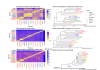
In just hours, the black hole released a flare of X-ray light that quickly faded, followed by winds blasting outward at astonishing speeds of around 60,000 kilometres per second, or roughly one-fifth the speed of light.
The event, observed by ESA’s XMM-Newton and the international XRISM mission led by JAXA with support from ESA and NASA, offers a new look at how black holes can generate powerful winds on short timescales.
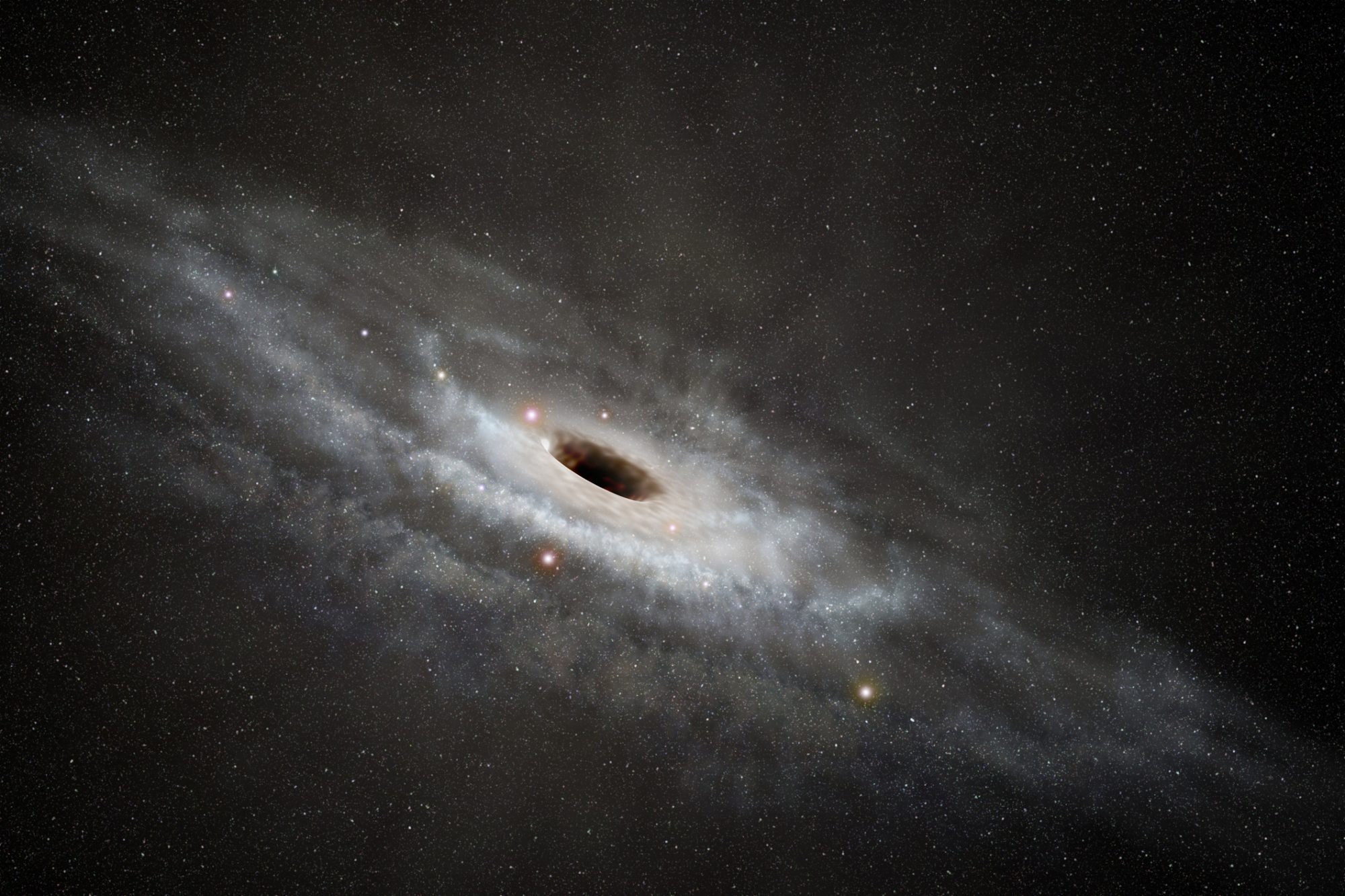
In the middle of NGC 3783 lies a black hole containing as much mass as 30 million Suns. As it consumes surrounding material, it forms an extraordinarily bright region known as an Active Galactic Nucleus (AGN). These zones are known for producing intense radiation, swirling magnetic fields, and high-speed jets of energy and matter.
During the new observation campaign, astronomers caught the AGN in a rare moment of rapid change. A sudden X-ray flare erupted from the black hole’s surroundings, suggesting that material close to the event horizon briefly became superheated and highly energised.
As the flare subsided, the telescopes detected ultra-fast winds travelling through space, indicating that the flare had triggered a dramatic reconfiguration of the AGN’s magnetic environment.
Magnetism on a galactic scale
The leading interpretation is that the AGN’s magnetic fields suddenly “untwisted,” releasing stored energy in a violent burst similar to the process that drives solar flares on the Sun. This rapid magnetic reconnection likely launched the winds that shot away from the black hole at relativistic speeds.
Although the scale is vastly larger, the resemblance to coronal mass ejections (CMEs) on the Sun is striking. Like the Sun hurling hot plasma into the solar system, a supermassive black hole appears capable of ejecting its own enormous storms of high-energy particles. The comparison gives scientists a new way to link familiar solar physics with the extreme behaviour of distant galaxies.
The Sun also produced a powerful CME just weeks before the black hole event, launching material at roughly 1500 kilometres per second.
Why these winds matter
Ultra-fast winds from AGNs are more than dramatic cosmic fireworks. They play an essential role in shaping how galaxies grow and form stars. When these winds sweep through their host galaxies, they can either trigger star formation by compressing clouds of gas or suppress it by blowing material away before new stars can form.
Understanding how these winds originate helps scientists trace the long-term evolution of galaxies across the Universe.
A team effort in space
The discovery was made possible by the combined strengths of XMM-Newton, which has spent more than 25 years studying the hot and energetic Universe, and XRISM, launched in 2023 to investigate the motion and temperature of cosmic gases.
XMM-Newton tracked the bright flare and measured the emerging winds, while XRISM provided detailed information about the winds’ speed and structure.
Together, the telescopes captured a cosmic event never before witnessed in this much detail.