

This special report clarifies when legionella sampling is required, when it is optional, and how to make informed decisions based on guidance, risk, and the needs of your facility
You receive a quote for a legionella sampling package, with the salesperson emphasizing its necessity and citing technical risks. This can create uncertainty about whether the expenditure is required or simply an upsell. The need for microbiological sampling is often misunderstood, misinterpreted, or mis-sold.
Legionella sampling is often included in risk assessments or PPM programmes. However, for properties not classified as high-risk, this may not be a mandatory requirement. The HSG274 part 2 covers such types of properties, including schools, offices, hotels and the like.
In paragraph 2.119, it immediately tells us that ‘microbiological monitoring of domestic hot and cold water supplied from the mains is not usually required, unless the risk assessment or monitoring indicates there is a problem’
This document then goes on to discuss that samples should be carried out if there is doubt about the efficacy of the control regime, or it is known that recommended temperatures and disinfectant concentrations are not being consistently achieved throughout the system or certain high risk systems such as those with chemical dosing, those that struggle to maintain control measures system wide, sites whose population have an increased susceptibility or any property that has been associated with a single case or an outbreak of legionnaires disease.
A sampling programme should be tailored to the site, taking into account risk areas, population susceptibility, and other factors identified in the risk assessment.
Key consideration for property managers: What does this mean for your facility?
Without a completed assessment, sampling may overlook critical outlets. While sampling during a risk assessment can be beneficial, it may not cover all necessary locations or provide sufficient data if the assessment is not already in place.
Sampling as part of a PPM regime can support quality assurance and verify control measures, but it is not a legal requirement.
If you choose to conduct sampling as part of PPMs or a risk assessment, clearly define the information you seek and ensure you have support to interpret and act on the results.
The information you require from sampling will determine both the locations and types of samples collected.
There are two main types of Legionella water samples:
- Pre Flush
- Post flush
When selecting a sample type, consider your primary objective. Use pre-flush sampling to assess occupant exposure, as it reflects what users experience when first using taps or showers. Choose post-flush sampling to evaluate the condition of the main distribution systems, without the influence of initial outlet conditions.
Each sample type provides different information. While other methods exist, such as swabs and biofilm samples, water sampling is the most common.
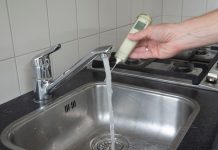
Pre-flush samples are collected immediately upon opening the outlet, capturing the initial discharge before any water flows to drain. These samples represent the conditions users encounter when first using taps, showers, or similar fixtures.
Post-flush samples require a more detailed process. The initial discharge is flushed to drain or collected as a pre-flush sample. Removable parts are taken out, and the outlet is disinfected to eliminate local contamination. After disinfection, the outlet is flushed to remove chemicals and refresh the immediate supply pipework with water from the main distribution system. The sample is then collected without altering the flow rate. Removable parts, such as aerators, are reinstalled after sampling. These samples represent the main distribution systems and help assess their quality, rather than the risk from initial outlet use.
A qualified contractor can provide recommendations, explain their rationale, and address any uncertainties you may have.
You can also consult guidance documents, such as:
- HSG 274 Parts 1-3
- BS7592:2022 – Sampling for legionella bacteria in water systems – Code of practice
- Code of Practice – The management and treatment of swimming pool water – Pool water treatment advisory group
- and other relevant documentation.
Culture analysis
The most common method for Legionella analysis in water systems is culture, where bacteria are grown on a medium in an incubator. Other methods exist, but this is the primary example discussed here.
This analysis involves filtering samples to isolate bacteria, plating them on nutrient agar in petri dishes, and incubating at optimal Legionella growth temperatures.
Plates are incubated for 10 days to ensure optimal growth conditions.
Final results are typically available from the laboratory within 12 to 14 days.
Plates are reviewed during incubation, and any confirmed presence of Legionella bacteria is reported immediately.
Some laboratories conduct interim reviews twice during the process, while others do so only once. It is important to clarify expectations before engaging a contractor or laboratory.
Highly vulnerable sites
If you manage a site with cooling towers, swimming pools, or a highly vulnerable population, sampling may be a mandatory requirement under guidance and local rules. If you are unsure, prioritise these higher-risk systems. Focusing on vulnerable sites is essential to ensure the safety of those most at risk.
Help from HC Legionella
At HC Legionella Ltd, our experienced and qualified team are able to discuss the pro, cons and requirements for sampling on your particular property portfolio ensuring not only that you understand the sampling requirements and that any sampling you choose to undertake are designed in line with BS7592:2002 but also that we are available and committed to help support you from the decision to undertake sampling right through to final resolution of any samples that do provide adverse results.