A new astronomical survey has brought scientists closer to identifying nearby stars that could host Earth-like planets capable of supporting life
Conducted by a research team led by a Georgia State University astronomy graduate student, the study delivers the strongest census to date of a class of stars known as K dwarfs. K dwarfs are stellar neighbours that may offer some of the most favourable environments for life beyond our solar system.
The findings were presented at the January 2026 meeting of the American Astronomical Society in Phoenix and have drawn attention for their implications for future planet-hunting missions and long-term space exploration.
Why K Dwarfs matter
Stars come in many sizes, temperatures, and lifespans. K dwarfs sit in a sweet spot between Sun-like stars and smaller, cooler red dwarfs. Slightly cooler and fainter than the Sun, K dwarfs are far more abundant in the local region of the galaxy and can remain stable for tens of billions of years, which is much longer than the Sun’s expected lifetime.
This long-term stability is particularly important when considering the development of life. Planets orbiting K dwarfs can receive steady energy over immense spans of time, providing conditions that may allow life to emerge and evolve without the dramatic changes seen around more volatile stars.
Mapping the sun’s stellar neighbourhood
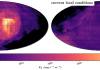
The new survey focuses on more than 2,100 K dwarfs located within about 130 light-years of Earth, a region often referred to as the Sun’s immediate neighbourhood. Researchers collected high-resolution spectra from each star, breaking their light into detailed colour patterns that reveal physical properties such as temperature, age, chemical composition, rotation rate, and motion through space.
These measurements also provide insight into stellar magnetic activity, which can strongly influence whether nearby planets retain atmospheres or are exposed to harmful radiation. Understanding these factors is important for assessing whether planets around these stars could remain habitable.
A global observing effort
To achieve full-sky coverage, the team relied on two nearly identical telescopes located in opposite hemispheres. Observations in the southern sky were carried out using the SMARTS 60-inch telescope at the Cerro Tololo Interamerican Observatory in the Chilean Andes, while northern targets were observed with the Tillinghast Telescope at the Fred Lawrence Whipple Observatory in Arizona.
Each telescope is equipped with a high-precision spectrograph, enabling researchers to obtain uniform, high-quality data on stars across the entire sky. This approach makes the survey uniquely complete and valuable for future studies.
A foundation for future exploration
The resulting dataset is expected to act as a cornerstone for decades of astronomical research. By identifying which nearby K dwarfs are most stable and least magnetically active, scientists can prioritise targets for future planet searches using both ground-based observatories and space telescopes.
In the long term, these stars and their planetary systems may even become destinations for advanced space missions. As humanity looks further into the galaxy for signs of life, this census helps narrow the search to the most promising stellar real estate close to home.
Funded by the National Science Foundation and NASA, with additional support from Georgia State University, the survey represents a major step forward in understanding the stars that could host the next Earth.