

Open Access Government produces compelling and informative news, publications, eBooks, and academic research articles for the public and private sector looking at health, diseases & conditions, workplace, research & innovation, digital transformation, government policy, environment, agriculture, energy, transport and more.
Home 2026
Archives

Reimagining mining for a net-zero future
Carbon-negative mining offers a promising path to meeting the mineral demands of the energy transition while shrinking the industry’s carbon footprint. In this article, Dr Estibalitz (Esti) Ukar examines how innovative geochemical and geomechanical processes could turn mining into a net-negative carbon industry.

Gallium oxide: The race to power the next-generation grid and EV infrastructure
In an exclusive OAG Q&A interview, Professor Singisetti from the Department of Electrical Engineering at the University at Buffalo discusses the commercialisation path for Gallium Oxide in high-power electronics.
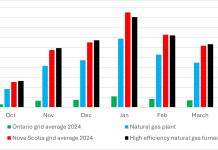
Cold climate heat pumps for GHG emission reductions: A smart-grid approach
Dr. M.F. Lightstone, P.Eng., FCSME, FCAE, from the Department of Mechanical Engineering at McMaster University, presents a smart-grid approach for cold climate heat pumps aimed at reducing greenhouse gas emissions.

Electrochemical interfaces: Crucial enablers of sustainable energy technologies
In this article, a team of expert scientists explains why electrochemical interfaces are crucial enablers of sustainable energy technologies.

Powering the future with soft electrostatic actuators and energy harvesters
A team of researchers at the University of Trento provides a perspective on the role that soft actuators and energy harvesters play in building the mechatronic devices of the future.

How U.S. research and innovation are reshaping the global energy future
Cecilia Van Cauwenberghe discusses how U.S. research and innovation are transforming the global energy landscape, beginning with comments on energy innovation necessity.

Unlocking private financing for deep energy renovation
Guillaume Lorentz, Head of Bankable Sustainable Solutions at the Sustainable Finance Observatory, explores FiRéno+, a project under the LIFE 2021-2027 programme funded by the EU to unlock private financing for deep energy renovation.

Power electronic modules form the basis of grid modernization
H. Alan Mantooth, Distinguished Professor at the University of Arkansas, guides us through power electronic modules, which form the basis of grid modernization.

Waste-to-energy: How Europe can avoid sleepwalking into a landfill catastrophe and achieve net zero
Vanessa Fakra at Kanadevia Inova AG discusses waste-to-energy, including how Europe can avoid sleepwalking into a landfill catastrophe while achieving net zero.

Reducing methane emissions from natural gas reciprocating engines: The silent contributor to global climate...
While natural gas is a cleaner-burning alternative to coal and diesel, its use comes with a significant downside: methane emissions. Adam Dempsey from Marquette University highlights prechamber-enabled mixing-controlled combustion as a promising technology for reducing methane slip from natural gas engines.

Disentangling risks and opportunities of offshore wind for marine ecosystems
Offshore wind brings new challenges alongside new opportunities for marine governance. Ecosystem models help to shed light on the complex interplay between humans and nature.

Energy harvesting IOT sensors: The key to green technology for sustainable transition
The Sensor Systems unit at RISE (Research Institutes of Sweden AB) develops advanced technologies that enable energy harvesting from the surrounding environment. Cristina Rusu, Henrik Staaf share some good news from the field!
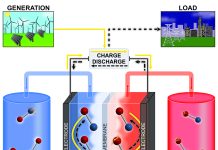
An organic battery to power the future
Jolt has developed novel organic batteries that could foster the widespread adoption of renewable energy sources for electricity generation.

Power generation game changers: Metal fuels to propel our future
Dr Michelle Pantoya of Texas Tech University examines the advantages of metal fuels compared to traditional hydrocarbons, emphasizing their potential importance in future energy generation.

Does moving away from the climate disaster signal a departure from the hydrogen economy?
According to Adélio Mendes, a Full Professor at the Faculty of Engineering of the University of Porto (FEUP), moving away from the climate disaster does indeed signal a departure from the hydrogen economy, presenting a third pathway to consider.
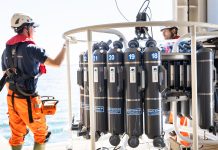
Securing the Baltic Sea’s built seascapes: Balancing innovation, security, and sustainability
Karina Barquet, Hans Liwång, and Torsten Linders explore how the Baltic Sea is evolving into a ‘built seascape.’ They highlight the necessity for cooperation and security strategies, alongside renewable energy and improved digital connectivity developments, to harmonize innovation with environmental protection.

How can traveling wave reactors solve nuclear energy issues?
Traveling Wave Reactors (TWRs) offer a promising approach to improving sustainability and safety in nuclear energy, though it faces challenges. Professor Di Yun from Xi’an Jiaotong University discusses a novel ‘Tai-Chi’ technology designed to tackle key R&D issues related to TWR.
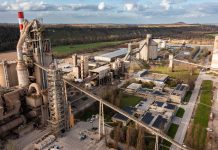
Redefining industrial sustainability
Committed to providing decarbonisation solutions for the global cement and lime industries, Leilac’s CEO, Daniel Rennie, discusses the principles for an environmentally and economically sustainable industrial transformation.
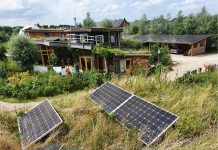
Establishment of local energy areas/communities: Barriers and solutions
The H2020 SERENE project has developed technical solutions for local energy areas by considering user engagement, local regulations, and cooperation with local authorities.

The future of green tech: Self-powered IoT sensors
Discover the future of green technology and self-powered IoT sensors, as explained by Henrik Staaf from RISE Research Institutes of Sweden.
