

Open Access Government produces compelling and informative news, publications, eBooks, and academic research articles for the public and private sector looking at health, diseases & conditions, workplace, research & innovation, digital transformation, government policy, environment, agriculture, energy, transport and more.
Home 2025
Archives
COP30 in Belém: Leadership between two worlds
Professor Richard Beardsworth continues his analysis of expectations for COP30 in Belém, as he navigates leadership between two realms, one rules-based and co-operative, the other nationalist-populist and centrifugal.
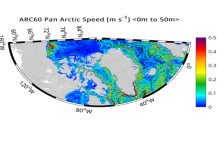
Modelling ocean currents in a changing climate
Paul Myers, Professor at the University of Alberta, emphasizes the necessity for a new generation of very high-resolution computer models to effectively understand how ocean currents will change in a warming climate.

The challenges around the fastness of natural dyes for textiles
Victor Durand from Ever Dye sheds light on the challenges surrounding the fastness of natural textile dyes. Dive into his insights, and learn why this issue is crucial for the future of the textile industry.

Mounting water scarcity: A complex challenge requiring nuanced solutions
Addressing increasing water scarcity is a complex challenge that requires nuanced solutions, according to Peter Greve from the Climate Service Center Germany.
Cryptic ground ice conditions in permafrost and northern agricultural expansion
Permafrost conditions are often heterogeneous and concealed beneath the surface, becoming evident only when thawing occurs. Melissa Ward Jones discusses these challenges and highlights a new publication that identifies ice wedges for the first time in the Yukon-Kuskokwim Delta region of Alaska.

Knowledge tipping points: Co-creating rainforest futures
The article highlights the importance of envisioning multiple futures for human and rainforest coexistence. It emphasizes forest conviviality and knowledge co-creation, drawing insights from the PRODIGY research project, which shows that knowledge systems are essential for socioecological resilience.

Navigating the sea of uncertainty around Marine Carbon Dioxide Removal (MCDR)
Prof. Christopher Pearce and Dr Willem van Dorp discuss the need for science-based governance approaches when evaluating the potential benefits, impacts and effectiveness of emerging marine carbon dioxide removal techniques.
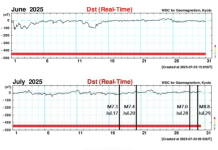
Could the summer 2025 earthquake awakening be provoked by magnetic storms?
Dimitar Ouzounov (1,2) and Galina Khachikyan (3) expertly walk us through the strong earthquakes awakening in July and August of 2025, which geomagnetic storms could have provoked in June 2025.
Priodiversity LIFE: Protecting biodiversity through restoration
Matti Koivula from the Natural Resources Institute Finland (Luke) discusses the advancement of forest restoration techniques in Northern European forests and explains how the Priodiversity LIFE project will enhance this knowledge base, address biodiversity loss, and contribute to EU restoration goals.

Life PeatCarbon Project: The role of peatlands for climate change mitigation
Dr. biol. Māra Pakalne from the University of Latvia provides insights into the LIFE PeatCarbon project by exploring the significance of peatlands in mitigating climate change.
Pharmaceuticals and personal care products in wastewaters
Despite progress in wastewater treatment, PPCPs like medications and personal care products continue to enter ecosystems, threatening aquatic life. Since 2020, the Bow River Ecosystem Health Assessment project in Alberta, Canada, has been evaluating the impact of treated wastewater on the Bow River.
LIFE4ZOO: Sustainable water circulation in zoos
LIFE4ZOO is a project dedicated to sustainable water circulation for the future of zoos, as explained by experts Tomáš Lederer, Petr Kvapil and Paola Sepúlveda-Ruiz.

Primate exposure to anthropogenic pollutants: Interactions with the gut microbiome and neuroendocrine SYSTEM
Michael Wasserman of Indiana University discusses interactions among the chemical exposome, microbes, and hormones in wild primates.
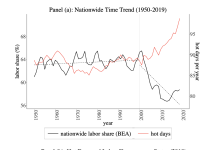
Climate change reduced the labour share in the 21st Century
Masahiro Yoshida, from Waseda University’s Department of Political Science and Economics, presents a new theory and evidence linking climate change to the decline of labour share.
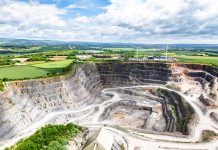
Innovation and sustainability in the geosciences
John Marshall, the Director at Skrinkle Reservoir Geology, examines innovation and sustainability in the field of geosciences.

Volcanism, volcanic ash, and its role in forest ecology and management
Mark Kimsey, the Director of the Intermountain Forestry Cooperative, discusses volcanism, volcanic ash, and their roles in forest ecology and management.

Shaping the future of circular and sustainable urban mobility
Advancing circular and sustainable urban mobility and logistics are essential for the future of Europe’s green transition and achieving the European Union’s (EU) climate neutrality goal by 2050, as highlighted here by Irene Jubany from the Eurecat Technology Centre.
Consciousness research: The science that changes everything for CEOs
Find out here why the world’s most successful business leaders are embracing consciousness research to drive sustainable transformation.
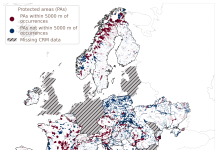
Europe’s mineral raw materials challenge: balancing strategic needs with environmental protection
W. Eberhard Falck and Vitor Correia of the International Raw Materials Observatory examine the EU’s challenges in securing mineral raw materials while protecting the environment and ensuring democratic governance.

Protecting the environment and human health from persistent, mobile, and toxic substances
PMT substances pose a worrying impact to human health and the environment. This article highlights why it’s crucial to recognize the need for integrated prevention and remediation strategies to effectively combat the challenges these pollutants present.