

Open Access Government produces compelling and informative news, publications, eBooks, and academic research articles for the public and private sector looking at health, diseases & conditions, workplace, research & innovation, digital transformation, government policy, environment, agriculture, energy, transport and more.
Home 2025
Archives
Ancient greek heritage in (early modern) Europe
Natasha Constantinidou unpacks Ancient Greek heritage in (early modern) Europe through the project Greek Heritage in European Culture and Identity.

The medieval march of Wales: Welsh or English?
Professor Helen Fulton at the University of Bristol, examines the case study of the Medieval March of Wales, a vibrant multicultural border region between...
Collapse and persistence before 1713: Rethinking Khoekhoen political economy at the early Cape
Erik Green examines the complex interactions between the Khoekhoen and early European settlers, challenging conventional narratives of indigenous passivity and highlighting the resilience and agency of Khoe societies in the face of colonial pressures.

Afrikan studies and research in the human sciences
Discussing Afrikan studies, Kimani S. K. Nehusi highlights the importance of an Afrocentric perspective that positions Afrikans as active participants in their cultures and histories. He introduces the concept of the Afrikan Ancestral Land Complex (AALC), which includes the essential values, knowledge, and rituals that sustain Afrikan identity and community cohesion.
Cladoselache, a puzzling ancient shark-like fish
Loren E. Babcock, Professor in the School of Earth Sciences at The Ohio State University, introduces research on Cladoselache, a puzzling ancient shark-like fish.
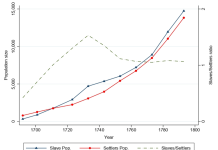
Rethinking slavery at the Cape
Rethinking slavery at the Cape: Although slavery was common, the Cape was not a ‘slave economy’ in the strict sense, as it did not rely solely on slavery for economic surplus, according to Lund University’s Professor Erik Green.
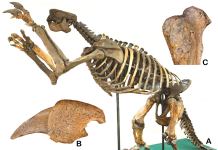
A gentle giant: Thomas Jefferson’s ground sloth
Professor Loren E. Babcock and Dr H. Gregory McDonald discuss the historical significance of palaeontology, focusing on key figures’ contributions to the field and their studies of the ground sloth, Megalonyx.
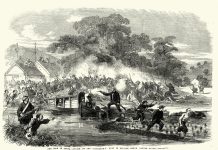
Harmony among civilizations: The influence of Chinese philosophy on Western idealism and contemporary revolutionary...
Germaine A. Hoston of the University of California, San Diego, demonstrates the influence of Neo-Confucianism on European idealism and Marxist revolutionary thought.

Human history: What’s most distinctive about humans as a species, viewed collectively?
What’s most distinctive about humans as a species, viewed collectively in human history? Penelope J. Corfield from the Royal Holloway, London University explores this critical question.
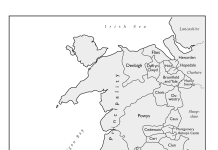
Defining a region: The march of Wales
Principal Investigator, Professor Helen Fulton, Chair of Medieval Literature at the University of Bristol, explores a collaborative project which aims to revitalise a forgotten British borderland.
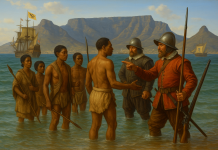
European colonialism and the grand strategy myth: The case of the Cape colony
Erik Green, Professor at Lund University in Sweden, investigates European colonialism and the myth of a grand strategy, setting forth the case of the Cape colony.
![Figure 1: Sketch of the evolution of the Universe over the last 13.77 billion years. It started with the Big Bang, followed by an extremely short period of rapid exponential expansion. The furthest we can see is the cosmic microwave background, when radiation decoupled from matter, approximately 380,000 years after the Big Bang. This is followed by the ‘dark ages,’ during which this radiation redshifted from the visible regime into infrared and sub-mm wavelengths. The occurrence of the first stars, about 400 million years after the Big Bang, ended this phase, spearheading the formation of galaxies as we see them today. [Credit: NASA/WMAP Science Team, public domain]](https://www.openaccessgovernment.org/wp-content/uploads/2025/05/Fig-1_1200-218x150.jpg "How did the first stars form in space?")
How did the first stars form in space?
Ralf Klessen, professor of theoretical astrophysics at Heidelberg University, investigates the physical processes that governed the formation of the first generation of stars in the early Universe.

Human history: Handshaking’s international journey
Penelope J. Corfield, from Royal Holloway, University of London, offers a compelling analysis of handshaking’s international journey in human history.

Transforming education: How museum visits revolutionise learning
From enhanced critical thinking to interdisciplinary learning, museums offer tangible educational advantages. This Q&A answers key questions about museum visits, including practical tips for teachers and the impact of sustained museum programs.

The history of bird photography: What can it teach us?
The research of Karla McManus, Associate Professor at the University of Regina, explores the history of bird photography and discusses its lessons, including the evolving technology of photography and the printing press.

Studying visitors to museums and other learning spaces
Joe E. Heimlich, Ph.D., Sr. Director of Research at COSI and Academy Professor Emeritus at Ohio State University, focuses on studying visitors in museums and other informal and nonformal learning environments.
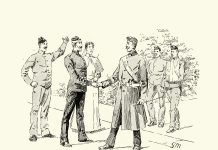
Human history: Handshaking horrors explained
Penelope J. Corfield, from Royal Holloway, University of London, offers an intriguing examination of the perils of shaking hands in human history.

Historians, archives, and the stories we create
Learning about history through archives can help historians expand the way they acquire and interpret information. Cecilia Morgan, from the University of Toronto, discusses how archives have influenced her own research.
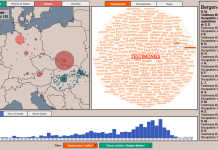
Memorise: New digital approaches for Nazi persecution storytelling
Stefan Jänicke, Professor of Data Science at the University of Southern Denmark, introduces MEMORISE, a project focusing on new digital approaches to storytelling about Nazi persecution.

Karl Popper and Michael Polanyi: Two 20th century philosophers of science and their present-day...
Ute Deichmann, Director of the Jacques Loeb Centre for the History and Philosophy of Science at the Ben-Gurion University of the Negev, discusses two prominent 20th-century philosophers and their distinctive but equally significant approaches to science.
