

Open Access Government produces compelling and informative news, publications, eBooks, and academic research articles for the public and private sector looking at health, diseases & conditions, workplace, research & innovation, digital transformation, government policy, environment, agriculture, energy, transport and more.
Home 2026
Archives

Precycling: Waste to plastics resource pathways
The PRecycling project aims to recover high-quality polymeric materials from underutilized plastic waste streams, focusing on developing near-production-scale recycling processes to transform plastic waste into secondary raw materials, and enabling up to 100% recycled content incorporation in new products.

Longitudinal Educational Achievements: Reducing Inequalities (LEARN) Project
Paula Sergeant from Manchester Metropolitan University and Doris Hanappi from University of Zurich present the Longitudinal Educational Achievements: Reducing Inequalities (LEARN) Project.

CoDiet: You are what you eat
Learn about CoDiet, an international research initiative aimed at addressing diet-related diseases using innovative monitoring technologies and personalised nutrition.
Studying the environmental impact of nanoplastics: Strategies and limitations
Understanding the environmental impact of nanoplastics is complex and requires the development of robust and standardised laboratory tests, which are essential for assessing their effects on broader, real-world scales, Monica Passananti explains.

Piezo4Spine: Dreaming on a cure for paraplegic patients
Piezo4Spine is a European project that aims to develop a novel therapy to repair the injured spinal cord, a pathology for which a cure remains elusive. María C. Serrano tells us more.

Ancient greek heritage in (early modern) Europe
Natasha Constantinidou unpacks Ancient Greek heritage in (early modern) Europe through the project Greek Heritage in European Culture and Identity.
Overcoming barriers for efficient dialogue between research and practice
As climate and biodiversity crises grow more complex, productive exchange between researchers, practitioners and policymakers becomes crucial. This article outlines the hurdles to efficient dialogue and the approaches that can help build trust, shared understanding and real-world impact.
The DOME marketplace: Building a trusted, unified cloud & edge ecosystem for Europe
Digital sovereignty remains a strategic priority for Europe, aiming to strengthen its digital resilience and empower European companies to compete globally in a trusted and transparent environment.
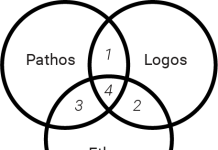
The collective organization of science denial: Toward a framework for collective response
The recent volume “Organized Science Denial. An Action Plan for Solutions” edited by Elena Bruni and Lianne M. Lefsrud, hosts the voices of scholars in organization theory to reflect about the collective dynamics of denial and its implications in this currently complex world.

Cerberus: The digital lord of the flies
Professor Francisco Rovira-Más from the Universitat Politecnica de Valencia discusses the Cerberus project, focusing on sustainable crop protection through data-driven decision-making in Mediterranean agriculture.
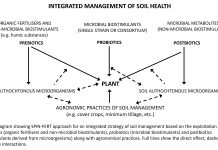
SPIN-FERT: Innovations for soil, impact for people and policies
The SPIN-FERT project, funded by the European Union’s Horizon Europe program, focuses on improving soil health in horticultural crops while promoting peat-free substrates.
Materials and structures that interpret signals and react
Alberto Corigliano, a Full Professor at the Politecnico di Milano, explores the development of sentient materials and structures through the IMMENSE project.
Environmental surveillance as a sentinel for emerging outbreaks: Lessons from mpox in Africa
Here, various academic experts examine research on environmental surveillance as an early warning system for emerging outbreaks, focusing on lessons learned from Mpox in Africa.
Bexyl Project: Beyond Xylella – Europe’s United fight against Xylella fastidiosa, a silent plant...
Across the Mediterranean, olive groves have shaped landscapes, cultures, and economies for centuries. But in the last decade, this heritage has come under threat from a silent plant killer: Xylella fastidiosa.
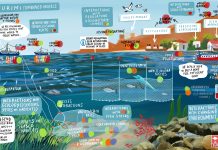
SURIMI: Pioneering sustainable fisheries management via EU DTO
Patrycja Antosz, the Research Director of the Center for Modeling Social Systems in NORCE Research AS, shares details of the SURIMI project, part of the European Digital Twin of the Ocean (EU DTO) initiative, aiming to enhance sustainable fisheries management.

Forest management in an uncertain future: The role of tree diversity
Prof Dr Andreas Rigling and Dr Valentina Vitali highlight the importance of tree diversity for enhancing forest resilience in an uncertain future.
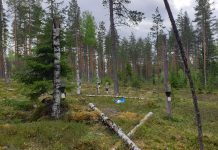
Priodiversity LIFE: Protecting biodiversity through restoration
Matti Koivula from the Natural Resources Institute Finland (Luke) discusses the advancement of forest restoration techniques in Northern European forests and explains how the Priodiversity LIFE project will enhance this knowledge base, address biodiversity loss, and contribute to EU restoration goals.
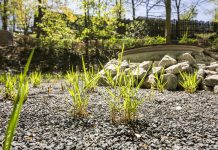
LIFE4ZOO: Sustainable water circulation in zoos
LIFE4ZOO is a project dedicated to sustainable water circulation for the future of zoos, as explained by experts Tomáš Lederer, Petr Kvapil and Paola Sepúlveda-Ruiz.
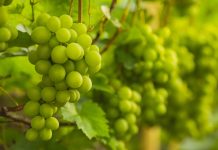
Grape extracts to prevent the use of antibiotics in farmed animals
Learn about the NeoGiANT project, which focuses on the antimicrobial and antioxidant properties of grape extracts to prevent the need for antibiotics in farmed animals.
Shaping the future of circular and sustainable urban mobility
Advancing circular and sustainable urban mobility and logistics are essential for the future of Europe’s green transition and achieving the European Union’s (EU) climate neutrality goal by 2050, as highlighted here by Irene Jubany from the Eurecat Technology Centre.