

Open Access Government produces compelling and informative news, publications, eBooks, and academic research articles for the public and private sector looking at health, diseases & conditions, workplace, research & innovation, digital transformation, government policy, environment, agriculture, energy, transport and more.
Home 2025
Archives

Smarter decisions, better outcomes: How a new molecular test improves patient care
Oliver Bathe, Professor of Surgery and Oncology at the University of Calgary and CEO of Qualisure Diagnostics, examines how a new molecular test can lead to smarter decisions and better patient care outcomes in his third article.

Food environment dynamics research
Dr. Terrence Thomas and Murat Cankurt, Ph.D. at North Carolina A&T State University provide guidance on the fundamentals of food environment dynamics research.
Gut microbiome and aging – Unlocking new frontiers in healthy longevity
As the population ages, research into preserving healthy longevity is gaining pace. Christian Brechot highlights the role of the gut microbiome – a complex community of microorganisms within us – in influencing health as we age.

Driving innovation in lunar water purification technology
Learn about how the UK Space Agency’s International Bilateral Fund (IBF) supported the UK-Canada Aqualunar Challenge to promote advancements in lunar water purification technology.

How U.S. research and innovation are reshaping the global energy future
Cecilia Van Cauwenberghe discusses how U.S. research and innovation are transforming the global energy landscape, beginning with comments on energy innovation necessity.

Paternal perinatal mental health: Barriers to help-seeking
Deborah Da Costa, PhD, Associate Professor at the Department of Medicine, McGill University, Scientist at McGill University Health Centre, details the benefits and barriers to paternity leave uptake by fathers following the birth of a child.

Stimulating women’s entrepreneurship in contexts of oppression
Applying insights from a recent article published in the Academy of Management Perspectives, Dr Jennifer Jennings discusses critical precursors to entrepreneurship for women living under oppressive conditions.

Clones for viticulture in Canada: National clonal selection program
Jim Willwerth from CCOVI at Brock University highlights the importance of clonal propagation in grapevine cultivation, as new vines are grown from cuttings of a ‘mother vine’ to preserve desirable traits. He also advocates for a national clonal selection program to assess new clones for Canada’s cool climate.

Resilience as a metric: Why midlife interventions matter more than ever
Dr Rebecca Crews and Heather Makar from Renue By Science advocate for changing health policy to prioritize proactive resilience maintenance over reactive disease treatment, especially during midlife. They emphasize the benefits of NAD+ biology as a measurable intervention framework.
Connecting Canada for rare disease care and research
The Canadian Rare Disease Network (CRDN) is uniting care, research, and lived experience to improve the rare disease journey in Canada.

Fueling bone regeneration by rewriting immune metabolism
Chima V. Maduka, DVM, MS, PhD, and Christopher H. Contag, PhD, provide insights on tuning immunometabolism to resolve inflammation and promote repair at the bone–biomaterial interface.

The integration of artificial intelligence into personalized medicine
Priya Hays, CEO and Science Writer at Hays Documentation Specialists, LLC, discusses the integration of Artificial Intelligence (AI) into personalized medicine (PM), highlighting its potential to enhance healthcare, particularly in genomic medicine and precision oncology.

A new era of Lunar exploration: Canada is heading to the Moon
With Canadian astronaut Jeremy Hansen leading the way, Canada is heading to the Moon with humans and robots, as explained by Dr. Gordon Osinski from Western University.
Screen time and myopia: Options for children’s vision in a digital world
With mounting evidence linking screen time to myopic progression, interest is growing in developing behavioral and nutritional vision care strategies to promote long-term ocular health in the digital age.

Co-occurring disorders and the need for a research network
The treatment of patients with pain and co-occurring disorders presents a significant knowledge gap that necessitates a strong infrastructure for conducting representative clinical trials. Norm Buckley from the Michael G. DeGroote Institute for Pain Research & Care explains.

Vitamin a toxicity: “Too much of a good thing”
Fredric Gorin, Sarah Torres, and Pamela J. Lein discuss the implications of vitamin A supplementation during a recent measles outbreak in the US. They explain that a common misconception – that vitamin A supplementation can prevent the transmission of measles among unvaccinated individuals – can result in vitamin A toxicity.
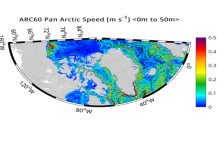
Modelling ocean currents in a changing climate
Paul Myers, Professor at the University of Alberta, emphasizes the necessity for a new generation of very high-resolution computer models to effectively understand how ocean currents will change in a warming climate.

Gallium oxide HV switches to turbo charge the AI data center
Prof. Singisetti at the University at Buffalo explains why gallium oxide semiconductor could be a key player in the AI transformation of society.
The promise of antimicrobial peptides
Brian P. Lazzaro, Liberty Hyde Bailey Professor at Cornell University, highlights the promise of antimicrobial peptides (AMPs) as powerful agents in the ongoing battle against antibiotic resistance.
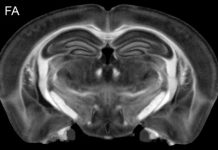
3D microscopic whole brain neurodegenerative MRI
This article by G. Allan Johnson, Ph.D., focuses on advanced MRI techniques for studying neurodegenerative diseases, exploring the challenges of screening therapies for conditions like Alzheimer’s and Parkinson’s, and highlighting the promising research conducted at Duke University.