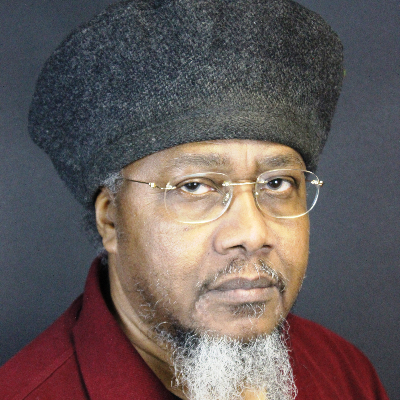


Discussing Afrikan studies, Kimani S. K. Nehusi highlights the importance of an Afrocentric perspective that positions Afrikans as active participants in their cultures and histories. He introduces the concept of the Afrikan Ancestral Land Complex (AALC), which includes the essential values, knowledge, and rituals that sustain Afrikan identity and community cohesion
Afrikan Studies is the scientific study of the Afrikan World: the people of the Afrikan Continent and their descendants around the planet as a single unit; past, present, and future.
The approach is Afrocentric. Afrikans are present as knowing agents located within the greatest extent of their culture and history. This is the most valid context for understanding and explaining them and their actions, though the presence and influence of other cultures is not ignored or needlessly minimized. A significant challenge to the proper study of Afrika is posed by scholars who represent Eurocentric and Arab-centered approaches, which tend to privilege the values, standards, perspectives, biases, and prejudices of dominant groups among Europeans and Arabs, thereby erasing or excluding the perspectives of Afrika. Such approaches often neglect the presence of Afrikans in their own affairs or misrepresent them as inferior. These deficiencies are the living consequences of the Maafa: the Arab and European conquests and subjugation of the continent and its peoples.
There was an Afrika long before the Maafa. It was independent, self-sustaining, mature, and complete in itself. It resulted from its own self-development, for it is in Afrika that humanity was born and civilization invented in a very lengthy process spanning tens of thousands of years. The most consequential development was a system of intergenerational transmission of values, attitudes, an ethical system of behaviors that constituted the performance indicators of the attainment of those values, accumulated experience, knowledge, insights, rituals, skills, and a cosmic system of Ma’at that logically explained the cosmos and all within it. An observation by Ptahhotep, one of the great sages of Kemet (Ancient Egypt), that ‘No one is born wise,’ points towards the strategic discovery of the teachability of humans. This is the intellectual basis of this system of socialization and its later manifestation as education, through which intergenerational transmission was assured for countless generations over many millennia. It is the highest achievement of Afrikans on the Ancestral Continent. The very well-known and equally imposing pyramids, temples, and other monuments of Kemet, Nubia, Ethiopia (Axum) and other parts of Afrika are mute material witnesses to the highly organized socialization, training, orientation, education, motivation and coordination of workforces to achieve these material heights and enabled Kemet to remain at the leading edge of human development and progress for over three thousand years, the longest continuous period of such leadership in the history of humanity.
The Afrikan Ancestral Land Complex
The Afrikan Ancestral Land Complex (AALC) is one example of the intellectual (nonmaterial) intergenerational transmission mentioned above. It is a distinctive collection of related values, knowledge, attitudes, and rituals of Afrikan tradition. It functions to promote and maintain Afrikan Identity and family and community solidarity and stability. It works by reinforcing values such as the importance of community interests and the recognition of individuality, while discouraging individualism, greed, and other social ills. Above all else, the AALC assures the secure possession and use of land, which is recognized as a significant base of economic, social, and spiritual existence, and therefore a most valuable resource. Land is sacred.
The placenta, navel string, and dead bodies each held deep spiritual significance. Their ritual interment in the land constitutes the core of this behavioral complex. These ritual burials create a deep spiritual, psychological, and cultural bond with the specific piece of land across all generations among all who inherit it. Through these invisible bonds, the people belong to the land and the land belongs to them. The land is transformed into a sacred place. An eternal intergenerational circle of related people is established. It contains those who are past, those who inhabit the present, and those who are yet to come. Land became a significant element in shaping a person. A good person belonged to an identifiable piece of land.
The AALC has been attested in the Afrikan World from very ancient times. However, today it does not function as a single integrated unit. Its elements exist, though usually in isolation from each other, across the Ancestral Continent and its communities abroad. But though the AALC is antique, it may well be that it is not antiquated. It is a potential tool in the redemption of Afrikan people across the planet. The collective birthplace and grand ancestral land of all Afrikans, and therefore of all humanity, is known in the ancient texts of Afrika as the Holy Land, Placenta Land, Land of Beginnings, and Ancestral Land. Its recognition can be an important source of Pan-Afrikan identity, unity, and orientation. The AALC may also become the basis of identifying Ancestral Land and part of the means of settling land disputes that occur in many parts of the Afrikan World today.
The Afrikan Ancestral Land Complex lifts the veil of imposed ignorance, distortion, omission, and misrepresentation. It offers a glimpse of Afrika before the Maafa. This Afrika is a distinct spiritual, cultural, and historical space and time. It is a region of existence in the time of our Ancestors. It contains earlier versions of the Afrikan self and Afrikan institutions, uncontaminated by the Maafa.
The reconstruction, analysis, and evaluation of the AALC serve as an example of how Afrikan humanity can overcome the destruction, erasure, and misrepresentation of Afrikan Traditions and restore them to greater utility and respectability. Such reconstruction makes sense, or complete sense, of hitherto isolated pieces of knowledge and information that survived almost as meaningless oddities among Afrikan people in the world, cut off from their beginnings and therefore the conception of the full complex and the explanation of itself. The new knowledge and greater understanding of the AALC position it as an effective solution, or part thereof, to some persistent challenges facing Afrikan families and communities around the world.
The restoration of the AALC validates ancestral knowledge and highlights Indigenous Knowledge Systems worldwide as critical repositories of humanity’s knowledge, accumulated over millennia of observation and preservation.
The Afrikan Indigenous Knowledge System preserves the rule of Ma’at, Spirituality, Matriarchy, Environmentalism, and many other good things of proven enduring relevance to humanity.