

Professor Francisco Rovira-Más from the Universitat Politecnica de Valencia discusses the Cerberus project, focusing on sustainable crop protection through data-driven decision-making in Mediterranean agriculture
The challenge tackled in Cerberus is to prove that crop protection can be sustainable when decisions are driven by trustworthy data. According to Junaid and Gokce (2024), 38% of agricultural losses are solely caused by insect pests, posing a serious threat to food security and agricultural sustainability. In particular, we are going to demonstrate the envisioned concept and methodology in the most relevant orchard crops found in Southern Europe –vineyards, olives, and citrus. Each crop is being monitored for one quarantine pest and one common pest. This article only focuses on the efforts made within Cerberus to fight common pests in Mediterranean agriculture; for the rest of quarantine pests and diseases, keep updated via our media channels. The specific common pests under observation and control are the European grapevine moth (Lobesia botrana), the olive fruit fly (Bactrocera oleae), and the Mediterranean fruit fly (Ceratitis capitata). Hence, by putting the spotlight on one moth and two flies, we often nickname Cerberus the lord of the flies. Incidentally, the quarantine pest chosen for citrus is also a fly, the oriental fruit fly (Bactrocera dorsalis).
Pest control and economic sustainability for farmers
The approach followed in Cerberus is realistic and straightforward. The moth and flies damage the fruits, ruin wine and olive oil, and make oranges and mandarins unsellable. Consumers only accept perfect fruits. Growers cannot trade produce with flaws. Complete control of these pests is necessary to ensure the farmer’s economic sustainability. Given the destructive nature of these insects, which worsen with increasing average temperatures and longer summers, farmers have no alternative but to spray the orchards. Therefore, we consider orchard spraying part of the solution, complementing systematic insect tracking and early detection in the quest for a sustainable production methodology. On the other hand, most governments, channelled through their ministries or departments of agriculture, have set ambitious goals to reduce insecticide use, with the European Union leading the way by proposing a 50% reduction target by 2030. However, no regulatory body has provided specific technical guidance to achieve such reduction rates, as a uniform, unchanging reduction might be catastrophic.
At Cerberus, we believe significant rate reductions are feasible with the proper use of data and technology. In particular, the idea of developing a smart sprayer that accurately and automatically translates tree-specific rates to the orchard. These spray rates will be progressively lowered as biological control remains satisfactory. As a result, two facts need to be met: a sprayer capable of applying tree-specific rates accurately without changing droplet size, and a way to prove that maps coded with overall lower rates are effective in controlling pests and thus yield high-quality fruits. The former is explained in detail over the rest of this article; the latter is embedded in Cerberus methodology through the cloud-connected smart traps shown in Figure 1, which reproduces the average catches (MTD -males per trap per day) of grapevine moth in the pilot vineyard located in northern Italy. The pesticides kill the larvae, and therefore the treatment must be done right after the male flight curve drops, which can be precisely determined with the tools developed in Cerberus, resulting in less overspray.
Addressing drift and runoff
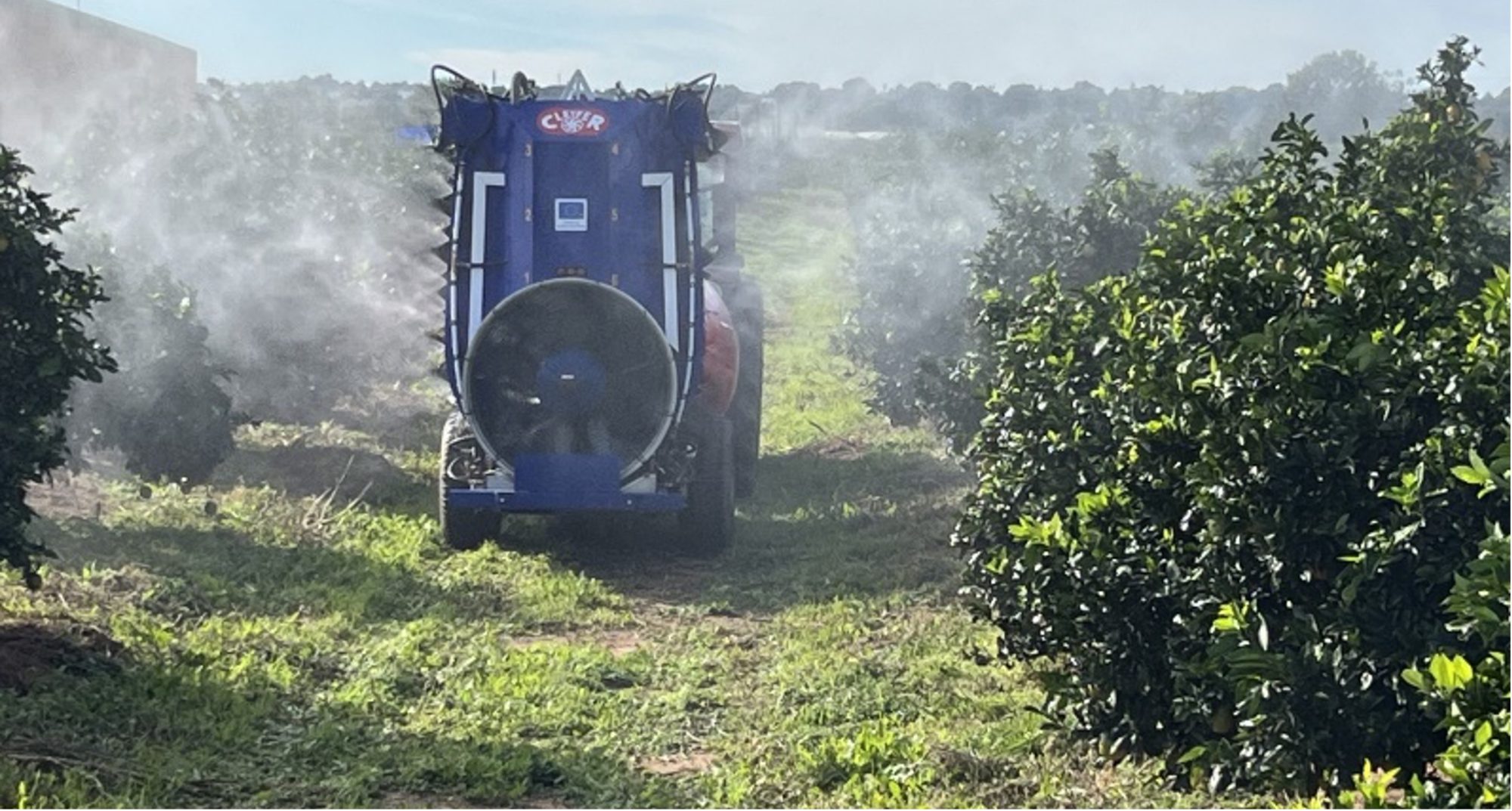
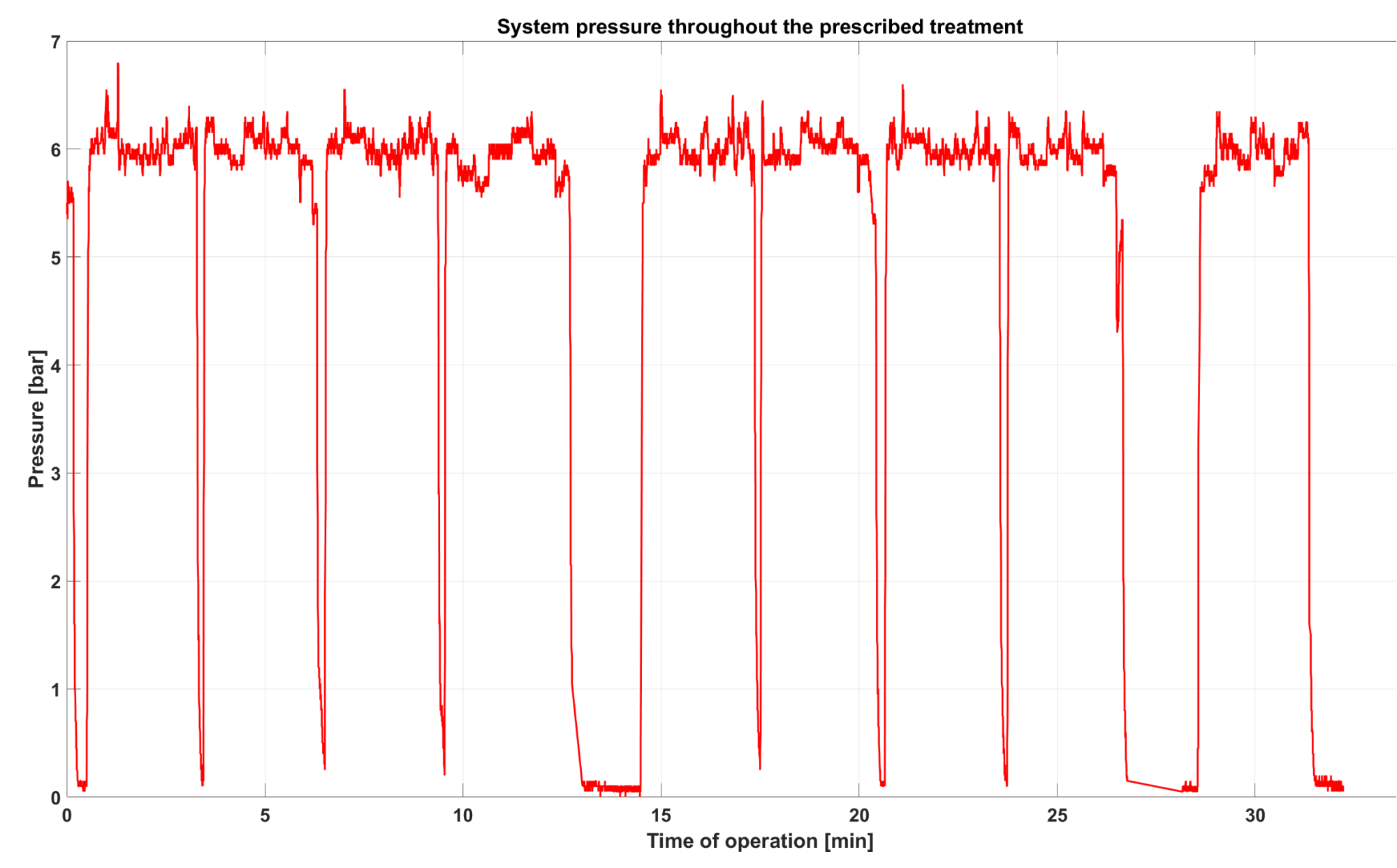
When the goal is a significant reduction in orchard spray to increase sustainability, the first place to look is drift to the atmosphere and runoff to the soil, as both represent a waste of products and serious environmental damage. Drift is caused when droplets are too fine, whereas runoff occurs when droplets are oversized. Consequently, droplet size is a key parameter to consider in the design of the sprayer. As it turns out, droplet size depends on system pressure, and the fewer fluctuations we have during a treatment, the less overspray will occur. Keeping the pressure constant may seem a simple endeavour, but it is not in such a dynamic system as the Cerberus smart sprayer (Figure 2a), where 32 10-Hz pulsating nozzles, computer-controlled in six independent sectors (one to six in the image), are constantly changing to translate a prescription map that encodes variable spray rates. Electronically run nozzles that change flow rates on the fly, and even close suddenly when demanded, induce continuous pressure changes. To counterweight them, however, six flow-discharging electrovalves, working in cascade, adjust the excess of flow to attenuate pressure jumps in real time. Figure 2b shows the pressure variations along a treatment, with a target pressure of six bar (pressure dropped at the headlands when the driver disconnected the power-take-off to turn).
Advancements made in sprayer control technology
After the pressure has been systematically stabilized (Fig. 2b), the focus point is on the precision with which flow rates are commanded. To begin with, the sprayer is controlled by flow rate (L/min), whereas the prescribed maps are encoded in spray rates (L/ha), the conventional unit used by professional growers. Moving from one to the other requires precise, real-time knowledge of the row spacing in the orchard and the vehicle’s travel speed. The former is easily determined, as the sprayer locates the orchard using the GNSS receiver and retrieves the row spacing set by the farmer during plot registration. However, accurate and stable vehicle speed cannot be derived from GNSS receiver data because it is too noisy to ensure permanent, stable
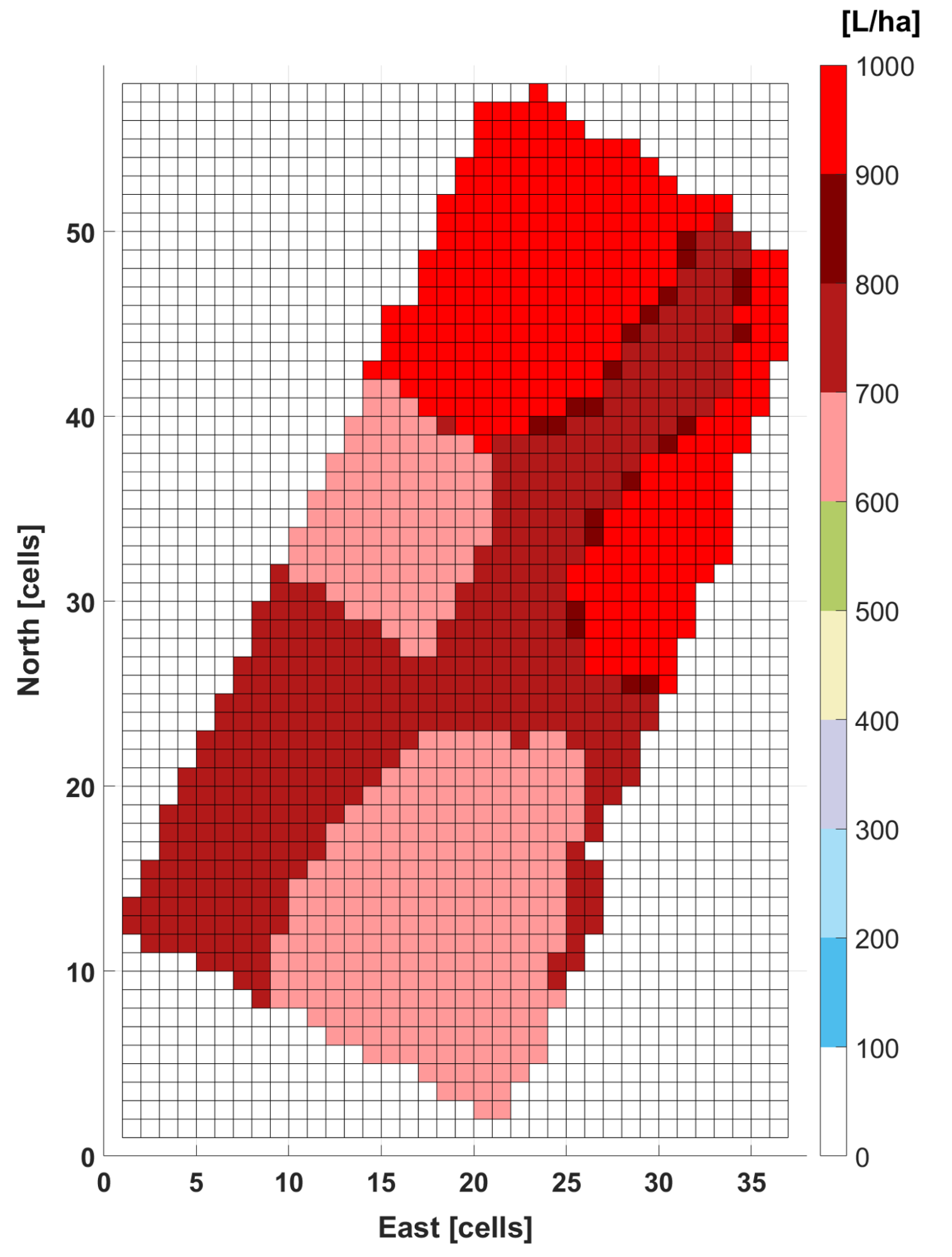
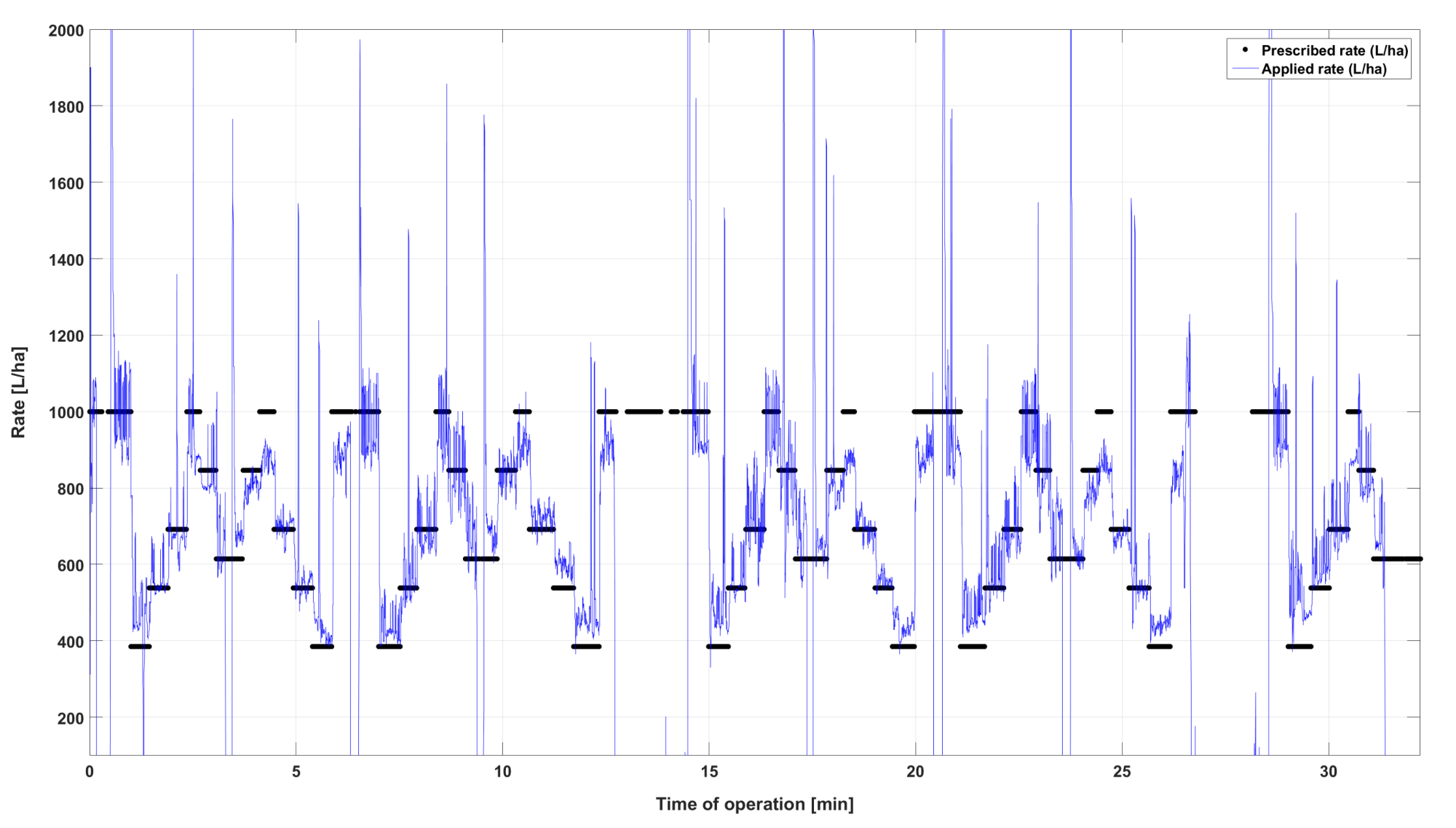
flow rates in the sprayer when actuating the nozzles. This challenge was overcome by mounting a tachometer on the inside of the sprayer’s wheel, which provides stable velocity measurements. As a result, the flow rate was automatically adjusted to the driver’s actual speed when applying the prescribed treatment. The prospects were high when the whole system was evaluated in a citrus orchard. Figure 3b shows that the delivered rate closely followed the desired rate when the prescription map in Figure 3a was applied. Having a sprayer that can closely apply the rates of a map to the orchard, regardless of speed, without the need to tamper with pressure regulators, puts the focus on properly designed prescription maps for pesticide reduction, as whatever the prescription is, it will be applied to each tree. The innovative step of Cerberus in pest control is that it not only provides a novel sprayer but also the upstream and downstream links to close the plant health chain: the auto-generation of prescription maps by the Cerberus Cloud Platform and the actual efficacy of the treatment recorded by in-field smart traps. In 2026, four sprayers will be deployed in Cyprus, Italy, and Spain.