Julian Trutz Müller, a Scientific Officer at GERICS/wpn2030, discusses the importance of bridging science and policy for sustainable transformation, using the case study of the Science Platform Sustainability 2030 (wpn2030)
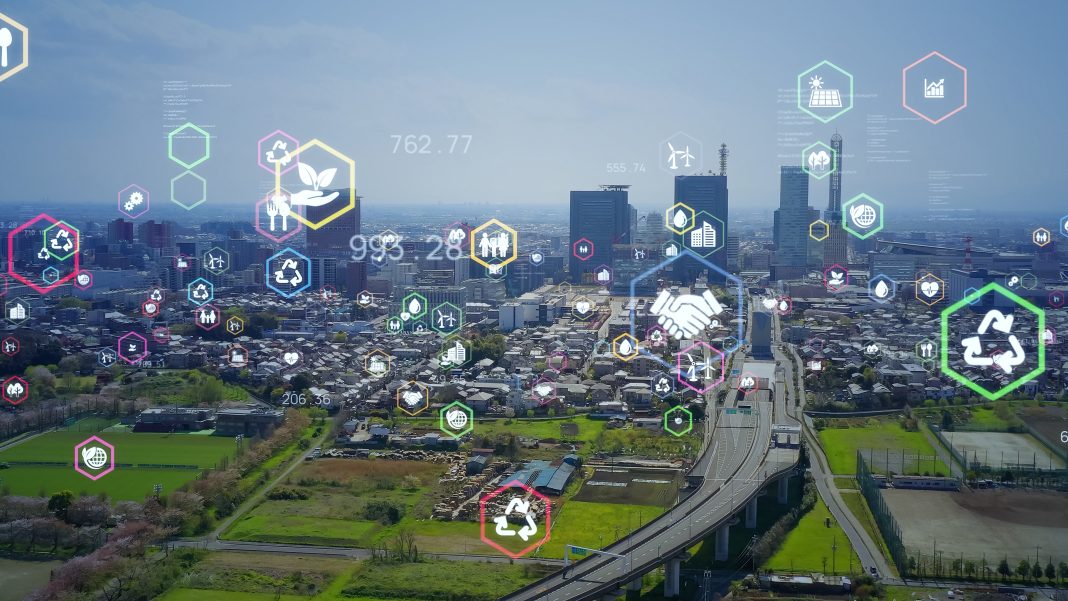
The transformation towards sustainability, the fundamental shift of our economies and lifestyles towards environmentally sound, climate- resilient, socially just and future- oriented systems is the overarching challenge of our time. Addressing it requires orientation, innovation and cooperation across all sectors of society. Science plays a crucial role in this process by providing evidence, reflection, and actionable knowledge for decision-making
The Science Platform Sustainability 2030 (Wissenschaftsplattform Nachhaltigkeit 2030, wpn2030) (1) was established to strengthen the connection between science and policy in Germany. Acting as an interface, it connects policy and research to jointly advance the implementation of the German Sustainable Development Strategy (Deutsche Nachhaltigkeitsstrategie, DNS) (2) and the 2030 Agenda for Sustainable Development. (3) The latest update of the strategy, adopted in early 2025, explicitly highlights the importance of scientific guidance (4) for achieving the Sustainable Development Goals (SDGs).
This interface function is increasingly important as sustainability governance becomes more complex and requires coordinated, cross-sectoral knowledge exchange.
Funded by the Federal Ministry of Research, Technology and Space (BMFTR) (5) since 2017, the platform critically and constructively reflects on the DNS, by fostering a solution- oriented dialogue on sustainability transformation and supporting inter- and transdisciplinary perspectives. Thus, the wpn2030 contributes to strengthening Germany’s long-term resilience and future viability. It works independently but is institutionally embedded within.
Germany’s sustainability governance. This positioning ensures continuity, legitimacy and access to policy processes while maintaining scientific independence.
Structure, governance and network
Three scientific organisations jointly lead the wpn2030 platform with complementary strengths in sustainability science, climate research, and policy engagement, and are firmly embedded in national and international science communities. Their combined expertise enables the platform to address sustainability challenges from both scientific and applied perspectives, linking global research agendas with national policy needs.
- RIFS (6) as the Project Coordinator led scientifically by Prof Mark Lawrence, conducts transformative and transdisciplinary research that directly informs policy debates and governance processes.
- German Committee Future Earth (DKN) (7), chaired by Prof Daniela Jacob, serves as Germany’s interface to international sustainability and climate research (Future Earth, WCRP) and advances interdisciplinary sustainability science. Prof Jacob also directs GERICS (8), which provides climate services and decision-support tools for policymakers and practitioners.
- SDSN Germany (9), whose steering committee includes Prof Christa Liedtke, brings together science, civil society and business to develop knowledge-based solutions for the 2030 Agenda. As Head of Sustainable Production and Consumption at the Wuppertal Institute (10), Prof Liedtke contributes expertise in applied transformation research.
Prof Jacob, Prof Liedtke and Prof Lawrence jointly lead the wpn2030 as Co-Chairs, forming its scientific and strategic backbone. Their leadership ensures coherence across the platform’s activities and alignment with evolving political and scientific priorities.
Within this structure, IDOS (11) , represented by Dr Axel Berger, adds expertise on global development, international cooperation and evidence- based policy advice.
Together, the partner institutions provide insights from sustainability and transformation research, climate services and development policy analysis research that support the platform’s activities.
![Figure 1: Advisory Councils Dialogue [source: wpn2030]](https://www.openaccessgovernment.org/wp-content/uploads/2025/12/Picture1-3.jpg)
Target groups
The platform’s main audiences are scientists and policymakers, but it also actively engages civil society and private sector actors as input providers, dialogue partners, and multipliers.
By combining scientific rigor with participatory dialogues, wpn2030 ensures that diverse societal perspectives inform sustainable policy solutions.
To include stakeholders into the translation of scientific insights into practice, wpn2030 has developed co-productive dialogue and exchange formats. These formats foster mutual learning, and the identification of policy-relevant actionable solutions at the science-policy-interface.
Advisory Councils Dialogue (Beirätedialog) (12)
Initiated by the wpn2030 and implemented in cooperation with SDSN Germany, the Advisory Councils Dialogue was established in 2018. It brings together all scientific advisory and expert councils of the Federal Government.
The Dialogue creates a space in which representatives from diverse policy fields jointly examine challenges for political action and discuss their relevance to the DNS. The format has contributed to stronger synergies between advisory bodies and helped identify cross-cutting sustainability challenges that require coordinated policy responses.
![Figure 2: wpn.Lab [source: wpn2030]](https://www.openaccessgovernment.org/wp-content/uploads/2025/12/Picture2.jpg)
wpn.Lab
The wpn.Lab(13) is a compact, interactive format that fosters transdisciplinary collaboration. It is designed to generate practical impulses for policy, research and broader transformation processes.
Within a short period of time, the format brings together different perspectives on a specific question, enabling joint reflection among actors among scientists, policymakers and societal stakeholders. Its key feature is a scientifically grounded and methodologically tested approach to exploring complex issues transdisciplinary, advancing transformation processes and identifying concrete steps towards implementation.
Accompanying research
Beyond these formats, the wpn2030 conducts accompanying research to analyse how its approaches contribute to sustainable policy-making. Two aspects are central: first, how the wpn2030 formats operate under different conditions and which design options are most effective; second, the broader landscape of scientific advice on sustainability policy in which these formats are embedded. This meta- perspective helps to refine advisory processes and strengthen the overall effectiveness of science–policy interfaces.
Outlook
The demand for scientifically grounded guidance will continue while the implementation of the 2030 Agenda enters a decisive phase. Looking ahead, the wpn2030 will further expand its role as a strategic interface, advancing evidence-based pathways for sustainability and strengthening the integration of scientific insights into political decision-making. By deepening dialogue, fostering co-production and strengthening advisory structures, the wpn2030 helps build the foundations for a more sustainable and resilient future.
References
- https://www.wpn2030.de/
- https://www.bundesumweltministerium.de/themen/nachhaltigkeit/strategie-und-umsetzung/nachhaltigkeitsstrategie
- https://sdgs.un.org/2030agenda
- Bundesregierung (2025), Transformation gemeinsam gerecht gestalten. Deutsche Nachhaltigkeitsstrategie. Weiterentwicklung 2025, p. 121.
- https://www.bmftr.bund.de/DE/Home/home_node.html
- https://www.rifs-potsdam.de/en
- https://www.dkn-future-earth.org/
- https://www.climate-service-center.de/
- https://www.sdsngermany.de/
- https://wupperinst.org/index/
- https://www.idos-research.de/
- https://www.wpn2030.de/beiraetedialog/
- https://www.wpn2030.de/wpn-lab/