
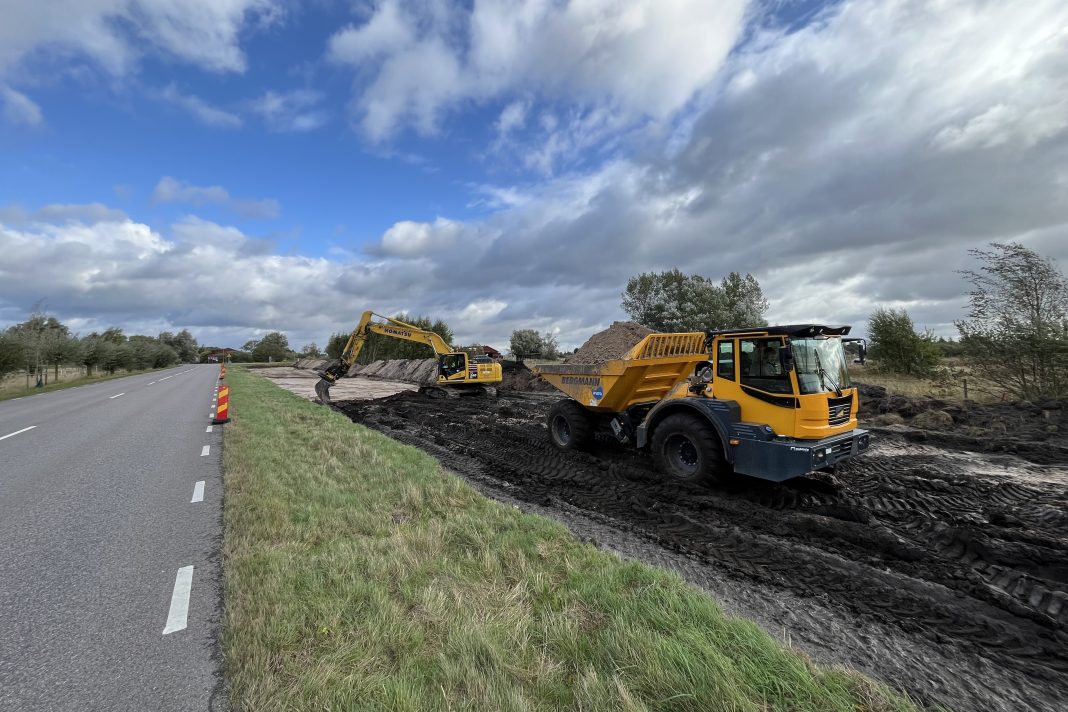
Nature meets engineering in Vellinge’s innovative flood defence, setting a new standard for sustainable coastal protection, Anders Purcell, Project Manager at Vellinge Municipality explains
As coastal communities across Europe face increasing threats from rising sea levels and extreme weather, the municipality of Vellinge in southern Sweden is leading the way with a groundbreaking flood protection initiative. At the centre of this effort is the European Union (EU)-funded LIFECAPEable project, which aims to transform the traditional concept of a dike into a nature-based, sustainable solution that not only protects people and property but also enhances the local environment.
Rethinking the dike
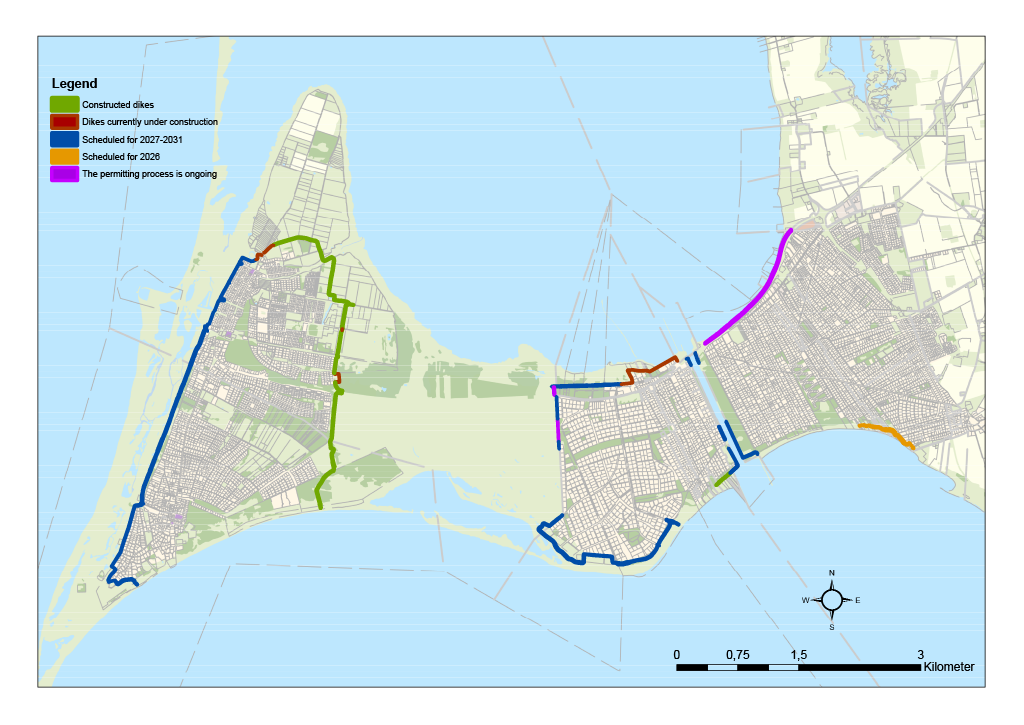
Vellinge’s flood protection system blends engineering with ecology and relies on nature areas for protection where possible. The flood protection combines five kilometres of sand dunes for flood and erosion protection, seven kilometres of wall-like construction designed to visually blend with the surrounding environment, including becoming part of an old church wall, and a 14-km nature-enhanced dike supported by wave dissipation over beach meadows and heaths.
The core of the dike is made from locally sourced materials, primarily moraine clay, which minimises environmental impact and construction costs. This approach also supports circular construction practices by reusing clean excavation materials from other infrastructure projects.
Surrounding the core is a watertight clay layer that prevents internal erosion and ensures the dike’s structural integrity. This layer is crucial for resisting wave action, preventing water from seeping through the structure, and maintaining long-term stability. So far, the dike adheres to the state-of-the-art standards for dike construction. But what truly sets this project apart is the outer vegetation layer: a living surface of adaptive vegetation designed to resist erosion, support biodiversity, and reduce maintenance.
LIFECAPEable: Engineering meets ecology
The LIFECAPEable project is a collaboration between Vellinge Municipality, Lund University, Delft University of Technology in the Netherlands, and Ecogain, a Swedish ecological consultancy. Funded by the EU’s LIFE programme, the project explores how nature-based solutions can enhance flood resilience while promoting ecological values and climate adaptation.
Key components of the project include:
- Six kilometres of newly constructed dike with 53,000 square metres of new habitat.
- 1,800 square metres of reinforced sand dunes, with three tested vegetation strategies.
On a prototype test dike, researchers are evaluating how different vegetation covers perform under storm conditions, how they recover from damage, and their contribution to the dike’s overall stability. The goal is to identify vegetation types that enhance biodiversity and can withstand wave forces, drought, and heatwaves – conditions expected to become more common due to climate change.
Vegetation as a protective layer
Traditional grass-covered dikes require frequent mowing – up to five times per year. In contrast, meadow vegetation needs only one annual cut, reducing maintenance and emissions. However, its ability to withstand wave forces and extreme weather is still under study. The project is testing various combinations of grasses, herbs, and native plants to determine which offer the best balance of resilience and ecological value.
“Vegetation with varied root depths may be more resilient to drought and heat,” explains Caroline Hallin, Coastal Engineer and PhD at LTH. “We’re testing how these plant systems respond to wave impact and how they contribute to the structural integrity of the dike.” Because Vellinge’s dike is not located directly on the shoreline, it faces less intense wave action. This allows for more flexibility in vegetation choice and opens the door to innovative ecological designs. The presence of shallow areas in front of the dike helps dissipate wave energy, reducing the need for heavily reinforced surfaces.
Sand dunes as natural defences
In addition to the dike, the project includes the restoration and reinforcement of sand dunes – natural formations that act as buffers against storm surges. These dunes are being studied for their ability to recover after storms and how vegetation can accelerate this process. The reinforced dunes are expected to play a key role in protecting inland areas while also serving as habitats for coastal flora and fauna.
The LIFE project is also investigating how different types of vegetation influence dune stability and regeneration. By planting native grasses and shrubs with deep root systems, researchers hope to enhance the dunes’ ability to withstand erosion and recover naturally after extreme weather events.
A modular protection system
The modular approach, which combines dunes, wall-like construction, and dikes, enables the municipality to adapt the system to various environments and space constraints. In urban areas where space is limited, vertical elements like concrete walls and sheet piles are used. In rural and natural areas, the focus is on nature-based solutions that blend into the landscape.
Monitoring and maintenance
To ensure long-term effectiveness, the dike and dune systems will be monitored regularly. Sensors and visual inspections will track erosion, vegetation health, and structural integrity. Maintenance plans are being developed to address issues such as animal burrowing, vegetation die-off, and sediment displacement.
The project also includes public education and engagement efforts aimed at raising awareness about flood risks and the benefits of nature-based solutions.
A model for climate adaptation
The LIFECAPEable project is more than a local initiative – it’s a blueprint for coastal communities across Europe. By integrating ecological research with civil engineering, Vellinge is demonstrating that flood protection can be both effective and environmentally responsible.
As the project progresses, its findings will inform future designs and policies. With continued support from the EU and collaboration between academia and local governments, nature-based dikes like those in Vellinge may become the new standard in climate adaptation.
The success of LIFECAPEable could inspire similar projects in other regions, promoting a shift toward sustainable infrastructure that works with nature rather than against it. In a time when climate resilience is more important than ever, Vellinge’s innovative approach offers hope and guidance for communities facing the challenges of a changing world.