

Open Access Government produces compelling and informative news, publications, eBooks, and academic research articles for the public and private sector looking at health, diseases & conditions, workplace, research & innovation, digital transformation, government policy, environment, agriculture, energy, transport and more.
Home 2026
Archives

CoDiet: You are what you eat
Learn about CoDiet, an international research initiative aimed at addressing diet-related diseases using innovative monitoring technologies and personalised nutrition.

How academic-tribal teams cut cancer risks in Native American communities
Learn how the Native American Center for Cancer Health Excellence addresses cancer health disparities through bidirectional research that honors tribal sovereignty.

Modern payment models in health
Oriana Ciani addresses the financial pressures that healthcare payers face due to rising costs of innovative therapies. The HI-PRIX project, funded by Horizon Europe, aims to create adaptable pricing and payment model for health systems, focusing on financial sustainability, supporting innovation, and ensuring timely access to high-cost medicines.
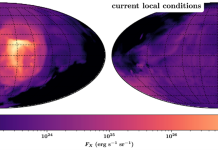
Understanding our place in the Milky Way: Insights into the local bubble
PD Dr Philipp Girichidis, Prof Dr Ralf S Klessen and Dr Stefan Reissl at Heidelberg University’s Centre for Astronomy provide insights into our place in the Milky Way and the Local Bubble.

Dynamic feedback modeling to predict random infection outcomes
Brian P. Lazzaro from Cornell University discusses the role of dynamic feedbacks in determining infection outcomes.

Could the mind sport bridge provide much-needed social connection in the digital age?
A third of young people in the UK experience loneliness linked to screen use. Bridge: A MindSport for All (BAMSA) asks: Could the mind sport bridge provide the much-needed social connection in the Digital Age?

The politics of rights and marginalised groups: Towards critical awareness
Kati Rantala offers a thorough analysis of the politics surrounding rights and marginalised groups, fostering critical awareness.

Safe and effective use of opioids for co-occurring disorders
Co-occurring disorders and clinical care for complex illnesses- safe and effective use of opioids may be only one of the areas where we need collaboration. Norm Buckley from the Michael G. DeGroote Institute for Pain Research & Care explains.
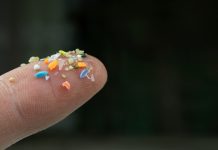
Studying the environmental impact of nanoplastics: Strategies and limitations
Understanding the environmental impact of nanoplastics is complex and requires the development of robust and standardised laboratory tests, which are essential for assessing their effects on broader, real-world scales, Monica Passananti explains.

Volunteering in rural and urban communities isn’t one-size-fits-all
Rebecca Nesbit and Laurie E. Paarlberg argue that volunteering cannot be a one-size-fits-all solution, as the experiences of rural and urban communities demonstrate.

Mental health in the health workforce
Auckland University of Technology Associate Professor Dianne Wepa’s research found that mental health in the health workforce is influenced by how workplace cultures either promote or hinder psychological safety.
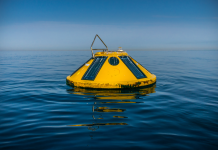
Charting the technical landscape of marine carbon dioxide removal
Dr Nils Thonemann and Mona Delval from the University of Leiden consider the scientific and technical requirements for effective evaluation of emerging marine carbon dioxide removal (mCDR) approaches.

Novel adjunct treatments for posttraumatic stress disorder: Neurofeedback and deep brain reorienting
Dr. Ruth Lanius, Scientist at London Health Sciences Centre Research Institute (LHSCRI) and Psychiatrist at London Health Sciences Centre (LHSC) discusses the need for novel adjunct treatments for posttraumatic stress disorder (PTSD), highlighting two promising approaches: neurofeedback and Deep Brain Reorienting (DBR).

The next step in regenerative medicine for osteoarthritis: Spscs and a new regulatory pathway
Osteoarthritis (OA) remains one of the leading causes of disability worldwide, burdening health systems and diminishing quality of life for millions.

Science Platform Sustainability 2030: Bridging science and policy for sustainable transformation
Julian Trutz Müller, a Scientific Officer at GERICS/wpn2030, discusses the importance of bridging science and policy for sustainable transformation, using the case study of the Science Platform Sustainability 2030 (wpn2030).
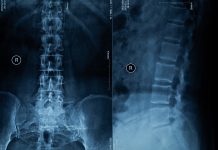
Piezo4Spine: Dreaming on a cure for paraplegic patients
Piezo4Spine is a European project that aims to develop a novel therapy to repair the injured spinal cord, a pathology for which a cure remains elusive. María C. Serrano tells us more.

Ancient greek heritage in (early modern) Europe
Natasha Constantinidou unpacks Ancient Greek heritage in (early modern) Europe through the project Greek Heritage in European Culture and Identity.

Overcoming barriers for efficient dialogue between research and practice
As climate and biodiversity crises grow more complex, productive exchange between researchers, practitioners and policymakers becomes crucial. This article outlines the hurdles to efficient dialogue and the approaches that can help build trust, shared understanding and real-world impact.
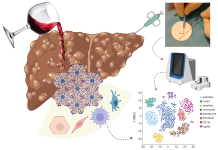
Liver regeneration in alcohol related liver disease
Recompensation in liver disease indicates both a physical and molecular improvement in liver functions. Molecular regeneration is key to improving liver function, and novel technologies in proteomics and RNA transcriptomics may hold the key to advancing liver regeneration in alcohol-related liver disease. Nina Kimer explains.

The DOME marketplace: Building a trusted, unified cloud & edge ecosystem for Europe
Digital sovereignty remains a strategic priority for Europe, aiming to strengthen its digital resilience and empower European companies to compete globally in a trusted and transparent environment.