

Open Access Government produces compelling and informative news, publications, eBooks, and academic research articles for the public and private sector looking at health, diseases & conditions, workplace, research & innovation, digital transformation, government policy, environment, agriculture, energy, transport and more.
Home 2025
Archives
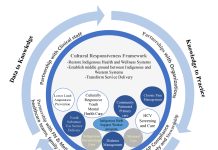
Indigenous health research program: Offering insights for better health
Dr. Mamata Pandey, Research Scientist at the Saskatchewan Health Authority in Canada shares insights from her Indigenous-partnered health research program, enhancing health.

Wellbalance elevates coaching through the science of personalized wellbeing
WellBalance’s “Wellbeing Balance and Lived-Experiences Model of Positive Wellbeing”, developed by Harvard-trained scientist Troy W. Norris, is the first scientifically validated experiential model of wellbeing.
Soil health: The importance of the rhizosphere
Lynette Abbott, Emerita Professor, The University of Western Australia School of Agriculture and Environment and UWA Institute of Agriculture, examines how the rhizosphere, a narrow collar of soil clinging to plant roots, is emerging as a key player in soil and plant health.

Business education at the crossroads: Transform or face irrelevance
The article, authored by Jean Garner Stead, calls for an urgent re-evaluation of business education to foster leaders capable of creating sustainable value in a rapidly changing world.
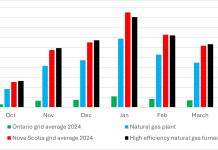
Cold climate heat pumps for GHG emission reductions: A smart-grid approach
Dr. M.F. Lightstone, P.Eng., FCSME, FCAE, from the Department of Mechanical Engineering at McMaster University, presents a smart-grid approach for cold climate heat pumps aimed at reducing greenhouse gas emissions.

The medieval march of Wales: Welsh or English?
Professor Helen Fulton at the University of Bristol, examines the case study of the Medieval March of Wales, a vibrant multicultural border region between...

From pilots to system value: AI, leadership and collaboration in value-based healthcare
As AI and robotics transform healthcare, the challenge is shifting from developing new tools to delivering measurable value for patients and health systems. This article explores how Value-Based Healthcare (VBHC) can help turn digital innovation into scalable, system-wide impact
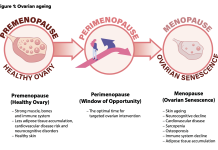
Targeting the perimenopause window to delay ovarian ageing and enhance healthspan
Adjunct Assistant Professor Zhongwei Huang and Dr. Paula Benny discuss perimenopause and ovarian ageing, highlighting the importance of future interventions focused on early detection, personalized treatments, and lifestyle modifications to improve health outcomes and longevity.

Electrochemical interfaces: Crucial enablers of sustainable energy technologies
In this article, a team of expert scientists explains why electrochemical interfaces are crucial enablers of sustainable energy technologies.
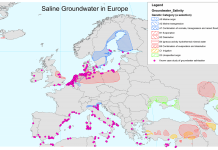
Salinization of coastal groundwaters in the EU – What can we do about it?
Written as part of the LIFE-FRESHMAN project, this article examines the issue of coastal groundwater salinization in the EU, particularly its impact on freshwater reserves, and highlights key strategies for mitigation.

Collapse and persistence before 1713: Rethinking Khoekhoen political economy at the early Cape
Erik Green examines the complex interactions between the Khoekhoen and early European settlers, challenging conventional narratives of indigenous passivity and highlighting the resilience and agency of Khoe societies in the face of colonial pressures.
Endothelial – The final frontier to reduce preterm birth and death from sepsis
Each year, around 15 million babies are born prematurely, with nearly one million dying soon after due to complications. Maternal mortality remains high, particularly in low-resource settings. This article describes how assessing endothelial integrity and function could help identify at-risk pregnancies to prevent adverse outcomes.
Improved herbicide stewardship with remote sensing and machine learning decision-making tools
Weeds pose the most persistent and costly threat to crop production in Canada, driving widespread herbicide use and accelerating the rise of herbicide-resistant species. This article explores how emerging AI- and trait-based decision tools can transform weed management and usher in a new era of precise, sustainable herbicide stewardship.
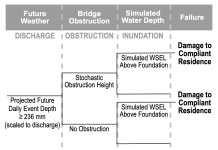
Probabilistic risk assessment (PRA) for sustainable water resources
Dynamic PRA provides sustainable flood risk decision support by identifying costs to present and future generations.
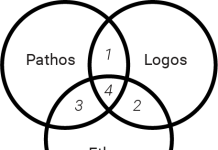
The collective organization of science denial: Toward a framework for collective response
The recent volume “Organized Science Denial. An Action Plan for Solutions” edited by Elena Bruni and Lianne M. Lefsrud, hosts the voices of scholars in organization theory to reflect about the collective dynamics of denial and its implications in this currently complex world.

Powering the future with soft electrostatic actuators and energy harvesters
A team of researchers at the University of Trento provides a perspective on the role that soft actuators and energy harvesters play in building the mechatronic devices of the future.

Afrikan studies and research in the human sciences
Discussing Afrikan studies, Kimani S. K. Nehusi highlights the importance of an Afrocentric perspective that positions Afrikans as active participants in their cultures and histories. He introduces the concept of the Afrikan Ancestral Land Complex (AALC), which includes the essential values, knowledge, and rituals that sustain Afrikan identity and community cohesion.
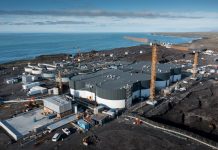
Terraforming life: Turning waste-to-value in Iceland’s circular economy
Sigurður Trausti Karvelsson, the Terraforming Life Project Coordinator and R&D Project Manager at First Water along with project partners; The Icelandic Farmers Association, Orkídea, SMJ Consulting Engineers, and Ölfus Cluster, present an initiative that transforms waste into resources within Iceland’s circular economy.
Exploring genetic tools in environmental microbes: Applications in extracellular electron transfer
Arpita Bose and Zhecheng Zhang explore genetic tools in environmental microbes, citing applications in extracellular electron transfer/
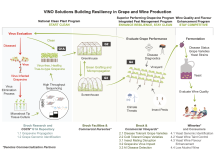
Resiliency strategies to overcome challenges facing the Canadian grape and wine sector
Resiliency strategies to overcome challenges facing the Canadian grape and wine sector.