

Open Access Government produces compelling and informative news, publications, eBooks, and academic research articles for the public and private sector looking at health, diseases & conditions, workplace, research & innovation, digital transformation, government policy, environment, agriculture, energy, transport and more.
Home Search
healthcare data - search results
If you're not happy with the results, please do another search

1 in 10 patients first learn they have kidney disease via NHS app, report...
The Falling through the GApp report by Kidney Care UK finds that many learn of chronic kidney disease via the NHS App, often without support, revealing a critical need for systemic reform.

Transforming public sector efficiency through SCC’s document services
SCC’s Document Services aim to enhance efficiency in the public sector, supporting organisations like local authorities and healthcare in transforming their print infrastructure and digitising workflows.

How academic-tribal teams cut cancer risks in Native American communities
Learn how the Native American Center for Cancer Health Excellence addresses cancer health disparities through bidirectional research that honors tribal sovereignty.

Government launches £210 million cyber action plan to protect public services
The UK government has announced a new cyber action plan to protect online public services and strengthen digital resilience across the public sector.

UCL researchers use AI to identify two forms of MS for the first time...
For the first time, UCL researchers have used AI to identify two biologically distinct forms of multiple sclerosis, supporting the potential for more personalised care and improved treatment decisions for patients worldwide.
New breakthrough could bring osteoporosis treatments to patients faster
University of Sheffield researchers helped secure FDA approval for a new bone imaging method that could speed up osteoporosis drug trials, meaning new treatments may reach patients faster than ever.

Securing AI systems against growing cybersecurity threats
As artificial intelligence continues to embed itself in the most important sectors, including healthcare, manufacturing, and mobility, concerns about cybersecurity and system resilience are growing just as quickly.

Cold weather drives £3bn in NHS spending, study finds
New Oxford University research reveals NHS England spends around 3% of its primary and secondary care budget, roughly £3 billion, on illnesses linked to extreme temperatures.

AI helps NHS tackle A&E pressure this winter
Hospitals across England are increasingly turning to artificial intelligence to reduce pressure on accident and emergency departments, helping patients receive faster care during one of the busiest times of the year.

EIT health annual report 2024: Advancing health innovation across Europe
Europe’s healthcare systems are under increasing pressure. Ageing populations, a growing burden of chronic disease, shortages in skills and workforce, and the rapid expansion of digital and data-driven solutions are all testing the resilience of care delivery across the continent.

Bridging gaps in neuroscience research
The British Neuroscience Association (BNA) is a key player in the neuroscience sector, supporting professionals and promoting interdisciplinary collaboration. Chief Executive Dr Laura Ajram highlights the importance of bridging advanced neurological research with public understanding and the latest developments in the field.

Why advanced air handling units matter, now more than ever
Large public-sector buildings, such as hospitals, face a host of critical challenges, one of the most pressing being meeting higher standards for occupant health and sustainability without increasing operational costs. In the HVAC sphere, modern air handling systems, such as the Rhoss ADV DNAIR, make this easily achievable. Roberto Malozzi, MD for Klima-Therm, explains.
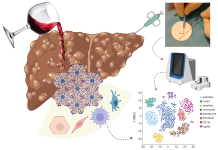
Liver regeneration in alcohol related liver disease
Recompensation in liver disease indicates both a physical and molecular improvement in liver functions. Molecular regeneration is key to improving liver function, and novel technologies in proteomics and RNA transcriptomics may hold the key to advancing liver regeneration in alcohol-related liver disease. Nina Kimer explains.

Agentic automation: A critical enabler for solving the NHS productivity challenge
As the NHS grapples with unprecedented demand, workforce pressures and growing elective backlogs, agentic automation is emerging as the key practical lever of choice.

The connectivity problem hiding in smart bins and heart monitors
Dominic Norton from Spitfire Network Services highlights the connectivity problem hiding in smart bins and heart monitors.
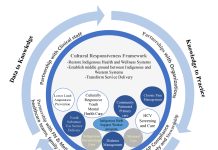
Indigenous health research program: Offering insights for better health
Dr. Mamata Pandey, Research Scientist at the Saskatchewan Health Authority in Canada shares insights from her Indigenous-partnered health research program, enhancing health.

Adolescent body image issues linked to adult depression, UCL study finds
UCL research shows body image concerns in teens raise the risk of depression in adulthood, highlighting the need for early support.

Nearly 1 in 5 NHS A&E patients treated in corridors or waiting rooms
A new University of Bristol study finds nearly 1 in 5 NHS emergency department patients are treated in corridors or waiting rooms, highlighting severe overcrowding and mounting pressure.

New technology services 4 framework goes live to support public sector digital transformation
The UK public sector is receiving an upgrade in how it buys technology services, with the launch of the Technology Service 4 (TS4) framework.

Digital pathology in the cloud: Driving interoperability, AI integration, and future-ready diagnosis
Philips Healthcare tells us about the advantages of adopting cloud technology in digital pathology, emphasizing its role in enhancing interoperability, AI integration, and diagnostic efficiency.