

Open Access Government produces compelling and informative news, publications, eBooks, and academic research articles for the public and private sector looking at health, diseases & conditions, workplace, research & innovation, digital transformation, government policy, environment, agriculture, energy, transport and more.
Home 2025
Archives
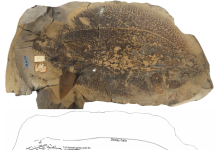
Cladoselache, a puzzling ancient shark-like fish
Loren E. Babcock, Professor in the School of Earth Sciences at The Ohio State University, introduces research on Cladoselache, a puzzling ancient shark-like fish.
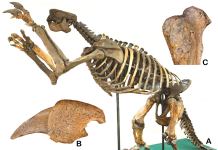
A gentle giant: Thomas Jefferson’s ground sloth
Professor Loren E. Babcock and Dr H. Gregory McDonald discuss the historical significance of palaeontology, focusing on key figures’ contributions to the field and their studies of the ground sloth, Megalonyx.
Orton Geological Museum
The Orton Geological Museum is administered within the School of Earth Sciences at The Ohio State University, Columbus, Ohio, USA. It maintains a large collection of fossils, rocks, minerals, meteorites, and building stones, many of them of historic as well as scientific importance.