
Rooftop solar panels could supply around 40% of the European Union’s electricity needs by 2050, according to a major new EU-wide study
The analysis shows that Europe’s rooftops represent a vast and largely untapped clean energy resource that could play a decisive role in achieving climate neutrality and reducing reliance on fossil fuels.
The study, published in Nature Energy, provides an assessment of rooftop solar photovoltaic (PV) potential across the EU, covering both residential and non-residential buildings at the individual-building level.
Mapping Europe’s solar rooftops
Researchers analysed the rooftops of approximately 271 million buildings across the EU using the latest European Digital Building Stock Model. By combining this high-resolution dataset with national administrative records and updated solar technology data, the study delivers a bottom-up picture of solar potential from single buildings to the entire continent.
The analysis estimates that EU rooftops could host around 2.3 terawatts peak (TWp) of solar PV capacity. If fully deployed, this capacity could generate roughly 2,750 terawatt-hours (TWh) of electricity per year using current technology. This would be enough to cover about 40% of electricity demand in a fully renewable EU energy system by mid-century.
Residential and commercial potential
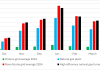
The study shows the difference between residential and non-residential buildings, highlighting the important role of larger structures. Residential rooftops account for around 1.8 TWp of potential capacity, while non-residential buildings contribute approximately 500 gigawatts peak (GWp).
Although non-residential buildings account for a smaller share of total capacity, their large, flat rooftops often allow higher power density. Buildings with roof areas of more than 2,000 square metres could host around 355 GW of solar capacity, making them particularly attractive for rapid deployment.
Supporting EU climate and energy targets
Rooftop solar could significantly support EU energy targets in the coming decades. By 2030, more than half of the EU’s solar capacity target of 700 GW could be met using non-residential rooftops alone.
In several Member States, including Cyprus, Finland and Denmark, non-residential rooftop installations could deliver 95% or more of the national solar targets set out in updated National Energy and Climate Plans. If the full rooftop potential were used, it would exceed the solar capacity required under many net-zero scenarios for 2050.
Despite its potential, rooftop solar remains underused across Europe. Currently, only around 10% of EU building rooftops are equipped with solar panels. Even so, rooftop systems already account for the majority of installed solar capacity, representing about 61% of the EU’s total PV capacity of 339 GW in 2024.
Buildings account for roughly 42% of EU energy consumption and 36% of energy-related greenhouse gas emissions, making them a central focus of climate policy. At the same time, household electrification remains low, with just over a quarter of household energy use currently powered by electricity.
Integrating solar into renovation and electrification
Given that most existing buildings are expected to remain in use through 2050, the study highlights the importance of integrating rooftop solar into renovation programmes. Solar installations can support the wider electrification of buildings, including the rollout of heat pumps and electric vehicle charging, while helping households and businesses cut energy bills.
EU policies are expected to accelerate uptake, particularly through the Energy Performance of Buildings Directive, which introduces solar requirements for new and renovated buildings. Initiatives such as RePowerEU and the European Solar Rooftops Initiative also align closely with the study’s findings.
Smarter energy planning
The publicly available building dataset and open-source analysis tools developed for the study provide policymakers, planners, utilities, and investors with a powerful resource. By enabling precise, building-level assessments, the research supports faster, fairer, and more targeted deployment of rooftop solar across Europe.