
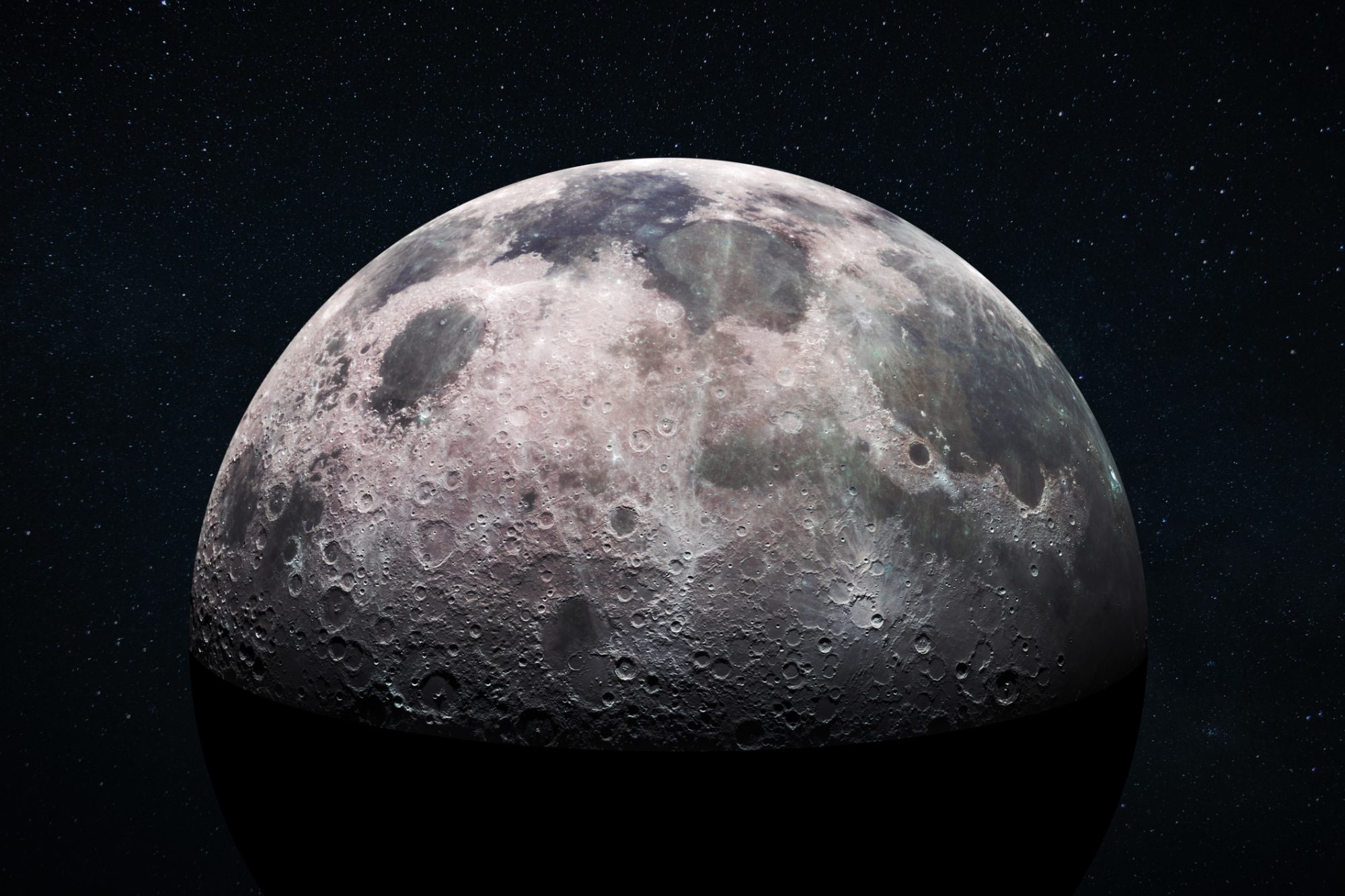
NASA has selected three new scientific investigations that will help deepen understanding of the Moon’s surface, interior, and radiation environment
These three Artemis payloads will fly as part of the agency’s Commercial Lunar Payload Services (CLPS) initiative and the broader Artemis campaign, with deliveries to the lunar surface planned for no earlier than 2028.
The experiments are designed to support both scientific discovery and future human exploration by improving knowledge of lunar terrain, thermal history, and radiation hazards. The Artemis payloads will be delivered by American commercial partners, continuing NASA’s strategy of working with U.S. industry to expand lunar exploration capabilities.
Advancing Luna science through commercial partnerships
CLPS allows NASA to send scientific instruments and technology demonstrations to the Moon using commercially developed landers. By doing this, there will be more frequent missions to support private-sector innovation and the development of a sustainable lunar economy.
The newly selected investigations were chosen through NASA’s Artemis payloads and Research Investigations on the Surface of the Moon program. All three experiments are site-agnostic, meaning they do not require a specific landing location to achieve their scientific goals. NASA will assign them to future CLPS delivery missions at a later date.
Mapping the moon’s surface in three dimensions
One of the selected Artemis payloads, the Emission Imager for Lunar Infrared Analysis in 3D (EMILIA-3D), will focus on understanding the Moon’s surface properties. The instrument combines a thermal imager with a stereo pair of visible-light cameras to create three-dimensional thermal models of lunar terrain.
By measuring how temperatures vary across the surface, EMILIA-3D will provide insights into the physical properties of lunar regolith, the fine, dusty soil that blankets the Moon. These data will help scientists interpret how heat moves through the surface and will support improved navigation and hazard assessment for future robotic and human missions.
Probing the moon’s interior heat
Another payload, Lunar Instrumentation for Subsurface Thermal Exploration with Rapidity (LISTER), will investigate the Moon’s internal heat flow. The instrument works by drilling beneath the lunar surface and stopping at intervals to measure temperature changes and the efficiency with which subsurface materials conduct heat.
A previous version of LISTER successfully operated on an earlier CLPS mission, drilling several feet into the Moon’s near side. The new investigation builds on that success and aims to measure heat generated by the Moon itself. These findings will help scientists better understand the Moon’s thermal evolution and geological history.
Understanding radiation on the lunar surface
The third payload, Site-agnostic Energetic Lunar Ion and Neutron Environment (SELINE), will examine the Moon’s radiation environment directly from the surface. For the first time, scientists will be able to study both incoming galactic cosmic rays and the secondary particles they produce when interacting with lunar soil.
This information is critical for assessing radiation risks to astronauts and equipment during long-term lunar missions. SELINE’s data will also contribute to a broader understanding of space weather and how radiation processes operate on airless planetary bodies.
Supporting the future of Artemis
All three if these Artemis payloads represent another step forward in NASA’s Artemis strategy, which aims to return humans to the Moon and establish a sustained presence there. By leveraging commercial partners and deploying targeted scientific instruments, NASA continues to expand knowledge of the Moon while laying the groundwork for safer, more informed exploration in the years ahead.