
UCL scientists grow lab-made mini-stomach organoids that mimic human organs, offering a breakthrough way to study and treat rare diseases
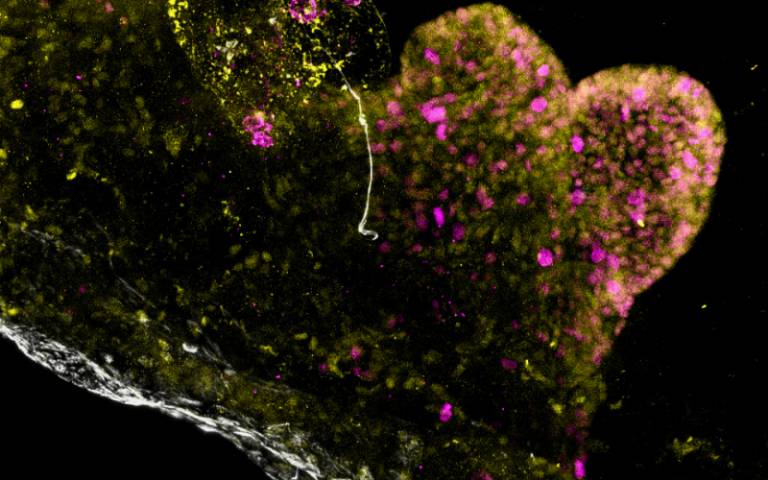
Researchers at University College London (UCL) have created miniature human stomach organoids, tiny, lab-grown models that replicate key regions of the stomach. These mini-stomach organoids give scientists an unprecedented tool to study rare genetic disorders, explore disease mechanisms, and test potential treatments. The breakthrough could transform research into rare diseases, paving the way for personalised therapies and improved patient outcomes.
The research is published in Nature Biomedical Engineering.
How are the mini-stomachs grown
These lab-grown mini-stomachs, called multi-regional assembloids, are the first to contain all major stomach regions—fundus, body, and antrum—enabling a comprehensive study of stomach function.
Together, these regions form the mucosa layer, which is key to digestion and hormone regulation.
To create the mini lab-grown stomachs, the researchers isolated stem cells from patient stomach samples and grew them in special laboratory conditions in a petri dish, forming organoids that mimic the behaviour of a human stomach.
They grew separate organoids for each of the three main stomach regions, then assembled them into a single structure, marking the first such attempt worldwide.
Each part kept its original features and communicated as in a full-sized stomach, even producing stomach acid. Researchers then used this technique to model a very rare genetic stomach disease, opening new possibilities for studying more common gastric disorders.
New hope for children with rare stomach disease
After confirming that the assembloid model worked, the researchers grew multi-regional mini-stomachs from the stem cells of children with a very rare stomach disease called Phosphomannomutase 2-associated Hyperinsulinism with Polycystic Kidney Disease and Inflammatory Bowel Disease (PMM2-HIPKD-IBD), which can severely impact digestion, blood sugar levels, and kidney function.
The mini stomachs allowed the researchers to test their hypothesis about what causes the disorder and test possible treatments. The benefits of testing treatments in this way include reducing the time required to obtain their approval for use in patients with PMM2-HIPKD-IBD. With the assembloid laboratory model derived from patients, researchers can generate useful data for clinical approval and accelerate the development and rollout of this new treatment.
Co-author Dr Kelsey Jones, consultant in paediatric gastroenterology at GOSH, said: “This is a major step toward personalised treatment for this complex genetic condition, showing how patient-focused research can benefit families.”
Expert insights on mini-stomach breakthroughs
Senior author Dr Giovanni Giobbe (UCL Great Ormond Street Institute of Child Health) said: “Traditional organoids and animal models fail to replicate the regional architecture and functional diversity of the human stomach.
“Recent advances in gastric assembloid technologies offer the potential to model region-specific physiology and disease phenotypes in vitro.
“Our multi-regional gastric assembloids replicate the antrum-body-fundus structure and function, including acid secretion, and are uniquely positioned to unravel disease mechanisms in rare gastric disorders.”
Co-Senior author Professor Paolo De Coppi, UCL Great Ormond Street Institute of Child Health, and a consultant paediatric surgeon at GOSH, said: “With these newly developed miniature stomachs, we have now been able to test treatments for a very rare gastric condition. But these are just preliminary findings, and more research is required.
“This is a major step forward and could have implications for much more common diseases of the stomach lining, which millions of people suffer from.”