

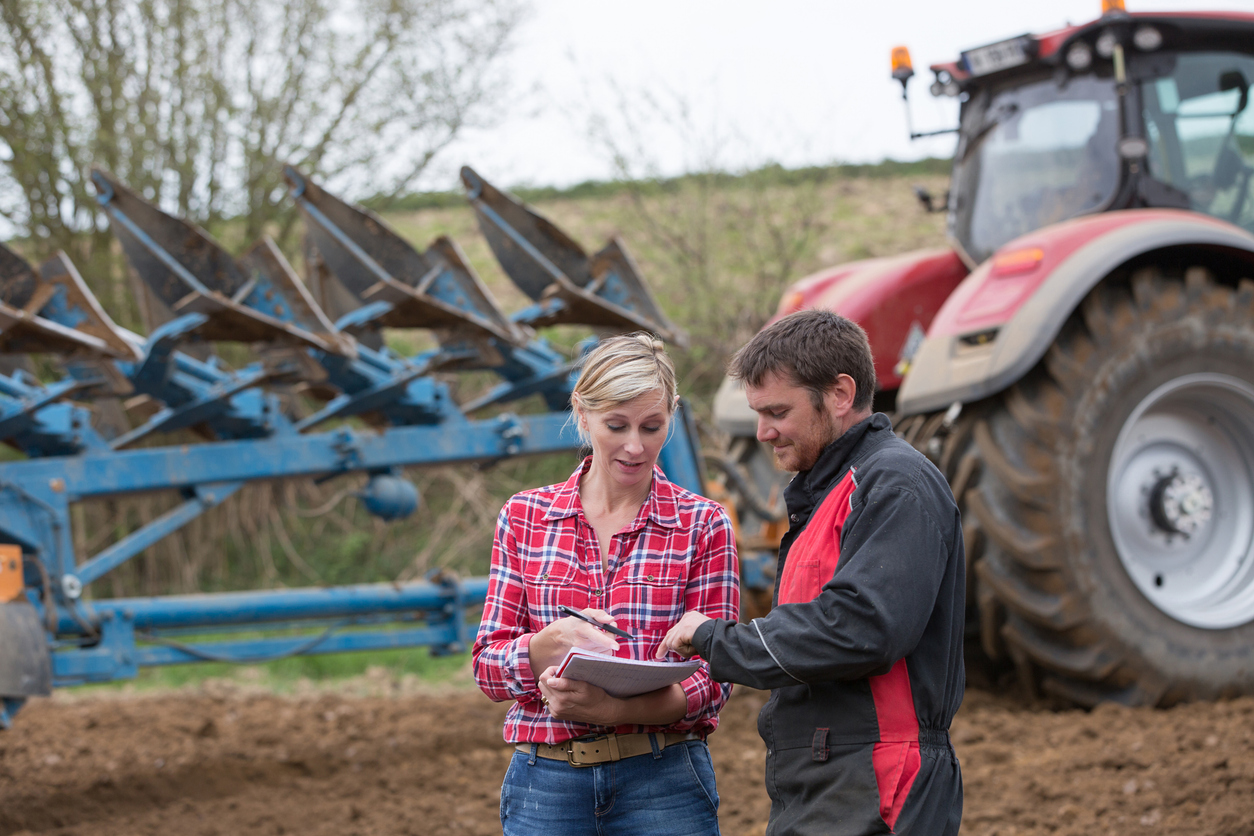
This special report discusses one of the novel avenues and actors that have emerged as sources of knowledge and guidance for new farmers, in addition to the traditional avenues and actors and how they have transitioned due to changing actor/institution and knowledge/power configurations
Consulting services as a form of knowledge extension impact how new farmers in the agricultural system acquire the necessary knowledge and skills to navigate initial complex questions and pursue their operations successfully within the Alberta context. This is important to explore as the ability of new farmers to acquire the necessary knowledge and skills ultimately influences the rate of attrition within the agricultural system and the long-term sustainability of their operations.
How local and cultural knowledge is generated and transferred between experienced farmers, other actors, and new farmers has been identified as a key factor in the development of agriculture. (1) Direct help from government experts does not seem to be sufficient in guiding new farmers through perplexing problems during their start-up phase. By contrast, the emergence and visibility of third-sector social organizations illustrates how “society is answering the problem of supporting a new generation of farmers.” (2)
The process of generating and transferring this knowledge between third-sector social organizations and new farmers can be classified as agricultural extension. Extension can be viewed as a system used to assist both new farmers and experienced farmers in improving production methods through education. Extension can also be viewed as a means to enable an organized exchange of knowledge and skills between various actors, for example, between new farmers and experienced farmers. Empirical evidence suggests the absence of a monopoly on expertise related to agricultural production and food systems. (3)
All stakeholders within the food system, including producers, processors, business specialists, etc., have sufficient local and practical expertise to contribute to knowledge generation and transfer within the agricultural industry. (4-5) Knowledge and skill sharing is, therefore, not restricted to simply being funnelled through government actors but can be achieved through social interaction and collective learning by all the actors involved. (3)
Knowledge and skill sharing also does not have to be treated as a “prescribed package of practices” transferred to farmers for ready adoption, but as a collection of ideas, experiences, and suggestions that are drawn upon as needed. (3) The context of knowledge transfer and skill sharing can also shift from the government or academic setting to farm fields, processing plants, and other parts of the food system where agricultural production occurs on a regular basis. This leads to the empowerment of new farmers in the agricultural system. (3)
Government or academic institutions provide one outlet through which the necessary knowledge and expertise are transferred. This usually entails academic experts who research scientific innovation, who in turn pass along that knowledge to new and experienced farmers for application in their agricultural practices in alignment with their practical conditions. However, agricultural extension can be a highly localized process or a centralized organized process depending on the epistemic culture of the given community or geographical context. (6)
Consulting services as a form of extension and knowledge source available for new farmers within the agricultural system
Consultants have now also become actors in the agricultural system that fill in the gaps for government extension experts. They work with clients (new farmers) on various production issues, such as price data analysis, soil analysis, water analysis, and building connections within the agricultural industry. Their work extends to helping new farmers eventually scale up their operations and diversify their operations, whether that entails producing new commodities or adding supplemental business endeavours, such as agritourism. However, their work also extends to help new farmers navigate the vastness of all aspects of the industry and to help them overcome hurdles, such as filling out the necessary regulatory paperwork and accounting aspects. One consultant further details this:
I also worked on the production side. A lot of times when new people were getting into [the industry], they didn’t know where to start […] In a lot of cases, they were considering a certain avenue, and I would connect the dots or fill in the blanks [for them]. (Consultant)
Another consultant further echoed the significant role they play in helping producers get their products to market:
My specialization is helping them get their products to market. I find that a lot of these people have [a talent] for innovation, but they know nothing about the market. That’s where they need help—with the business aspect of it. They’re passionate about their products, but they don’t understand the whole distribution system. They don’t have relationships in the marketplace. (Consultant)
In addition to market access and business planning, many new farmers struggle with the financial aspects of their operations. This is primarily regarding securing grants and navigating loan applications, which highlights the limitations to the work that consultants are willing to do. Consultants are hesitant to assist their clients with grant writing and loan applications because of ethical issues. One consultant further explained:
I will help facilitate business plans, but I want them to do the bulk of the work because they’re the ones who are going to be sitting across [the table] from that bank [advisor] or having to defend their business. They need to be engaged […]. I think for a lot of them, that’s the hardest. […] They’re very passionate about the product, but they don’t really know the ins and outs of the business side of things. They don’t know the proper language—they don’t know the proper culture of business. (Consultant)
Nonetheless, consultants have also become actors filling in the gaps for agricultural extension experts. Participants stated that it is common for consultants to facilitate webinars and workshops in collaboration with municipalities. These webinars and workshops share a vast range of knowledge, including the risks and challenges involved in production and how to navigate direct market access. Workshops are also tailored to specific audiences, such as horticulturalists who are interested in learning how to plant and grow a specific berry.
Over time, these collaborations have snowballed into adjacent municipalities and counties, catalyzing skill-sharing and resource-sharing opportunities among producers. These collaborations have also driven interest in the local food industry, as they have mobilized municipal and county authorities to share knowledge on how to further develop and grow the local food industry and how to help new farmers. One consultant explained the structure of the collaboration with municipalities as follows:
I also worked with a number of municipalities, [especially] rural municipalities […] They had questions that their staff didn’t have any expertise [on]. So I would be that [expert for them]. They didn’t have to hire anybody as a staff member to do that. They would just put me on contract for six months. (Consultant)
An evolving form of extension within the agricultural system
Regarding the practice of consulting, empirical evidence confirms that one-to-one consultant farmer interactions are still considered one of the most effective extension methods in agriculture. (7) The increasing number of registered consultants reflects their increasing prominence in providing extension services within the agriculture industry. (8)
In addition to helping new farmers with production aspects and marketing, consultants are now playing an increasingly critical role in assisting them with policy requirements, technological adoption, and sustainability measures. (9) Since some farmers are more reluctant than others to share their skills and knowledge with fellow farmers, consultants provide these new farmers with an opportunity to maintain their competitive advantage. (8)
Traditionally, consultants have been viewed as representing the top-down model of extension. In this model, consultants are viewed as having power, acknowledged as the technical experts in the relationship, and the new farmers are considered individuals who are dependent on the expertise of the consultant. However, the credibility of a consultant is now attributed to their relationship with the individual farmer, strengthened by their local knowledge and on-site, in-person interactions with their clients. (10) The relationship between a consultant and farmer must be mutual in understanding. The consultant should empathize with the farmer and understand their perspectives while giving expert advice. (9) Viewing consultants as impartial and trustworthy is a transition in thinking in comparison to how government extension experts are viewed as prescriptive, impersonal, demanding, and authoritative. (11)
Furthermore, scholars have confirmed the importance of farmers being engaged in the consultation process. (9) Consultation should operate in a partnership model, where both the consultant and the farmer share their expertise and knowledge to determine joint decisions on how to meet the needs of the farmer. Consultants should be agents who guide and steer the decision-making process while allowing the farmer to conduct the bulk of the work. In other words, they see themselves “as helping to advise farmers as to the pros and cons in their farming systems.’’ (9)
References
- Carolan, M. (2008). More-than-representational knowledge/s of the countryside: How we think as bodies. Journal of the European Society for Rural Sociology, 48(4), 408-422.
- Monllor, N. (2012). Farm entry: A comparative analysis of young farmers, their pathways, attitudes, and practices in Ontario (Canada) and Catalunya (Spain). Retrieved from https://www.accesstoland.eu/IMG/pdf/monllor_farm_entry_report_2012.pdf
- Carolan, M. (2016). Alternative agri-food networks. In M. Carolan (Ed.), The sociology of food and agriculture: Second edition (295-319). New York, NY: Routledge.
- Carolan, M. S. (2006). Sustainable agriculture, science and the co-production of ‘expert’ knowledge: The value of interactional expertise. Local environment, 11(4), 421-431.
- Collins, H.M., Evans, R. (2002). The third wave of science studies: Studies of expertise and experience. Social Studies of Science, 32(2), 235-296.
- Van Assche, K., Hornidge, A. (2015). Rural development: Knowledge and expertise in governance. Wageningen, NL: Wageningen Academic Publishers.
- Kountios, G. (2022). The role of agricultural consultants and precision agriculture in the adoption of good agricultural practices and sustainable water management. International Journal of Sustainable Agricultural Management and Informatics, 8(2), 144-155.
- Owolabi, A. O., Kolawole, A. E., Ajala, A. O., Akangbe, J. A., Obaniyi, K. S., Adebimpe, A. T., Adeniyi, V. A. (2019). Grassroot mechanized farming: the role of agricultural extension providers. International Journal of Civil Engineering and Technology, 10(2), 176-182.
- Ingram, J. (2008). Agronomist–farmer knowledge encounters: An analysis of knowledge exchange in the context of best management practices in England. Agriculture and Human Values, 25, 405-418.
- Ingram, J., Morris, C. (2007). The knowledge challenge within the transition towards sustainable soil management: An analysis of agricultural advisors in England. Land Use Policy, 24(1), 100-117.
- Dentzman, K. (2024). Reflexivity and certified crop advisors’ knowledge paradigms as related to pesticide resistance management. Journal of Rural Studies, 108, 103286.
- Tymczak, A. (2025). Navigating Challenges and Opportunities in Alberta’s Small-Scale Agricultural Sector: Pathways for New Entrants, Knowledge Transfer, and Institutional Barriers. University of Alberta. DOI: [10.7939/81811] https://ualberta.scholaris.ca/items/88b0ab26-c882-4aecbaf1-cd759c0ca388