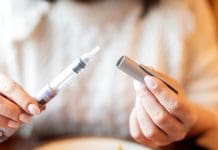

A simple finger-prick blood test can now detect Alzheimer’s disease biomarkers with high accuracy. This accessible method enables at-home sample collection and could transform diagnosis and research participation
This major international breakthrough, backed by the National Institute for Health and Care Research (NIHR), underscores the potential for finger-prick blood tests to revolutionise Alzheimer’s diagnostics by making testing more accessible outside clinical settings.
Published in Nature Medicine, the study found that key protein markers of Alzheimer’s, including p-tau217, GFAP and neurofilament light (NfL), extracted from dried finger-prick samples closely matched results from standard testing methods.
Alzheimer’s biomarkers measurable via blood
The DROP-AD project involved seven European medical centres, including the University of Exeter, and confirmed that finger-prick blood collection reliably quantifies important Alzheimer’s markers. These findings suggest straightforward, scalable diagnostics for Alzheimer’s.
Diagnostic confirmation of Alzheimer’s traditionally requires invasive or costly procedures. The blood biomarker tests shown in this study, however, promise more accessible, accurate detection, making effective testing available to more people.
Professor Nicholas Ashton, senior director of Banner’s Fluid Biomarker Program and lead investigator of the study, said: “This development could fundamentally change Alzheimer’s research by providing a method to measure the same biomarkers used in clinical detection via a finger prick collected at home or in community settings.
“While we’re still years away from clinical use, we’re opening doors to research that was previously impossible – studying diverse populations, conducting large-scale screening studies, and including communities that have been historically underrepresented in Alzheimer’s studies.
“Ultimately, we are moving toward a pathway of treating people for Alzheimer’s disease before symptoms emerge. If this trajectory continues, we will need innovative ways to identify eligible individuals who are not routinely presenting in clinical settings. This work represents one such approach in that direction, and further validation remains.”
Finger-prick enables broader Alzheimer’s research
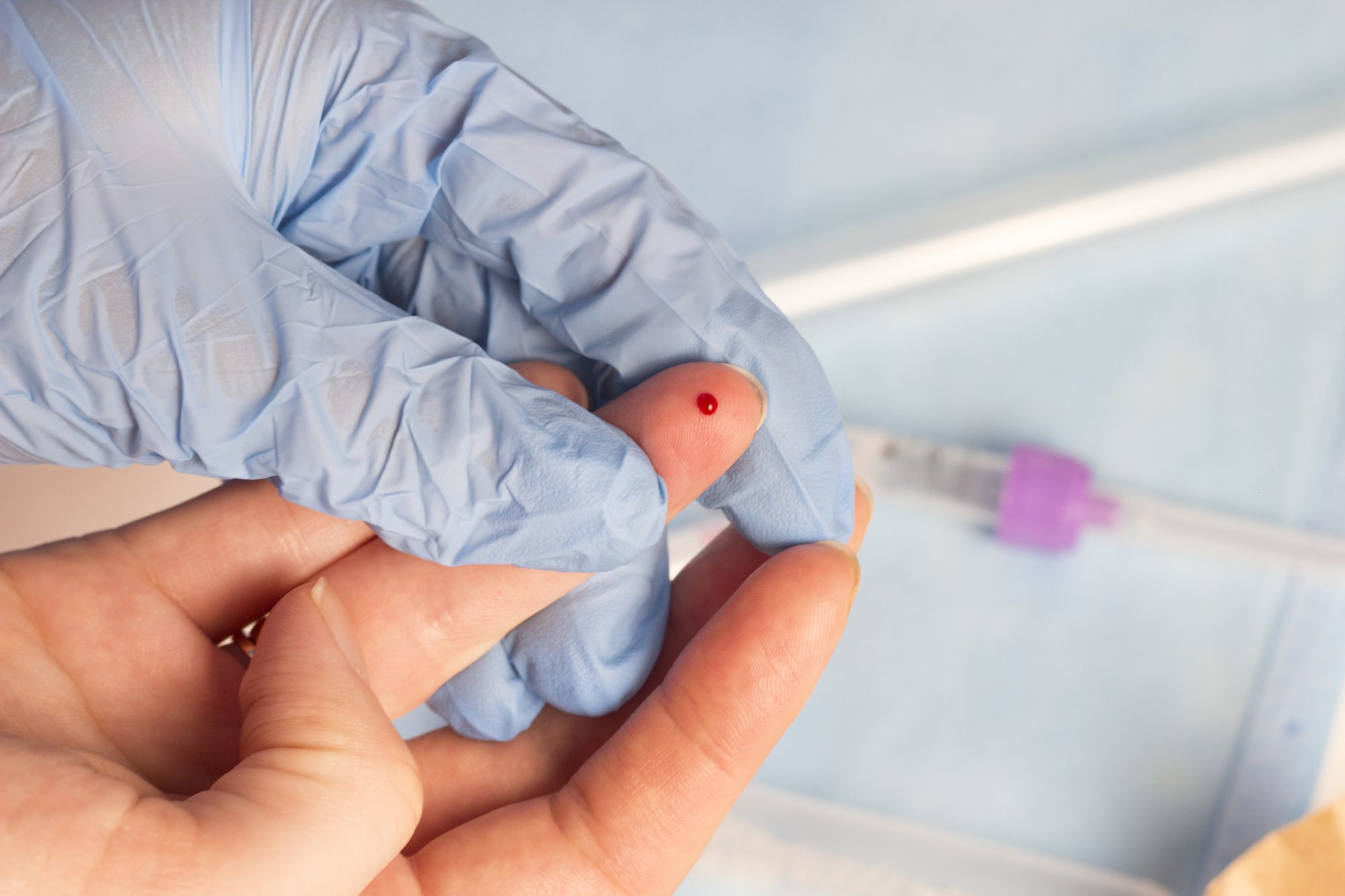
The researchers collected a few drops of blood from participants’ fingertips, dried them on a card, and searched for proteins associated with Alzheimer’s disease and brain changes in 337 participants.
In the study, p-tau217 levels from finger-prick samples showed strong correlation with standard tests. Alzheimer’s-linked changes in spinal fluid were identified with 86% accuracy, highlighting the approach’s effectiveness and clinical research significance.
The University of Exeter played a key role, recruiting participants for the PROTECT-UK study and acting as the only site to test self-collection capabilities. Participants successfully collected their own finger-prick samples without any guidance after watching the trained staff and instructions.
Professor Anne Corbett, Professor in Dementia Research at the University of Exeter, said: “What excites me most is that this work makes this type of research far more accessible. We’re moving toward a future where anyone, anywhere, can contribute to advancing our understanding of brain diseases. This isn’t just a technical advancement – it’s a paradigm shift in how we conduct neuroscience research.”
Co-author Professor Clive Ballard, Professor of Age-Related Diseases at the University of Exeter Medical School, added: “Our ongoing work will determine whether this could also be a valuable way of identifying people in the community who would benefit from more detailed diagnostic tests for Alzheimer’s disease.”
Professor Marian Knight, Scientific Director for NIHR Infrastructure, said:
“This type of research – with the potential to transform diagnosis and care for people with Alzheimer’s disease – showcases the importance of NIHR infrastructure funding and the expertise of its researchers supporting internationally collaborative commercial research. The future potential to enable testing in different settings outside of hospital clinics is hugely exciting.”