Europe’s wildfire seasons are becoming longer, more destructive, and increasingly unpredictable, according to the latest annual report from the Joint Research Centre (JRC)
Although 2024 recorded more moderate fire activity than the extreme conditions in 2023, the newly released analysis shows a persistent upward trend reshaping fire management strategies across the continent.
A moderately severe 2024
The 2024 wildfire season ended with 383,317 hectares burned across Europe, the Middle East, and North Africa. While significantly lower than the 500,000 hectares recorded in 2023, the figure still exceeds the 17-year average of 354,185 hectares. Intermittent rainfall during spring and summer helped limit what could have been a far worse season.
Across the 8,343 fires reported in EU Civil Protection Mechanism (UCPM) countries, Bulgaria, Greece, Italy, Portugal, and Spain were among the most affected. Together, they accounted for 334,940 hectares of burnt land. Beyond the EU, Albania, Bosnia and Herzegovina, North Macedonia, Türkiye, and Ukraine suffered the most extensive losses.
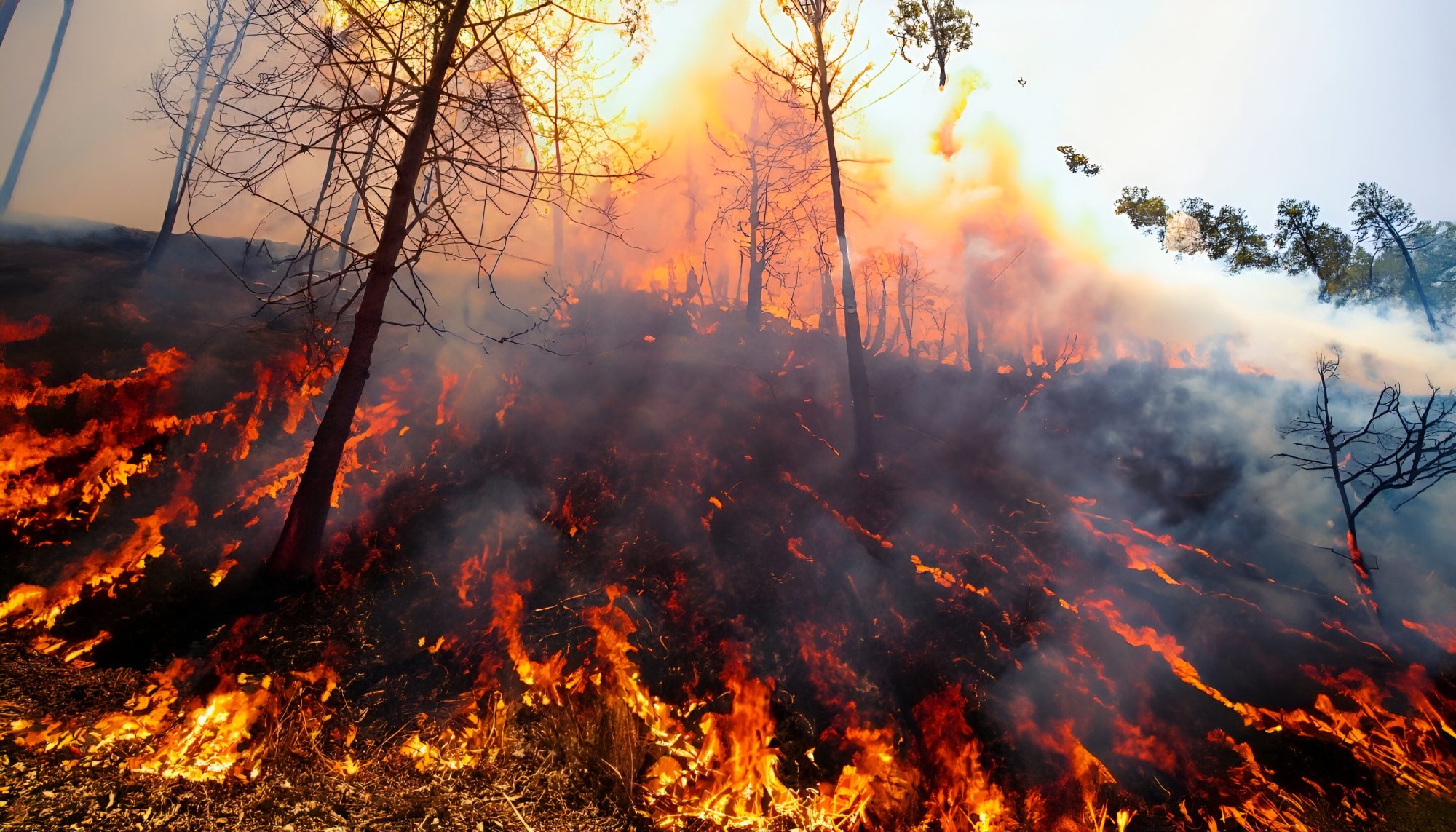
Late-season fires played a particularly destructive role. In September alone, a cluster of major wildfires in the Iberian Peninsula burned 100,000 hectares in just one week.
The Balkans also experienced widespread damage, while Ukraine saw half of the total area burned within UCPM countries, mainly in regions close to the combat frontlines.
Longer season, harsher conditions
Data from the European Forest Fire Information Service (EFFIS) confirms that Europe’s wildfire landscape is shifting rapidly. The traditional fire season, once confined to early June through mid-September, is expanding on both ends. Severe fires are now emerging earlier in spring and persisting well into autumn.
This extension is driven by more frequent and intense heatwaves, reduced soil moisture, and prolonged droughts, conditions that create ideal environments for fast-spreading, hard-to-control fires. While many fires remain small, the proportion of significant, high-impact events is rising, stretching national response capacities and increasing the human, ecological, and economic toll.
A turning point
Early data from the 2025 fire season indicate that Europe may be facing its most severe wildfire year since EFFIS began recording data. By mid-year, more than 7,200 fires had been detected across the 37 UCPM countries.
Over 1 million hectares have already burned within the EU alone, which is twice the total area lost in 2024 and roughly equivalent to the size of Lebanon.
Fire danger maps for August 2025 show severe risk levels across the Iberian Peninsula and other southern regions, showing how climate-driven extremes are accelerating the pace and scale of wildfire events.
Strengthening Europe’s preparedness
The JRC plays a key role in supporting firefighting and prevention efforts by providing daily updates on fire danger levels and near-real-time wildfire data. These insights help national authorities, emergency responders, researchers, and environmental organisations prepare for and respond to escalating fire threats.
EFFIS, part of the Copernicus Emergency Management Service run by the JRC, contributes essential Earth observation and weather-based assessments before, during, and after wildfire events. Since launching in 2000, it has become a cornerstone of Europe’s wildfire preparedness.
Meanwhile, the EU Civil Protection Mechanism continues to expand its capacity. The rescEU air fleet has recently doubled in size, adding more planes, helicopters, and specialised ground crews to support countries facing overwhelming fire outbreaks.
As Europe confronts longer, more intense fire seasons, experts emphasise the need to shift from reactive firefighting to proactive risk management. Landscape planning, nature-based solutions, and integrated prevention strategies will be key to reducing vulnerability and adapting to the new wildfire reality that is rapidly taking shape across the continent.