
The role of evidence and science-based solutions for global climate negotiations
The United Nations Framework Convention on Climate Change (UNFCCC) is an international treaty that entered into force in March 1994 with a total of 198 parties. The ultimate objective of the UNFCCC is to stabilize greenhouse gas concentrations at a level that would prevent further dangerous human-induced interference with the planet’s climate system.
The Conference of the Parties (COP) is the decision-making body of the UNFCCC, holding annual meetings that bring the Parties together to review the implementation of the Convention and agreements (e.g. Kyoto Protocol and Paris Agreement). These annual meetings allow the Parties to negotiate and adopt decisions that advance effective climate action, policies, and strategies.
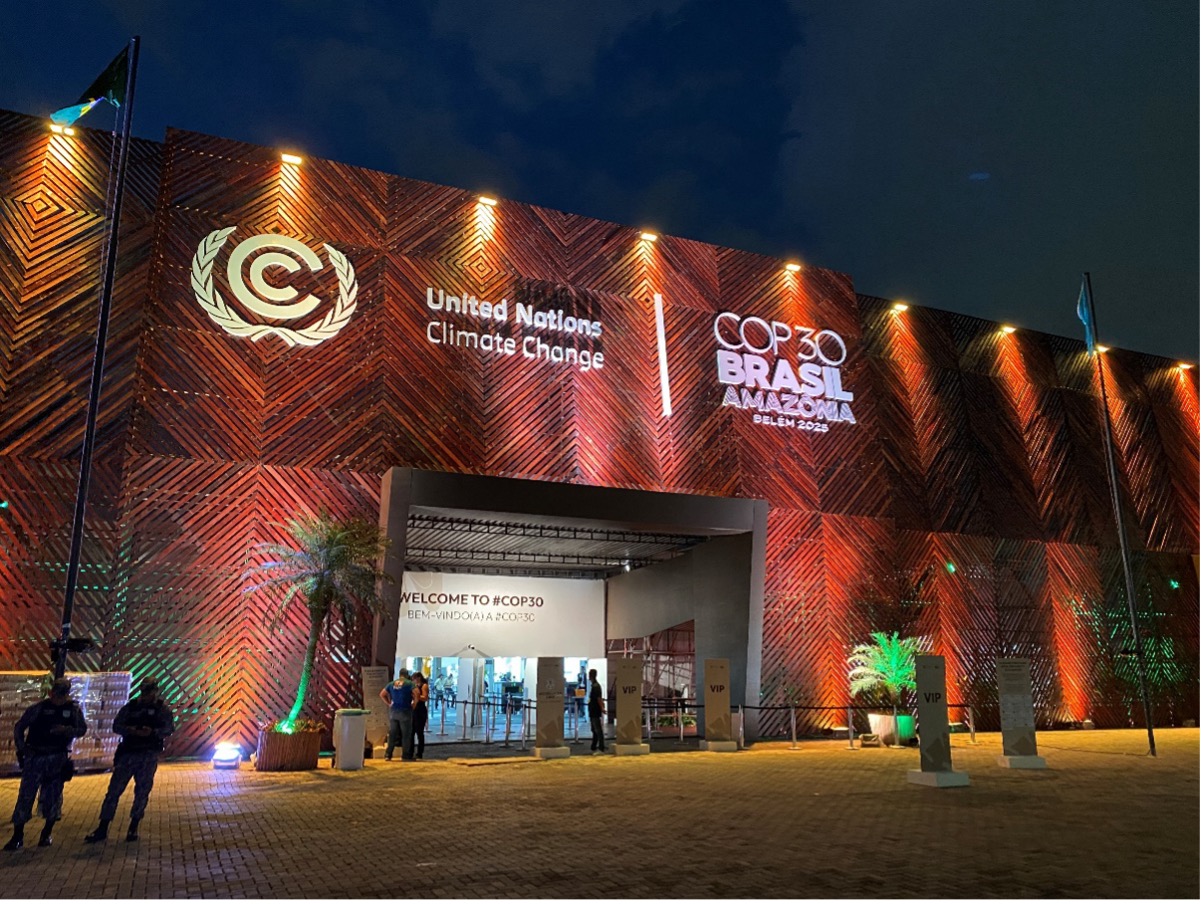
COP30, held from 10–21 November 2025 in Belém, Brazil, marked the 30th session of the UN Climate Change Conference and the first ever hosted in the Amazon region. This location was chosen to emphasize the urgency of protecting the world’s largest rainforest, which plays a critical role in removing carbon dioxide and stabilizing global climate.
Coming ten years after the Paris Agreement, COP30 was seen as a pivotal checkpoint for assessing progress toward limiting global warming to 1.5°C. The conference focused on accelerating climate commitments through the “Action Agenda”, prioritizing finance, mitigation, adaptation, and resilience.
The Planetary Science Pavilion: Science at the heart of COP
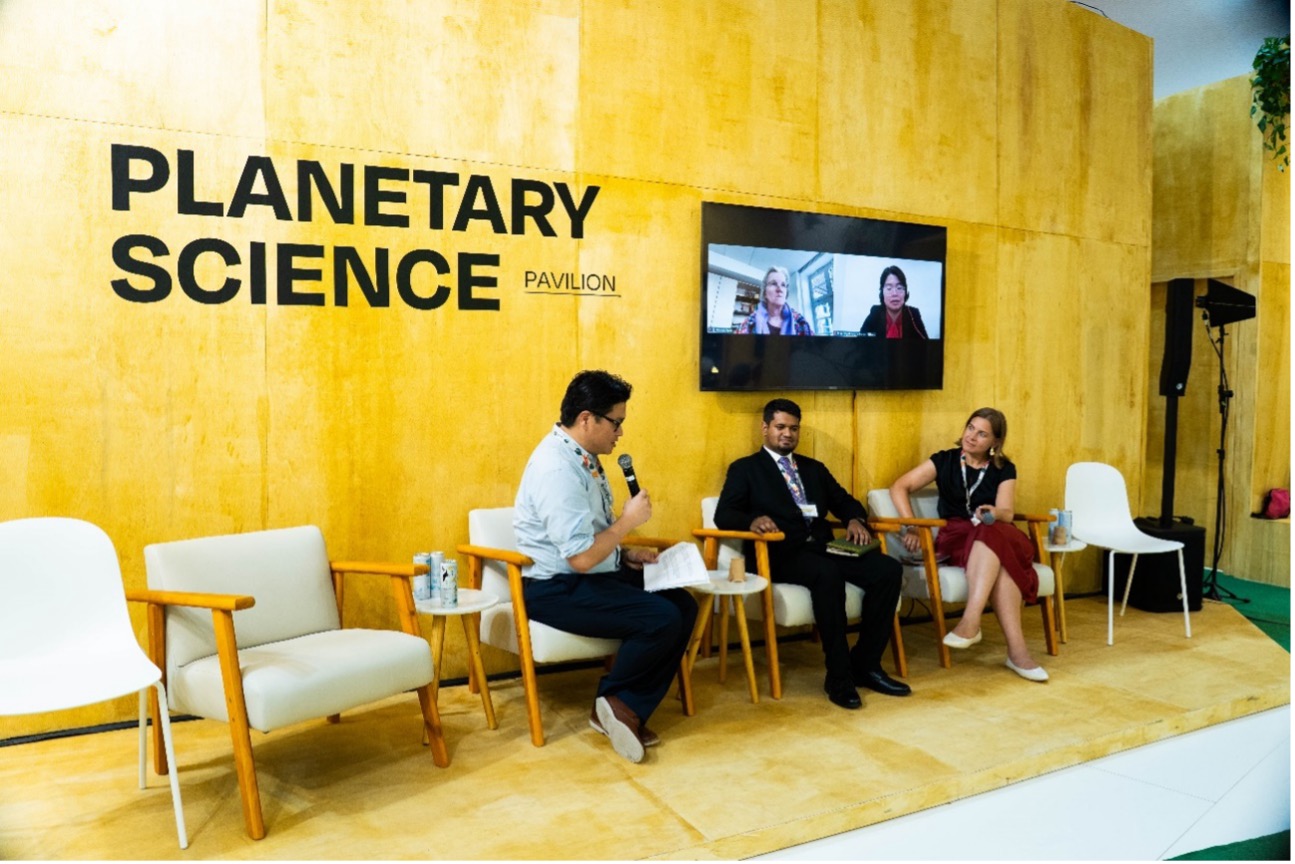
Mandated by the COP30 Presidency to introduce a space designed to integrate science directly into climate negotiations, the first Planetary Science Pavilion represented a way to ensure that negotiation decisions were informed by the best available scientific facts and evidence. The pavilion was an official hub for scientific exchange, offering up-to-date climate data, expert briefings, and high-level dialogues between researchers and decision-makers.
Flagship reports such as the 10 New Insights in Climate Science (Future Earth, The Earth League, WCRP, 2025) were presented, and a variety of expert panels were hosted. These activities were conceived to strengthen evidence-based decision-making and build trust between the scientific community, civil society, and political leaders.
The pavilion was both a venue for knowledge sharing and an active participant in negotiations, enabling scientists to respond quickly to developments and issue timely statements when progress was insufficient. Statements were delivered directly to the President of COP30, André Aranha Corrêa do Lago, by Professors Johan Rockström and Carlos Nobre, to emphasize the urgency to stay within the 1.5°C Paris Agreement target.
Moreover, the scientists expressed significant disappointment over the lack of ambition in the final “Mutirão” text without a pathway to phase out fossil fuels. The statement declared it “impossible to limit warming to levels that protect people and life without phasing out fossil fuels and ending deforestation.” These words carried a powerful message and reflected the intensified voice of science during COP30. They showed that the Planetary Science Pavilion and its associated scientists were not passive observers. Instead, they were active participants who spoke out when negotiations failed to deliver the ambition required.
The success of the Planetary Science Pavilion was made possible through collaboration among premier scientific networks and renowned institutions, led by the Potsdam Institute for Climate Impact Research (PIK), The Earth League, Future Earth, and Climate Service Center Germany (GERICS), alongside other global partners committed to advancing climate science.
Special thanks go to the sponsors whose support and resources enabled this pioneering initiative. Their contributions helped create this space where knowledge could directly inform policy and reinforce the importance of science-driven solutions in tackling the climate crisis.
GERICS at COP30: Leadership and engagement in the Blue Zone
The Planetary Science Pavilion was the focal point of GERICS’ presence in the Blue Zone at COP30. GERICS contributed to shaping adaptation strategies, integrating systemic risk approaches, and promoting user-oriented climate services. Over the two-week conference, GERICS organized eight side-events across thematic days such as adaptation, biodiversity, justice, and food systems. These events showcased climate services and applied science to support implementation and enable effective adaptation and mitigation strategies, demonstrating how scientific knowledge can be translated into practical tools for decision-makers.
Association with The Earth League
Additional COP30 side-events at the Planetary Science Pavilion were led by The Earth League. The Earth League is a voluntary alliance of leading scientists and institutions working on climate change, planetary processes, and sustainability issues. GERICS is closely associated with The Earth League as an Institutional Member.
The Earth League was established to provide interdisciplinary scientific voices at the speed required to address urgent planetary challenges. Its mission is to respond to crises through science-based advocacy and transformative strategies, ensuring that knowledge informs decision-making at the highest levels.
Designed to be agile, The Earth League produces timely scientific statements and publications on critical topics, including actionable insights from the latest climate science. These outputs aim to guide policymakers and stakeholders on occasions such as the UNFCCC COP.
During COP30, this was visible through joint initiatives such as the launch of the 10 New Insights in Climate Science (Future Earth, The Earth League, WCRP, 2025) and the publication of a Commentary in the journal One Earth on missing the critical decade of action (Rockström et al. 2025). These contributions provided negotiators and stakeholders with actionable knowledge at a critical moment for climate diplomacy.
As co-host of The Earth League Secretariat alongside PIK and Arizona State University (ASU), GERICS helps coordinate these efforts and advance collaborative projects that strengthen the role of science in global governance.
Looking ahead: The future of science integration in climate governance
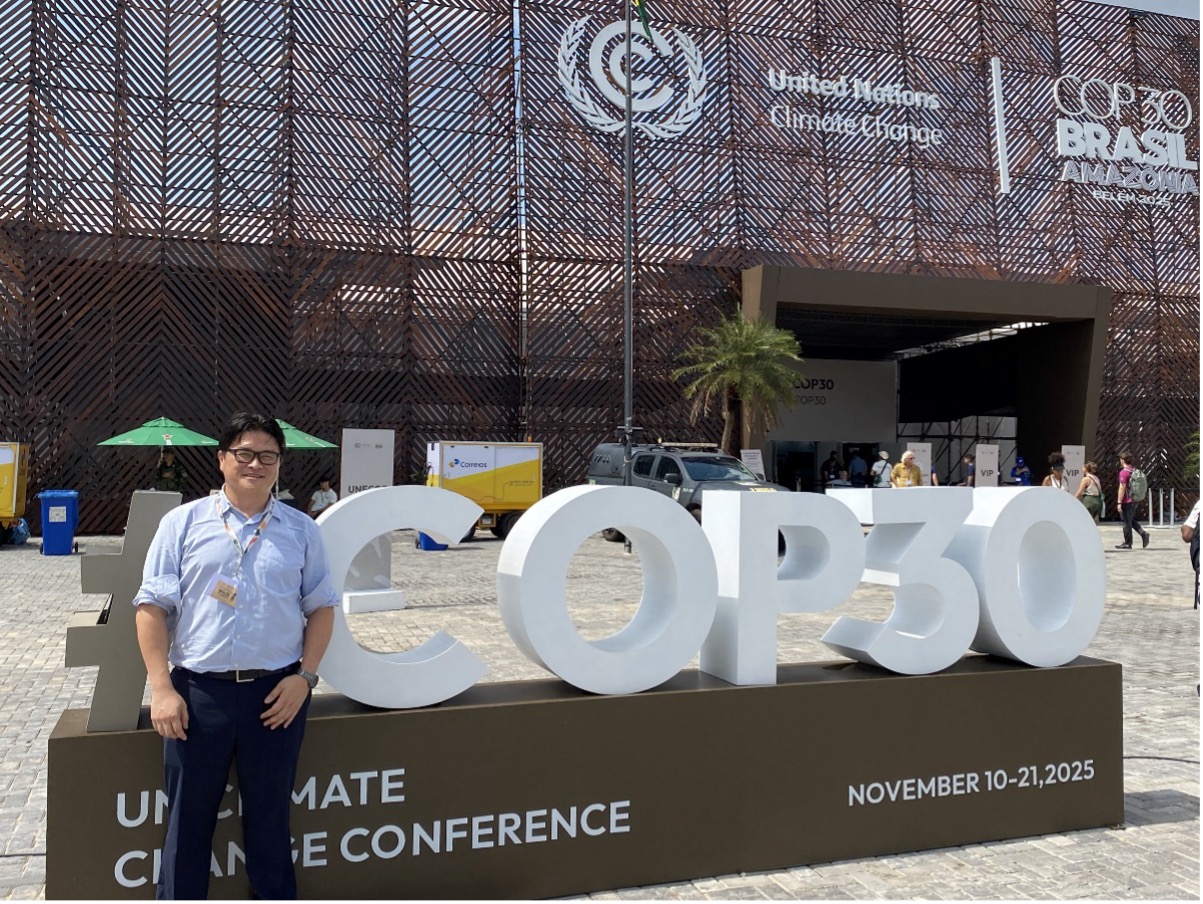
Credit: Henry Wu
COP30 showed that embedding science into negotiations is possible and necessary. GERICS will continue to strengthen science-policy connections by scaling climate services, advancing adaptation strategies, and producing timely scientific statements to guide decision-making.
The priority now is to move from dialogue to delivery, with critical steps highlighted by scientists during COP30 demonstrating that the world cannot keep 1.5°C within reach without bringing down the emissions curve immediately and accelerating the phase-out of fossil fuels alongside the protection of nature.
The Planetary Science Pavilion offers a blueprint for future COPs. It was clear that collaboration and science-based evidence can help shape global climate governance. Sustaining this momentum beyond COP30 is essential to turn knowledge into action and achieve real progress toward climate goals.
Further reading
Henry C. Wu 1 (https://orcid.org/0000-0001-8975-5917)
1 Climate Service Center Germany (GERICS), Helmholtz-Zentrum Hereon GmbH, Hamburg, Germany
References
Future Earth, The Earth League, WCRP (2025). 10 New Insights in Climate Science 2025/2026. Stockholm. doi:10.5281/zenodo.17328963
Future Earth International: 10 New Insights in Climate Science for 2025. Press Conference with the UNFCCC. https://unfccc.int/event/future-earth-international-10-new-insights-in-climate-science-for-2025
Planetary Science Pavilion Homepage. https://planetarysciencepavilion.org/
Planetary Science Pavilion. Statement on state of COP30 Negotiations. https://planetarysciencepavilion.org/2025/11/19/scientists-statement-on-state-of-cop30-negotiations-november-19-2025/
Planetary Science Pavilion. Scientists’ response to the text of Mutirão. https://planetarysciencepavilion.org/2025/11/21/scientists-response-to-the-text-of-mutirao-on-friday-november-21/
GERICS represented at the ‘Planetary Science Pavilion’ in the Blue Zone (with video impressions). https://www.gerics.de/about/news_and_events/news/119228/index.php.en
Recordings of GERICS side events at the Planetary Science Pavilion of COP30. https://www.gerics.de/about/news_and_events/news/119576/index.php.en
The Earth League. About. https://the-earth-league.org/about/
Rockström, J., Schlosser, P., Bhowmik, A.K., Cremades, R., Donges, J.F., Dyke, J.G., Ebi, K.L., Heilemann, A., Jacob, D., Mirazo, P., Ramírez, D.M., Nakicenovic, N., Otto, I.M., Prettenthaler, F., Ranganathan, J., Schellnhuber, H.J., Warren, R., Wu, H.C.. Living beyond limits: Consequences of missing the decisive decade for preserving our planet’s life-supporting systems, One Earth, 2025, 101527, ISSN 2590-3322, https://doi.org/10.1016/j.oneear.2025.101527