
A major new study has revealed just how vital Scots pine is to the UK’s woodland biodiversity, showing that no single alternative tree species can replace the role it plays
Researchers found that as many as 23 different tree species would be needed to support just over 40% of the wildlife currently associated with Scots pine.
Led by the James Hutton Institute in collaboration with the RSPB, Royal Botanic Garden Edinburgh, and the Woodland Trust, the research examined whether increasing tree species diversity could strengthen biodiversity resilience in Scots pine forests.
A keystone of UK forests
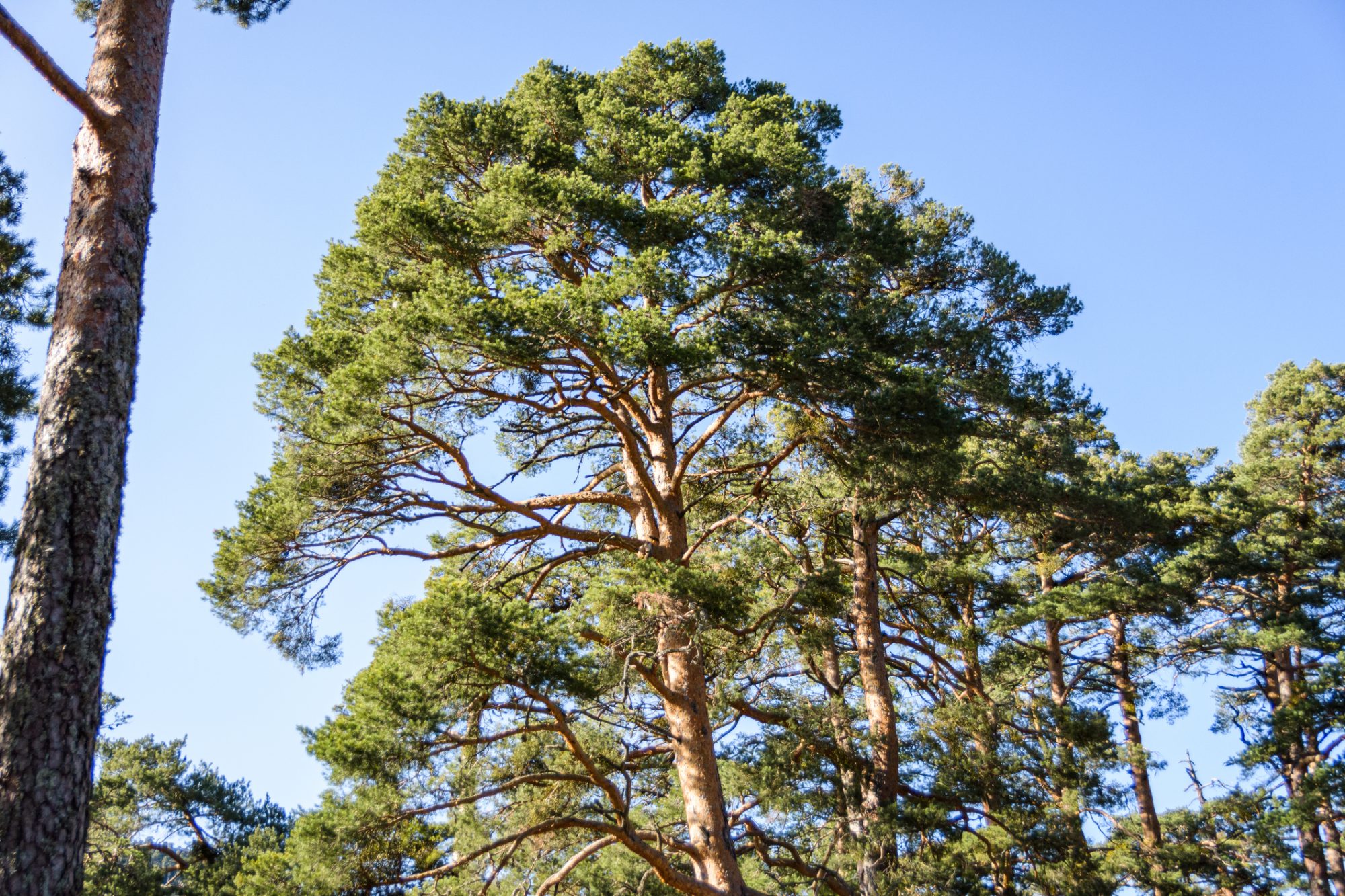
Scots pine is the most widespread and economically important native conifer in the UK. Other than its commercial value as a widely used softwood, it forms the backbone of distinctive woodland ecosystems, particularly in Scotland.
These forests support a wide range of plants, fungi, and animals that rely on Scots pine for food, shelter, or reproduction.
Scots pine woodlands are increasingly under pressure from climate change, pests, and diseases. This has raised questions about whether planting a wider range of tree species could help safeguard biodiversity if Scots pine declines.
Mapping an entire ecosystem
To address this, researchers created the first comprehensive catalogue of species associated with Scots pine in the UK. The list identified 1,589 species that use Scots pine in some way.
These included 17 bird species, 15 mammals, 130 bryophytes (mosses and liverworts), 468 lichens, 539 fungi, and 420 invertebrates. Many of these species are highly specialised. More than 220 were identified as obligates, meaning they depend entirely on Scots pine and cannot survive without it.
This level of dependency highlights the species’ ecological role and the difficulty of replacing it.
Can other trees fill the gap?
The team then compared the non-obligate species associated with Scots pine with those of 47 other UK tree species. The aim was to see how much of Scots pine biodiversity could be supported if alternative trees were planted.
The results showed that even the most subtle alternatives performed poorly by comparison. Sessile and pedunculate oak, European beech, and silver or downy birch each supported only around 15% of the biodiversity associated with Scots pine.
It was also discovered that over one in ten species linked to Scots pine could survive on only a single alternative tree species. To support just 41% of Scots pine-associated biodiversity, a mix of 23 different tree species would be required.
What does this mean for forest management?
The study also explored how diversification might affect woodland processes. Introducing native broadleaved trees was found to speed up nutrient cycling, whereas adding other conifers tended to maintain conditions similar to those in existing pine forests.
While this may benefit some ecosystem functions, it does little to compensate for the loss of Scots pine-dependent species.
Protecting what can’t be replaced
Overall, the findings challenge the assumption that simply increasing tree diversity will protect woodland biodiversity. While diversification has benefits, it cannot substitute for the loss of a keystone species like Scots pine.
The research shows the importance of conserving existing Scots pine woodlands and carefully considering species choices in future forest planting.