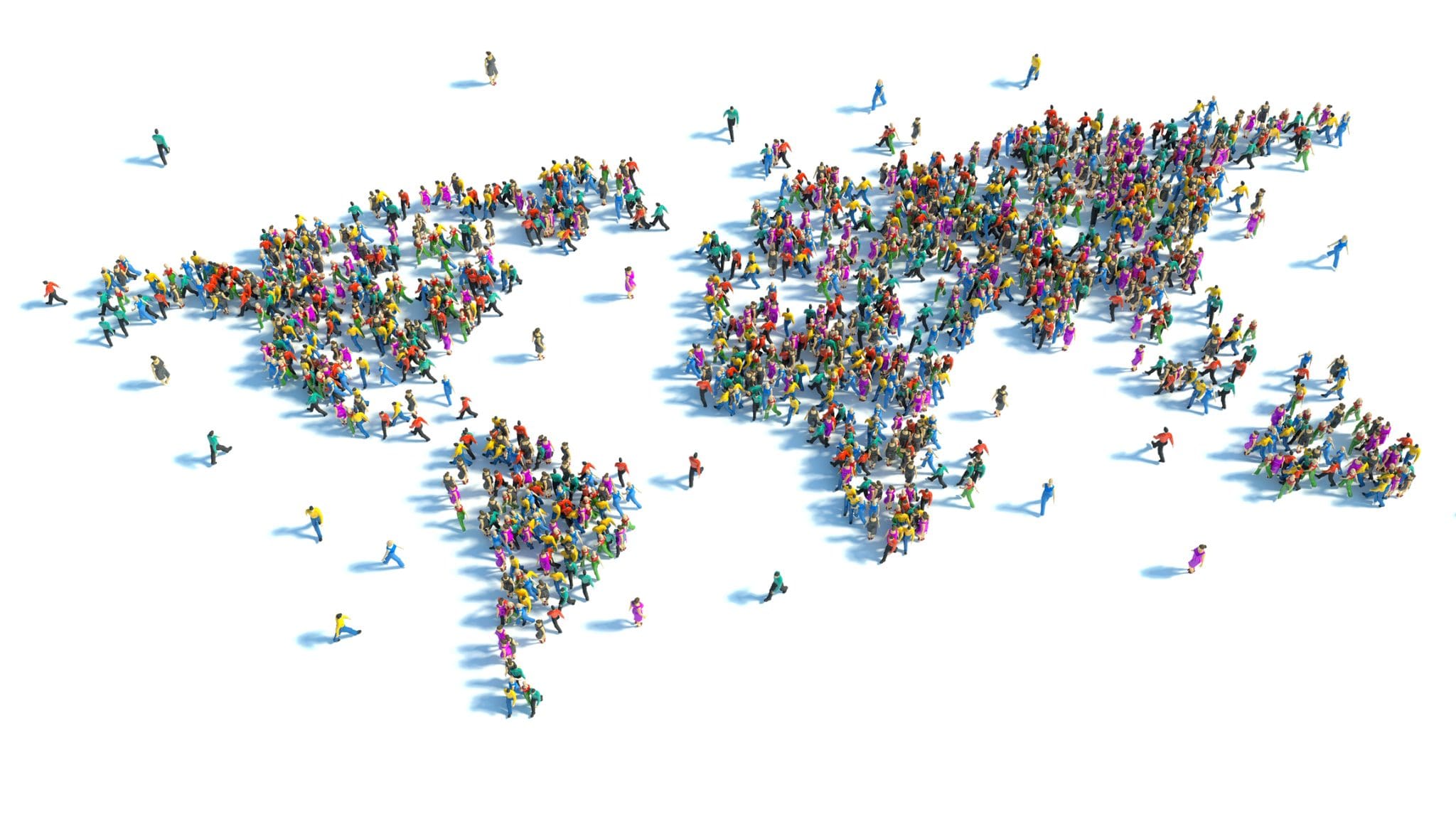
The EU/European Union describes a economical and political union of 28 States. With an estimated population of around 510 million the European Union policies aim to allow the free movement of people, goods and services. Within the internal market it aims to maintain common policies on agriculture, trade and more.
Members
The EU and European citizenship were established in 1933. With the inner original 6 being Belgium, France, Italy, Luxembourg, the Netherlands, and West Germany. Although no member state has ever left, in 2016 the UK announced its intention to leave and has begun negotiating their departure for 2019.
More foreign aid is provided by the EU than any other economic union. Due to its Global influence and reach the Union has been described as an emerging superpower.
The European Health and Digital Executive Agency (HaDEA) has officially launched a series of new open calls for proposals under the 2025 EU4Health Work Programme on behalf of the European Commission.
The European Institute of Innovation and Technology (EIT) has announced the nominees for the 2025 EIT Awards, bringing together Europe’s brightest minds and most promising ideas.
This September, Europe has taken steps in advancing its green transition with the opening of the continent’s largest rare earth magnet factory in Narva, Estonia.
A survey reveals widespread approval and growing interest in the European Commission’s practical guidance toolsA survey reveals widespread approval and growing interest in the European Commission’s practical guidance tools.
The European Commission has revealed a new strategy to bolster Europe’s research and technology infrastructures, aiming to secure the continent’s leadership in global science, innovation, and industrial competitiveness.
Senior officials from the United States and the European Union gathered in Washington, D.C. on September 8–9, 2025, for the 13th U.S.-EU Space Dialogue.
The European Commission’s flagship research and innovation event returns this autumn, bringing together policymakers, researchers, business leaders and the public to set the course for Europe’s future in science and technology.
The Interreg Madeira-Açores-Canarias (MAC) 2021–2027 programme is reinforcing its role as a critical tool of the European Union’s Cohesion Policy, boosting cross-border cooperation between Europe’s outermost regions and West African nationsThe Interreg Madeira-Açores-Canarias (MAC) 2021–2027 programme is reinforcing its role as a critical tool of the European Union’s Cohesion Policy, boosting cross-border cooperation between Europe’s outermost regions and West African nations.
The European Institute of Innovation and Technology (EIT) has officially opened a new Community Hub in Košice, Slovakia, aiming to strengthen the country’s innovation potential and connect local talent with Europe’s largest innovation ecosystem.
Decebal-Ștefăniță Pădure is a member of the European Economic and Social Committee and Co-Chair of the EU-Montenegro Civil Society Joint Consultative Committee (JCC). Here, he charts Montenegro’s path to the European Union.
Twelve cities are racing to be named the European Capital of Innovation 2026 as part of the iCapital Awards. These cities are now one step closer to securing recognition and significant financial support for their efforts in driving inclusive, citizen-focused innovation.
The European Commission and the Australian Government have begun discussing their scientific cooperation through Australia’s association with Horizon Europe, the EU’s flagship research and innovation programme.
Satellite navigation is slowly becoming an essential part of daily life. As our dependence on the Global Navigation Satellite System (GNSS) technology deepens, so does the need to protect it.