

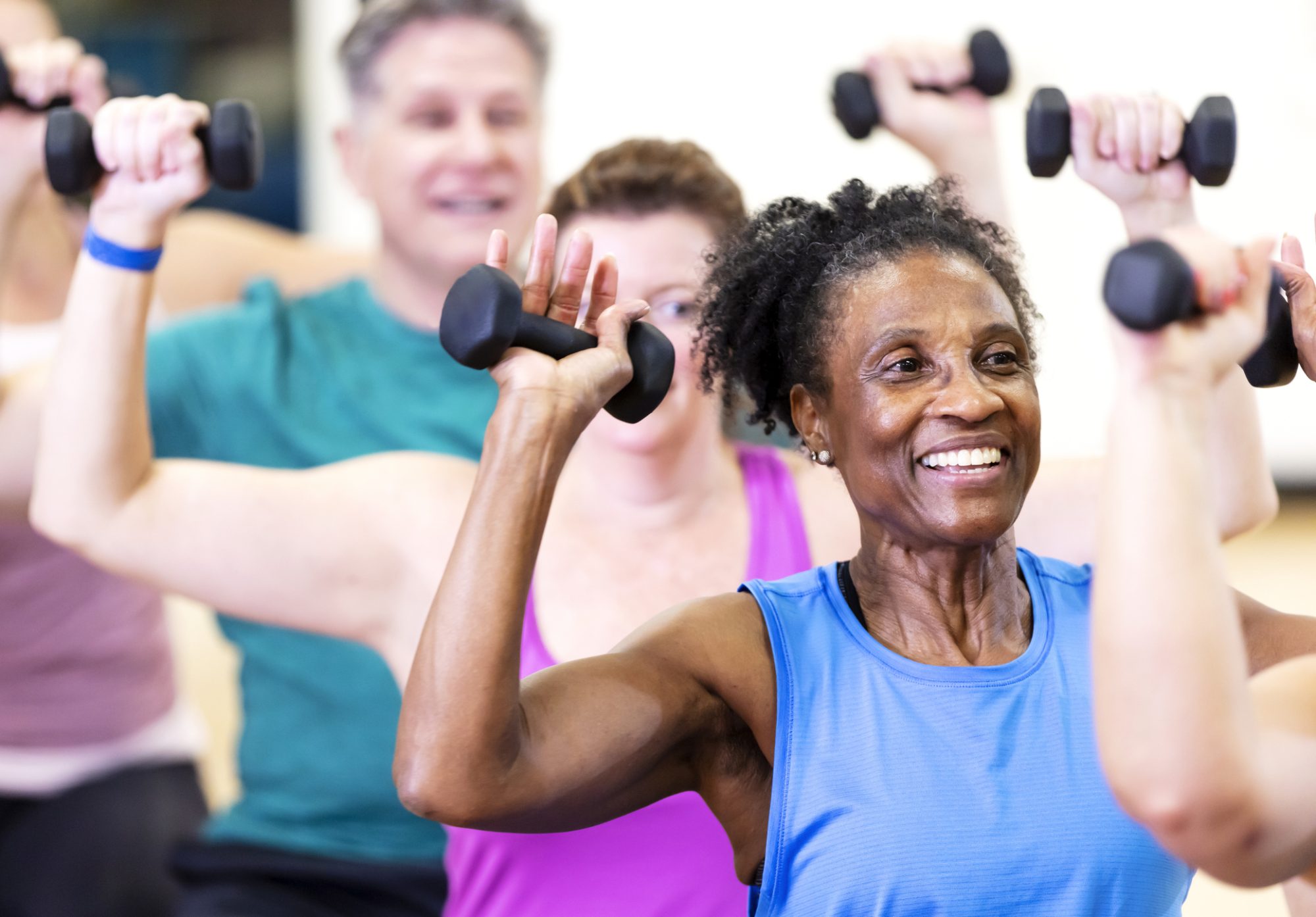
This article explores the significance of exercise, particularly strength training, to healthy aging, recognizing its role in mitigating many of the chronic conditions and risk factors associated with getting older
Whether one does it naturally, gracefully, or reluctantly, every living thing ages. There are many joys that often accompany aging, including gaining a sense of purpose, growing close with one’s loved ones and community, developing a reserve of social and financial capital, and the freedom that comes with these gifts. Yet, aging also comes with challenges, including an increased risk of chronic health conditions, frailty, which can lead to falls, and unpleasant symptoms such as fatigue, pain, and decreased mobility. Despite what might be seen on TikTok, Instagram, or other social media platforms de jour, sadly, there is nothing that can turn back time and prevent the challenges of aging. However, one strategy that has been repeatedly and scientifically demonstrated to improve healthy aging is exercise.
What is exercise?
Exercise is a subset of physical activity that is structured, planned, and repetitive. (1) When exercise progresses in volume and intensity over time, it is strongly associated with improved health, fitness, symptoms, mobility, and independence as one ages. Health-related components of exercise include cardiovascular endurance, muscular strength, balance, body composition, and flexibility. Undoubtedly, when people think of exercising, they think of cardiovascular (e.g., running, playing sports) and strength (e.g., lifting weights, push-ups, or plank challenges). These are critical components of cardiovascular, metabolic, musculoskeletal, and cognitive health. However, balance and flexibility often receive less attention, but they are equally important for aging well. Balance exercises include tai chi, yoga, heel-toe walking, Pilates, and stretching. Both types of activity, when combined with regular cardiovascular and strength training, are beneficial in preventing falls and maintaining emotional health and stress management as one ages.
Why does strength decline as we age?
The human body has more than 600 skeletal muscles, which generate force, produce and release energy, and maintain our posture and structure, thereby producing bodily movement that allows humans to engage in physical activity. As we age, our muscle mass declines (also called sarcopenia) due to both intrinsic time-related biological processes and lifestyle factors, including physical inactivity. (2) These intrinsic biological drivers include cellular processes that control skeletal muscle cell activation, growth, proliferation, and death. (3) The age-related cellular alterations result in declines in muscle mass (i.e., atrophy) and quality, which reduces muscular strength. Lifestyle factors, including diet and exercise, also influence muscle mass and function irrespective of age. (3) However, barriers to physical exercise, including increased symptoms and chronic health conditions that occur as people age, can reduce exercise engagement and adherence, and increase muscle disuse. Muscle disuse can interact with age-related cellular alterations to further reduce strength and function. (4) These declines are not experienced in the same way by men and women. Men have higher initial skeletal muscle mass than women throughout their lifespan; as they age, they experience more loss in mass (quantity), whereas women may experience a greater decline in muscle quality. (5) These suggest that strategies to improve muscle mass and function may need to be tailored differently to men and women.
How does strength training help with aging challenges?
Over time, strength training increases muscle strength and power through neuromuscular adaptations, improving the quantity and quality of muscle mass, mitochondrial content, and energy metabolism. (3) These changes directly reduce the risk and consequences of some of the most common aging-related challenges (e.g., decreased mobility, falls, frailty, etc.). With improvements in muscle mass and function in the core and leg muscles, balance and stability also improve, which reduces the risk of falls and subsequent injuries. As we age, we experience a natural loss of bone and bone density. Strength training stimulates the production of bone-forming cells, which can increase the content of calcium and phosphorus in the bones, leading to improved bone density. This, in turn, can reduce the risk of arthritis, osteoporosis, falls, fractures, and other injuries. (6) These benefits can be especially important for post-menopausal women who experience a significant decline in bone mineral density. One of the underappreciated benefits of strength training is its impact on cardiometabolic health. It has been shown to reduce blood pressure, improve glycemic control, and fasting lipid profiles – all of which can reduce the risk of chronic health conditions, including diabetes mellitus, atherosclerotic cardiovascular disease, heart failure, and more. (7) When regular strength training is combined with regular aerobic activity, these benefits are enhanced.
Does strength training improve brain health?
One of the newest areas of research in strength training science is its impact on cognitive health. Aging-related cognitive dysfunction shares many of the same risk factors as other chronic health conditions, including high blood pressure, insulin resistance, and inflammation, so by reducing these determinants, strength training can improve multiple domains of cognitive health. (7) In addition, it provokes functional brain changes, such as reducing atrophy of white matter and related white matter lesions, both of which are linked to cognitive decline. (8) With aerobic activity, strength training can enhance cognitive flexibility, memory, cognitive processing speed, and executive function – all of which typically deteriorate with age.
Barriers to strength training
Despite widespread scientific evidence and consensus, many older adults struggle to integrate strength training into their regular exercise routine. There are general barriers, including not knowing where to start, lack of time, high symptom burden, and a lack of motivation. Specific strength-related barriers include perceived risk of heart attacks, strokes, or death; fear of injury; lack of access to equipment or instruction; and fear of looking too muscular (especially for older women). (9) Addressing these obstacles through education, tailored exercise prescriptions, and supportive environments is essential to unlocking the potential of strength training as a cognitive health strategy. By confronting these challenges head-on, strength training can become a powerful tool for preserving independence, mental health, and quality of life in aging populations.
Aging is a universal experience marked by both joys and challenges. While no fountain of youth can reverse time, exercise – particularly strength training – has been scientifically proven to support healthy aging. Specifically, strength training mitigates age-related muscle and bone loss, enhances mobility and independence, and improves cardiometabolic and cognitive health. Supporting older adults to engage in strength training will enable them to age well.
References
- Caspersen, C. J., Powell, K. E., & Christenson, G. M. (1985). Physical activity, exercise, and physical fitness: definitions and distinctions for health-related research. Public health reports, 100(2), 126.
- Volpi E, Nazemi R, Fujita S. Muscle tissue changes with aging. Curr Opin Clin Nutr Metab Care. 2004 Jul;7(4):405-10. doi: https://doi.org/10.1097/01.mco.0000134362.
- Shur, N. F., Creedon, L., Skirrow, S., Atherton, P. J., MacDonald, I. A., Lund, J., & Greenhaff, P. L. (2021). Age-related changes in muscle architecture and metabolism in humans: The likely contribution of physical inactivity to age-related functional decline. Ageing Research Reviews, 68, 101344.
- Muñoz-Cánoves P, Neves J, Sousa-Victor P. Understanding muscle regenerative decline with aging: new approaches to bring back youthfulness to aged stem cells. FEBS J. 2020 Feb;287(3):406-416.
- Kim S, Won CW. Sex-different changes of body composition in aging: A systemic review. Arch Gerontol Geriatr. 2022 Sep-Oct;102:104711. doi: https://doi.org/10.1016/j.archger.2022.104711
- Hong AR, Kim SW. Effects of Resistance Exercise on Bone Health. Endocrinol Metab (Seoul). 2018 Dec;33(4):435-444. doi: https://doi.org/10.3803/EnM.2018.33.4.435.
- Paluch AE, Boyer WR, Franklin BA, Laddu D, Lobelo F, Lee DC, McDermott MM, Swift DL, Webel AR, Lane A; on behalf the American Heart Association Council on Lifestyle and Cardiometabolic Health; Council on Arteriosclerosis, Thrombosis and Vascular Biology; Council on Clinical Cardiology; Council on Cardiovascular and Stroke Nursing; Council on Epidemiology and Prevention; and Council on Peripheral Vascular Disease. Resistance Exercise Training in Individuals With and Without Cardiovascular Disease: 2023 Update: A Scientific Statement From the American Heart Association. Circulation. 2024 Jan 16;149(3):e217-e231. doi: https://doi.org/10.1161/CIR.0000000000001189.
- Dhahbi, W., Briki, W., Heissel, A. et al. Physical Activity to Counter Age-Related Cognitive Decline: Benefits of Aerobic, Resistance, and Combined Training—A Narrative Review. Sports Med – Open 11, 56 (2025).
- Cavill NA, Foster CEM. Enablers and barriers to older people’s participation in strength and balance activities: A review of reviews. J Frailty Sarcopenia Falls. 2018 Jun 1;3(2):105-113. doi: https://doi.org/10.22540/JFSF-03-105.