

Open Access Government produces compelling and informative news, publications, eBooks, and academic research articles for the public and private sector looking at health, diseases & conditions, workplace, research & innovation, digital transformation, government policy, environment, agriculture, energy, transport and more.
Home Search
healthcare data - search results
If you're not happy with the results, please do another search

Dementia cases may surge 42% higher by 2040, alarming study reveals
A UCL-led study has uncovered a potential surge in dementia cases, projecting that by 2040, up to 1.7 million people could be grappling with dementia in England and Wales.

NHS waiting lists could reach 8 million by summer 2024
According to modelling work from the Health Foundation charity, the NHS waiting lists may exceed eight million by next summer, even if doctor strikes stop.

The role of prescribing practices in managing chronic pain with opioids
Norm Buckley and Jason Busse from the Michael G. DeGroote Institute for Pain Research and Care discuss prescribing practices, managing chronic pain with opioids, and the contribution of licit and illicit opioids towards the Canadian opioid crisis.

RESCUER: Supporting new concepts for breast cancer subtypes treatment
RESCUER is an EU Horizon 2020 project, coordinated by the University of Oslo, Norway, that aims to predict treatment response and test new combinational therapies for complex breast cancer subtypes.

Ensuring adequate dementia care: The beginning of the end of Alzheimer’s?
Colin Capper, Associate Director of Evidence and Involvement at Alzheimer’s Society, argues that we need improved dementia care and further innovations for people living with dementia today while we wait for the breakthroughs of tomorrow

Immigrant, black and racialized people’s health
Learn about the research of Dr. Bukola Salami, Professor at Cumming School of Medicine, University of Calgary, in this particular focus on Immigrant, Black, and Racialized People’s Health.

Psychotic-like experiences: What are they and why are they important?
Dr Lorna Staines and Professor Mary Cannon of RCSI University of Medicine and Health Sciences, explore psychotic-like experiences, explaining what they are and why they are important.

17,000 patients avoid unnecessary hospital visits in Scotland thanks to tech
Health Boards in Scotland are implementing innovative technologies to enhance communication among GPs and paramedics, transforming hospital visits.

Adults with ADHD face higher risk of dementia
Adults with ADHD, formally known as attention-deficit/hyperactivity disorder (ADHD) face an alarming threefold increase in their dementia risk compared to those without ADHD, reveals a Rutgers study.

Lessons from the COVID pandemic to fight against sepsis and common infections
Michael Wong, Founder and Executive Director at Physician-Patient Alliance for Health & Safety and Amy Campbell, Quality Nurse Specialist at ECU Health and Chair at PPAHS Sepsis Advisory Board, discuss how the COVID-19 pandemic has impacted the fight against sepsis.

Ultra-processed food and obesity: How can we eat more healthy?
What is ultra-processed food? What does the research say about ultra-processed food and obesity? How can we change our diet and eat more healthily?

Post-pandemic MERS-CoV still presents risks
Darryl Falzarano, Research Scientist at the Vaccine and Infectious Disease Organization (VIDO), discusses potential solutions that are needed to tackle the coronavirus known as MERS-CoV.

Reducing restraint on residents in Hong Kong care home settings
Individuals from the Jockey Club Centre for Positive Ageing discuss reducing using restraint on residents in Hong Kong care home settings.

Launch of new sustainable technology products and services agreement
A new sustainable tech agreement with 172 suppliers set to launch on October 31, 2023.

World Mental Health day 2023: Everything you need to know
October 10th is World Mental Health Day; the objective of this day is to raise awareness about mental health issues, reduce stigma, and advocate for better mental health care.

Wearable bracelet detects bipolar mood shifts through skin signals
A wearable bracelet monitors mood swings in bipolar disorder by tracking alterations in skin electrical signals associated with manic or depressive states.

Artificial intelligence (AI) and biomaterials: A perfect BandAId™
Thomas J Webster, Ph.D., Professor and Entrepreneur, is investigating the potential of AI in medical applications and biomaterial production.

Overlooked concern: Addressing postpartum depression in dads
A pilot study at the University of Illinois Chicago emphasises the need to screen new fathers for postpartum depression.

Challenges to care of patients with diabetes in rural, undeserved areas
Patients with diabetes mellitus in rural communities face major impediments in achieving and maintaining control of glucose levels and preventing complications; patients in these areas endure their healthcare being medically underserved and financially challenged.
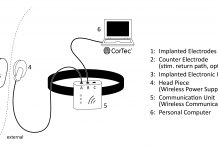
Options for stroke survivors: From stroke to conventional therapy
Discovery of novel treatment options for stroke survivors – requirements for implanted systems.
