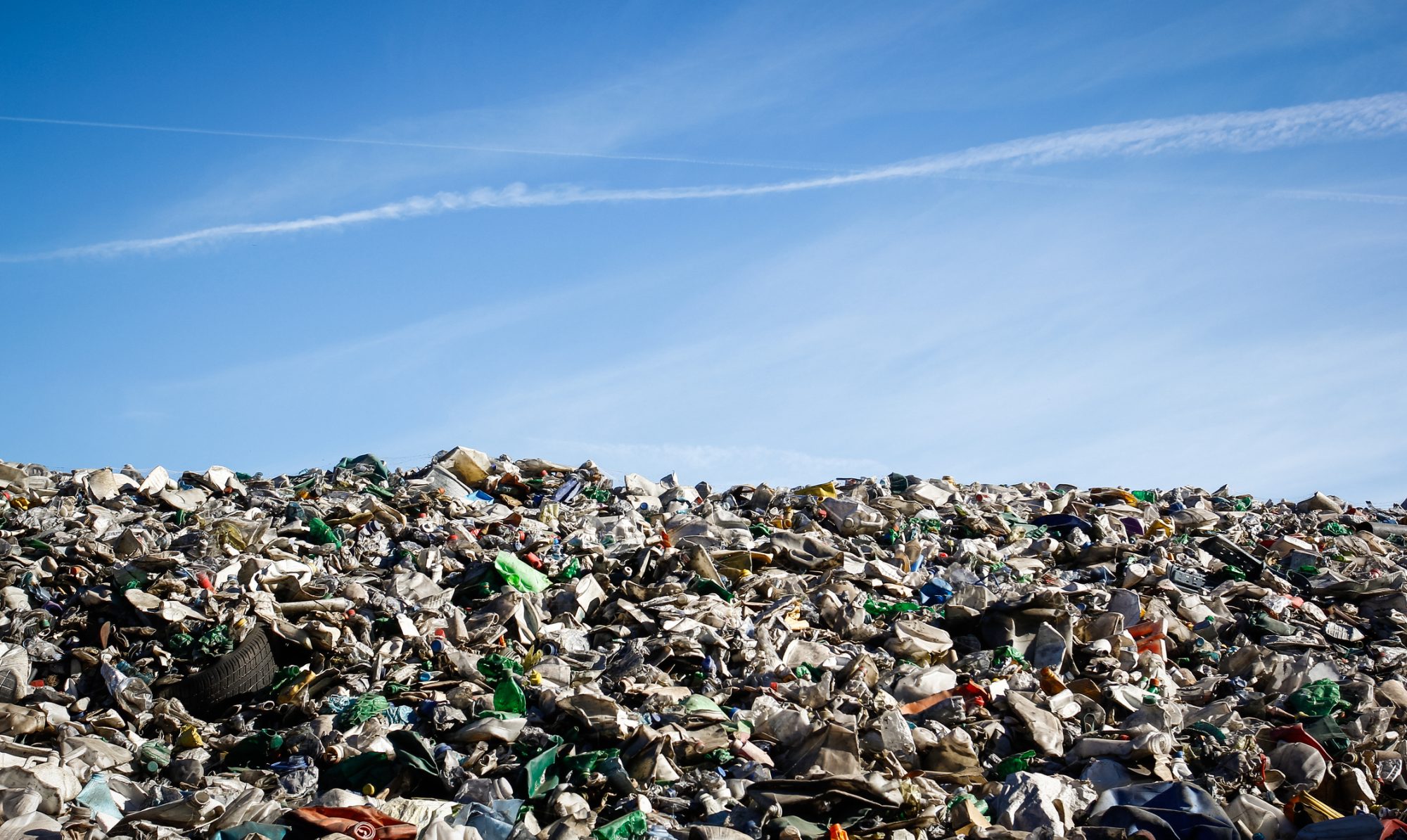
Paul Hubbard, the Managing Director and CEO of Northpointe Energy, outlines the current options for disposing of municipal solid waste
In the quest for a credible circular economy, the role of municipal solid waste (MSW) as a feedstock for UK industry is becoming increasingly significant – and increasingly complex. What was once deemed simply a disposal problem is now starting to be viewed as a resource stream. Yet how MSW is utilised – through energy-from-waste (EfW) plants, second-generation sustainable aviation fuel (SAF) manufacturing, or landfill – is not equivalent in terms of environmental, economic, and regulatory impacts.
In my view, when all factors are taken into account, channelling MSW into SAF manufacture offers the most favourable outcome for the UK. Here’s why.
1. Landfill
Landfilling residual MSW remains an option, albeit an increasingly expensive one. Landfill is the least desirable option in the waste hierarchy because it locks away materials, creates long-term liability (leachate, methane emissions, monitoring), and, for biodegradable fractions at least, produces substantial methane unless captured. Landfill is thus something to minimise.
2. Energy-from-waste (EfW) plants
In the UK, a substantial fraction of residual MSW currently ends up in EfW plants, where non-recyclable components are combusted (or otherwise thermally processed) to generate electricity and sometimes heat. UK EfW facilities processed about 16.8 million tonnes of waste in 2024, operating at ~88.6% of permitted capacity, and additional capacity being added could increase that to nearly 25 million tonnes by 2028.
From a resource-management perspective, this is a better option than landfill for many waste streams. For example, government modelling indicates that EfW emits less CO2 than landfilling residual waste, albeit still significant. EFW business models offer lower disposal costs than paying landfill taxes, making it an attractive solution for waste management stakeholders.
However, the EfW route has several drawbacks:
- New regulatory pressures: the UK Emissions Trading Scheme (ETS) will include EfW/incineration from 2028, increasing the cost burden on operators and potentially on local authorities.
- The dependence on incineration/ power generation adds complexity in a decarbonising electricity grid: as grid emissions fall, the relative benefit of EfW (as energy recovery) reduces further.
- Stricter approval criteria for new EfW plants: as reported in January 2025, the government announced that new EfW facilities would need to demonstrate readiness for carbon capture and heat networks, and that planning would be more tightly controlled.
- A declining feedstock base: under the residual waste regulation, the available tonnes of residual waste are set to decline over the next two decades. This means EfW plants will face a reduction in residual volumes and competition for supply.
These factors imply that the EfW business model is becoming more constrained: higher regulatory costs, tighter feedstock supply, and greater demands on performance (carbon capture, heat use) to justify new investment
3. Second-generation sustainable aviation fuel (SAF) manufacture
There is growing government and industry recognition that non-recyclable MSW can serve as a feedstock for second-generation SAF: that is, aviation fuel produced from waste rather than fossil sources. The Sustainable Aviation Fuel Bill makes explicit reference to MSW as “one of the most widely available feedstocks for producing SAF”.
Indeed, the evidence suggests that using MSW for SAF offers multiple advantages:
- The lifecycle carbon savings are significantly larger: one analysis states that MSW-to-SAF delivers a carbon saving that is five times greater than when the same waste is used for electricity in a legacy EfW plant. (1)
- SAF manufacturing creates a higher- value product (transport fuel) rather than simply energy recovery. This means waste becomes a raw material for a high-value sector (aviation) rather than being the low-grade end of the waste hierarchy.
- In terms of policy alignment, SAF mandates (and incentives) create demand for such feedstocks, offering a more stable investment signal than simply waste disposal alone. For example, one parliamentary evidence source states that converting MSW to SAF could contribute thousands of jobs and help meet the UK’s aviation net-zero ambitions while using only a portion of the available MSW feedstock. (2)
- As competition for waste intensifies, SAF manufacturing facilities are better positioned to compete for waste, thereby driving down disposal costs and potentially benefiting local authority budgets.
- The emissions advantage of the SAF pathway is magnified by the fact that, as the UK electricity grid decarbonises, the relative benefit of EfW (energy recovery) will shrink, but the benefit of SAF (displacing fossil jet) remains strong.
Caveats and considerations
Of course, this is not a silver bullet, and there are important caveats:
- The conversion of MSW to SAF at scale requires significant investment, technological maturity, and robust supply chains (sorting, waste pre- treatment, conversion facilities).
- Not all MSW is suitable for SAF feedstock: contamination, heterogeneity, and collection logistics may impact supply and cost.
- There remains a strong imperative to prioritise waste reduction, reuse and recycling ahead of the “residual” stream regardless of downstream utilisation. The SAF route should not be an excuse to delay recycling infrastructure or design reforms.
- Land-use, transport, and logistics for MSW feedstock aggregation require careful planning to ensure the environmental benefit is real (not offset by high transport emissions, for example).
- Policy support and certainty are still required – feed-in tariffs, mandates, certification and lifecycle accounting must be aligned and stable to de-risk investment.
Conclusion
The shift in emissions legislation, the economy’s decarbonisation trajectory, and the aviation sector’s need for sustainable fuels create a unique opportunity. By redirecting residual MSW to second-generation SAF manufacture, the UK can extract higher value from the waste stream, deliver larger greenhouse-gas savings, foster a domestic advanced-biofuel industry, and align with both circular-economy and net-zero objectives.
Thus, while EfW and landfill will remain part of the mix (particularly for the truly unavoidable waste), the optimum long-term solution is clear: prioritise MSW as a feedstock for SAF production. By doing so, the UK can turn what was once a disposal liability into a strategic asset.
References
- Sustainable Aviation (an industry alliance) written response to the Public Bill Committee’s Call for Evidence on the Sustainable Aviation Fuel Bill SAFB22.
- Manchester Airports Group written response to the Business and Trade Committee’s Industrial Strategy Inquiry IND0013.

This work is licensed under Creative Commons Attribution-NonCommercial-NoDerivatives 4.0 International.