
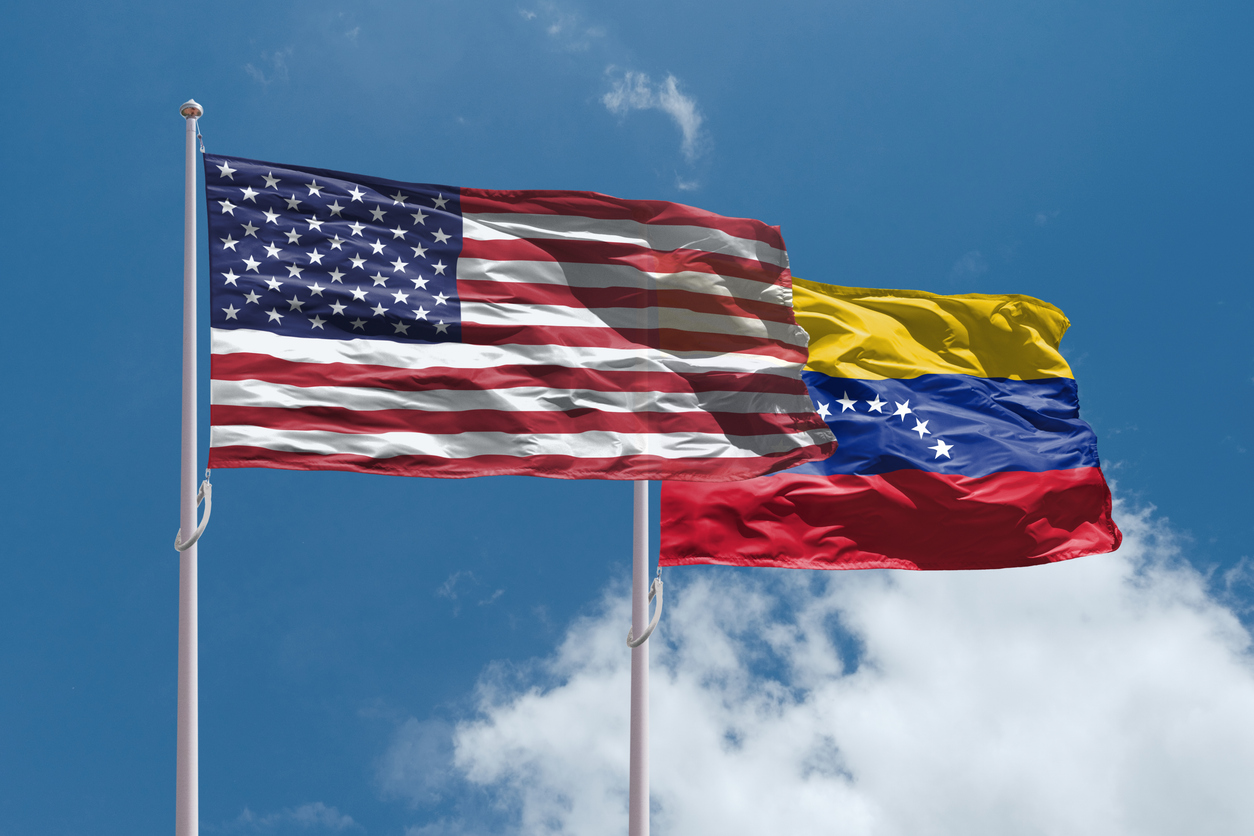
The United States has announced a new approach to Venezuela, announcing an energy agreement that will restore prosperity, safety, and security for both nations
The energy agreement follows recent developments in U.S.–Venezuela relations and shows the U.S. government’s effort to reassert stability and economic opportunity in the Western Hemisphere.
Venezuela was once a prosperous and stable country whose citizens benefited from vast natural resources and a strong economic partnership with the United States.
Over the past two decades, however, Venezuelan leadership pursued policies marked by corruption, violence, and socialism, which led to economic collapse, widespread poverty, and instability. These conditions weakened the nation’s institutions and disrupted long-standing ties with the United States.
U.S action against Venezuela leadership
On January 3, 2026, the United States apprehended Venezuelan leader Nicolás Maduro, who had been indicted for multiple violent crimes, including narco-terrorism conspiracy. U.S. officials described the action as a necessary step toward restoring accountability and security in the region.
The apprehension opened the door for cooperation with interim Venezuelan authorities and the implementation of new policies focused on economic recovery and lawful governance.
Historic energy deal announced
On January 6, 2026, President Trump announced a U.S.–Venezuela energy deal designed to strengthen America’s national security while helping Venezuela return to stability and prosperity as a responsible ally. The Department of Energy, under Secretary Wright, is working alongside interim Venezuelan authorities and private industry partners to execute the energy agreement.
As part of the U.S.–Venezuela energy deal, the U.S. government has begun marketing Venezuelan crude oil in global markets for the benefit of the American people, the Venezuelan people, and U.S. allies. The initiative includes engagement with leading commodity marketers and major banks to manage and finance crude oil and petroleum product sales.
Oil sales and financial oversight
The agreement establishes strict controls over oil revenue. All proceeds from Venezuelan crude oil and oil product sales will initially be deposited into U.S.-controlled accounts at globally recognised financial institutions. This structure is intended to ensure legitimacy, transparency, and proper oversight of funds.
The U.S. government will oversee the distribution of proceeds, directing funds for the benefit of both nations. Initial oil sales are expected to involve approximately 30 to 50 million barrels and will begin immediately. These sales are planned to continue indefinitely, providing an ongoing source of economic support.
Only authorised and legitimate channels consistent with U.S. law and national security requirements will be permitted for oil transportation in and out of Venezuela. To facilitate these operations, the United States is selectively rolling back sanctions related to the transport and sale of Venezuelan crude and oil products.
Modernisation of Venezuela’s energy sector
The energy agreement also addresses Venezuela’s severely deteriorated energy infrastructure. Years of underinvestment and corruption have left the nation’s oil fields and electricity grid in disrepair. Electricity production has declined by more than 30 per cent nationwide, limiting economic growth and daily quality of life.
To reverse this trend, the U.S. will authorise the import of select oil field equipment, parts, and services. American and international energy partners will contribute technology, expertise, and investment to offset decades of production decline and drive near-term growth. U.S. light crude oil will also be supplied as diluent to improve production and transportation.
U.S. officials say the energy deal represents a broader strategy to promote peace, prosperity, and security across the Western Hemisphere. By restoring lawful energy production and strengthening infrastructure, the initiative aims to rebuild Venezuela’s economy while reinforcing America’s national security and energy leadership.