
Millions of households across the UK will benefit from lower energy bills and warmer homes under the government’s newly launched £15 billion Warm Homes Plan
The Warm Homes Plan hopes to upgrade up to five million homes by 2039 through a mix of insulation, solar panels, heat pumps and battery storage.
Cutting bills and tackling fuel poverty
The Warm Homes Plan is designed to address both the immediate cost-of-living pressures and the long-term problem of poorly insulated, expensive-to-run homes.
The government has already announced that average household energy bills will fall by around £150 from April, following budget measures, with six million households also receiving a £150 Warm House Discount.
By improving the energy efficiency of homes, the government says families could save hundreds of pounds a year on heating and electricity, while also enjoying warmer, healthier living conditions.
Home insulation rates fell sharply over the past decade, leaving millions of households exposed to rising energy prices. The Warm Homes Plan hopes to reverse that trend at scale.
Targeted support for low-income households
A huge part of the new Warm Homes Plan is the direct support for low-income families and those in fuel poverty. Backed by £5 billion of public investment, eligible households will receive fully funded packages of upgrades tailored to their homes.
These could include insulation, solar panels, batteries or heat pumps, with some installations fully covering costs that can currently range from £9,000 to £12,000.
For social housing residents, upgrades may be carried out across whole streets or estates at once, improving comfort and lowering bills for entire communities.
A universal offer for homeowners
Along with targeted support, the Warm Homes Plan includes a universal offer open to all households. Homeowners will be able to access government-backed low and zero-interest loans to install solar panels, batteries and heat pumps when they choose.
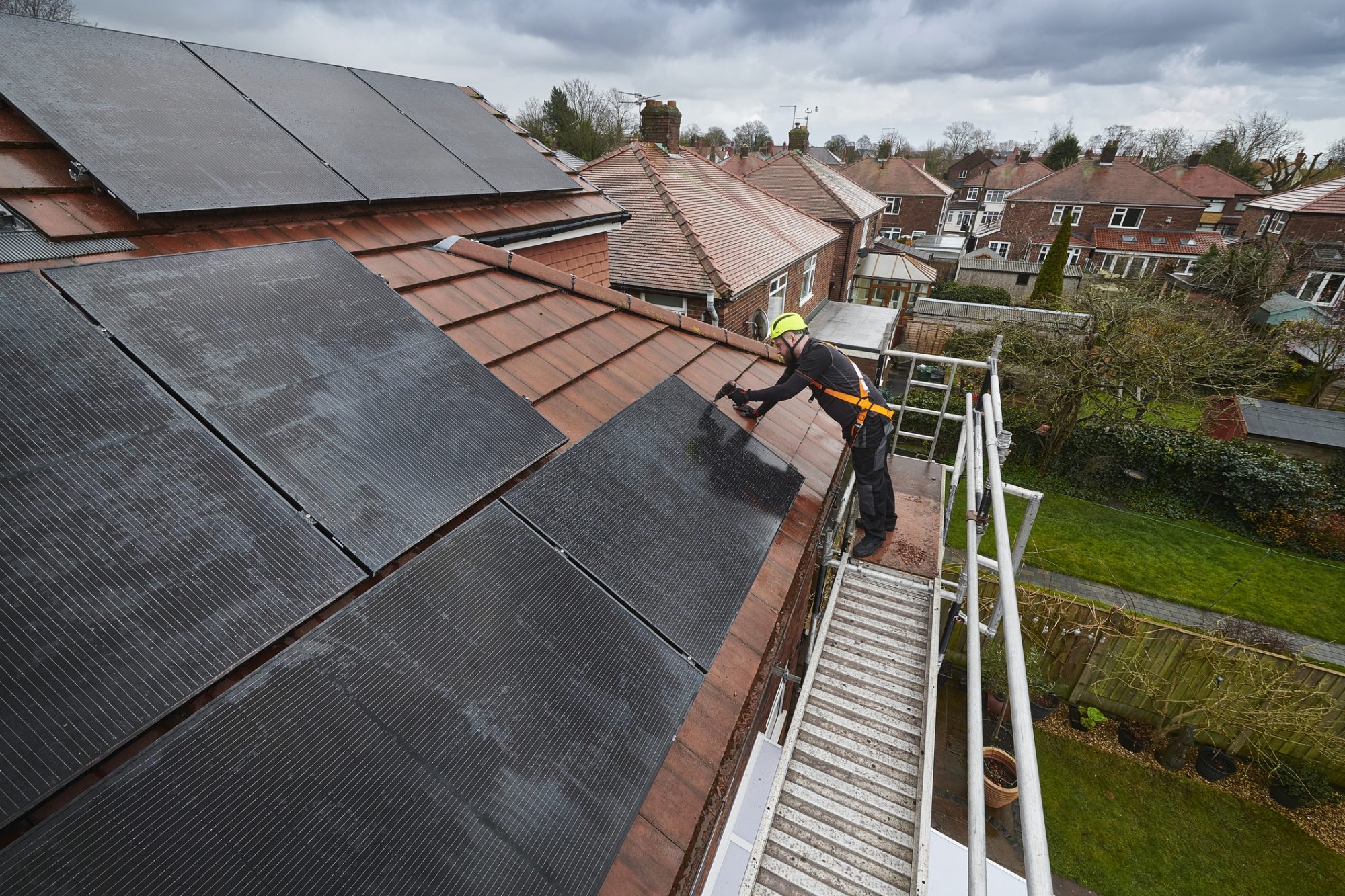
The government says this will help drive a “rooftop revolution”, with the number of homes fitted with solar panels expected to triple by 2030. A £7,500 universal grant will remain available for heat pumps, including a new offer for air-to-air heat pumps that can cool homes during summer heatwaves.
New homes built from early 2026 will also be cheaper to run, with solar panels installed as standard under the Future Homes Standard.
Stronger protections for renters
Renters are another key focus of the plan. Around 1.6 million children currently live in private rented homes affected by cold, damp or mould.
New rules will strengthen minimum energy efficiency standards in rented housing, requiring landlords to improve insulation and heating systems over a fair transition period. The government estimates these changes could lift around half a million renting families out of fuel poverty by the end of the decade.
Jobs, energy security and climate benefits
In addition to household savings, the Warm Homes Plan is expected to create around 180,000 skilled jobs across the UK by 2030, particularly in insulation, clean heating, and manufacturing. The government also aims for at least 70% of heat pumps installed in the UK to be made domestically.
By reducing reliance on gas, the programme is intended to strengthen energy security and protect households from future price shocks, while cutting emissions from buildings, which currently account for more than a fifth of the UK’s greenhouse gas output.
Beyond household savings, the Warm Homes Plan is expected to create around 180,000 skilled jobs across the UK by 2030, particularly in insulation, clean heating and manufacturing. The government also aims for at least 70% of heat pumps installed in the UK to be made domestically.
Further details on how households can access loans and support are expected later this year.