Discover how Agnos Biosciences’ AirSeq technology uniquely delivers fast, highly accurate airborne pathogen detection, with broad applications from food safety to biosecurity, setting it apart from conventional monitoring methods
Agnos Biosciences, a Biological Sciences Research Council (BBSRC)-backed spin-out, has launched AirSeq, a rapid DNA air-sequence technology designed to detect airborne pathogens that threaten crops and livestock. By delivering fast, accurate results, AirSeq helps farmers and agricultural businesses protect their yields, improve biosecurity, and safeguard the food supply chain. This innovation could transform how the agriculture sector monitors and responds to disease outbreaks in real time.
How AirSeq is transforming pathogen detection
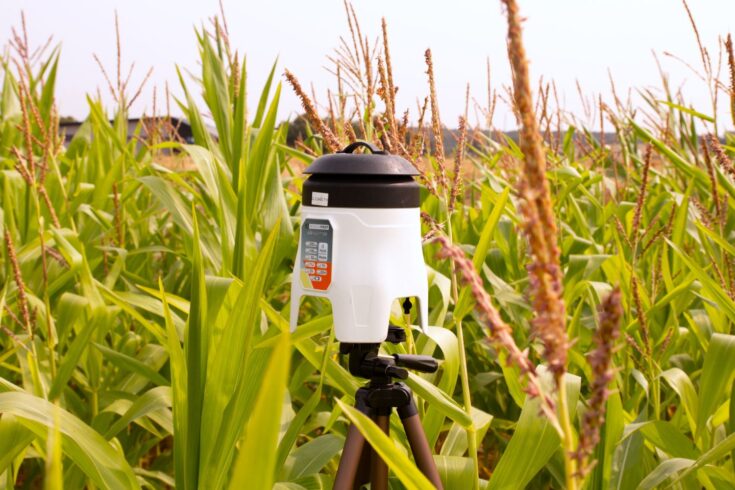
AirSeq rapidly detects airborne biological material, transforming early pathogen detection. It combines novel molecular biology, DNA sequencing, and bespoke computational analysis to characterise airborne biological particles.
AirSeq simultaneously detects and quantifies thousands of species, including bacteria, viruses, fungi, and pollen, with a very low false-positive rate. The technology could be used for environmental monitoring, agriculture, food manufacturing, cleanroom environments, and biosecurity. Its capabilities have been validated, including through research programmes with the United States Defense Advanced Research Projects Agency.
The Earlham Institute and the Natural History Museum are licensing the AirSeq technology to Agnos Biosciences, enabling the company to provide a fully integrated commercial service. This includes:
- Air sampling
- Laboratory-based DNA extraction and sequencing
- Advanced bioinformatics analysis
- Web-based visualisation of results
The dual-use spin-out is the first venture to launch from the Natural History Museum’s Strategy and Innovation Unit. It represents a novel model for translating research from the UK’s culture sector into high-value innovation.
Expert commentary
Professor Anne Ferguson-Smith, BBSRC Executive Chair, said: “This exciting spin-out demonstrates the power of long-term BBSRC investment in fundamental bioscience to deliver real-world impact. Agnos Biosciences is translating cutting-edge research into a technology with the potential to strengthen biosecurity, protect public health, and support key sectors such as agriculture and food production.”
Earlham Institute Group Leader and Agnos Biosciences Co-Founder and Chief Technology Officer, Dr Richard Leggett, said: “I’m delighted to launch AirSeq as a service after so many years of research and development. This is an exciting opportunity to use this technology to help new customers with different applications, as well as develop AirSeq’s continued use in agriculture, the wider food industry and in biosecurity.”
Natural History Museum Research Leader and Agnos Biosciences Co-Founder and Chief Scientific Officer, Professor Matt Clark, said: “AirSeq is the culmination of many years of research. We are very excited about how fast and accurate it is at detecting pathogens or indeed any organism via their DNA – identifying them in the air enables early, critical interventions hopefully preventing infections and pandemics taking hold.”