
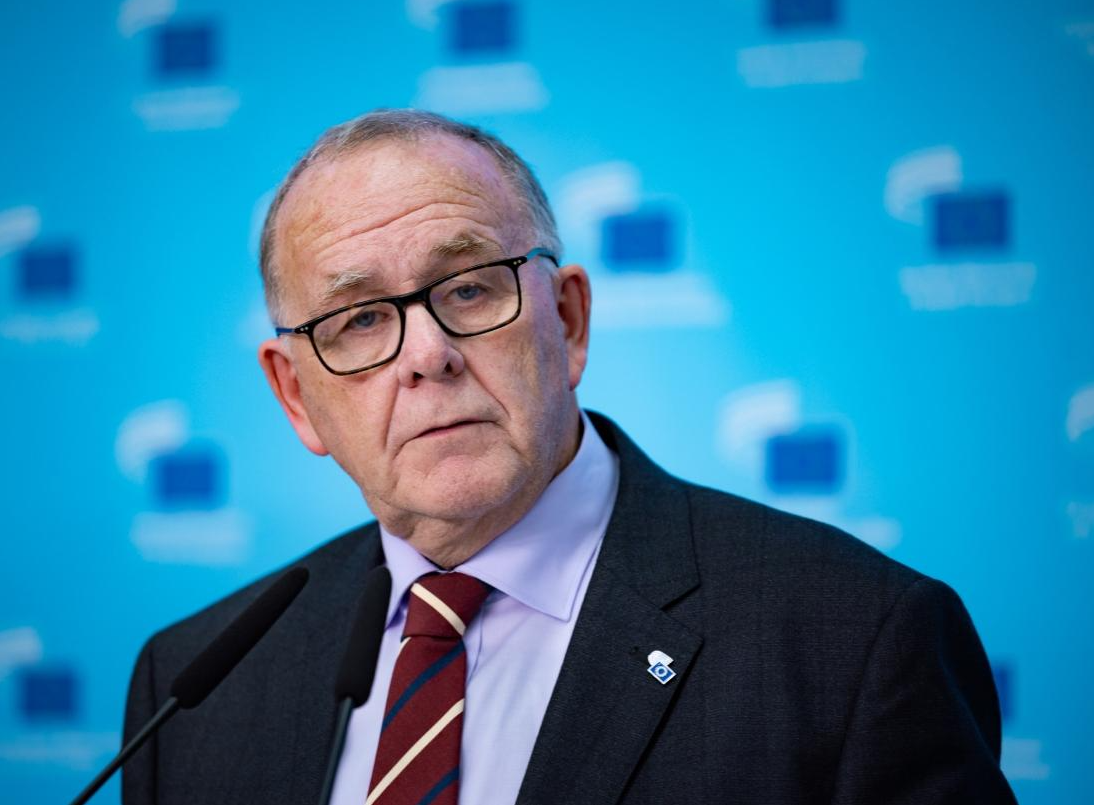
Séamus Boland, the newly elected President of the European Economic and Social Committee, emphasises the importance of placing civil society and social inclusion at the core of the EU’s efforts to enhance competitiveness and security
The European Union (EU) is right to embrace change. But we risk creating fertile ground for extremists if we don’t include the most vulnerable.
You may live in interesting times, the saying goes. Given the current geopolitical upheaval, global insecurities, and planetary threats, ‘extraordinary’ is more accurate. We are living in an age of ‘polycrisis’, according to experts.
Against this backdrop, it is not hard to understand why the EU is evolving from a peace project into one that embraces defence. Or why it is doubling down on economic competitiveness.
The role of civil society in shaping change
One thing is clear: the old Europe we knew has gone, and the EU must embrace change. As the EU body representing employers, workers and civil society organisations (CSOs), the European Economic and Social Committee (EESC) welcomes this change. But civil society must play an essential role in shaping this change – and in shaping this new Europe.
At this critical juncture, if we fail to include and listen to the grassroots, we will produce fertile ground for extremists to undermine the European project. On top of this, we will erode its value for young people and future generations. People cannot participate in society if they are excluded, if civic space is shrinking, or if our economies are leaving them behind.
Eradicating poverty is a central priority
This is why the eradication of poverty is my central priority as EESC President. As a farmer from a young age in rural Ireland, I am fortunate to be among those who have overcome poverty in their lifetime. Back then, economic growth and job creation were essential to tackling poverty. It still is – but, like then, it is not enough. In-work poverty persists, as does poverty among vulnerable groups, including children, older adults and vulnerable communities.
The EU’s efforts in recent years to reduce poverty have been a welcome step in the right direction. But, at best, it has merely slowed a catastrophic rise. It is simply unacceptable that more than one-fifth of the EU population (over 93.3 million) are at risk of poverty or social exclusion.
During my mandate as President, the EESC will hold the EU institutions to account on poverty eradication, including the implementation of the EU’s first antipoverty strategy. We will organise an annual high-level conference on combating poverty and prioritise solutions that balance economic prosperity with active labour-market policies and social inclusion.
Affordable housing is a major EESC focus
Affordable housing is a key part of this, and another major focus of the EESC. As I recently said to António Costa, President of the European Council, the lack of access to housing in Europe is an emergency and should be treated as such. We look forward to working with President Costa and other EU institutions on this. Action on housing needs to be people-centred, and this is impossible without civil society.
Security and the defence of European democracy
The role of civil society is also crucial to security and the defence of European democracy. Preparedness is about more than increasing spending on weapons. It is about preparing citizens for the consequences of war, climate disasters, infrastructure attacks, and financial shocks.
This means defence budgets must include the resources needed to prepare citizens. As recent floods and wildfires have shown, civil society are the first responders. They must be included in these discussions.
If we genuinely care about democracy, then we must work together to defend it. This is why reinforcing media freedom, countering disinformation and expanding the space for civic dialogue, including with communities in EU candidate countries, are all priorities during my mandate. Related to this, I will be championing the role of civil society in the reconstruction of Ukraine and Gaza. Another focus area will be the implementation of the European Commission’s recently published Democracy Shield package, in particular its Civil Society Strategy.
Longer-term challenges, including climate change
When it comes to longer-term challenges – including climate change, industrial trends, digital and artificial intelligence, and demographic shifts – the EU must stay resolutely on course. Creating a more resilient Europe means balancing sustainability, competitiveness and fairness – and not leaving communities behind. Otherwise, we risk exacerbating the problems we aim to address.
The EESC’s work in this space includes actively contributing to the EU Quality Jobs Roadmap to promote a just transition for all and advocating for continued high ambition on the European Green Deal. We will also continue to engage closely on the next EU long-term budget, which must balance investment across social, defence, agricultural and regional priorities.
It is clear that the overlapping challenges and crises facing the EU require not just concerted, well-thought-out strategies, but also a comprehensive approach to preparing citizens for the transformation ahead. As the voice of organised civil society in the EU, the EESC stands ready to play its part on both fronts.
The fragile flower that is European democracy will not survive these extraordinary times without the active participation of people and communities through civil society.