
University of Nottingham scientists will test biological alternatives to synthetic nitrogen fertilisers on dairy farms, in a Defra-funded project to reduce emissions and support UK sustainable farming
Researchers at the University of Nottingham have received government funding to explore sustainable alternatives to synthetic nitrogen fertilisers on dairy farms. The Defra-backed project aims to reduce nitrous oxide emissions, improve nitrogen use efficiency, and support more sustainable farming across the UK.
Testing biological solutions for greener dairy farming
Agriculture remains a major contributor to UK greenhouse gas emissions and is a key source of nitrous oxide (N2O), a potent greenhouse gas that warms the climate more than carbon dioxide over 100 years. Dairy systems are intensive users of synthetic nitrogen fertilisers.
The University of Nottingham is a research partner in Bio-Phage UK, a Defra-funded Low Emissions Farming project led by Terrafarmer and delivered through Innovate UK. The research is testing whether dairy farmers can replace approximately 50% of synthetic nitrogen fertiliser (produced from chemical processes) with biological alternatives (natural or biological sources of nitrogen), whilst maintaining or improving forage performance and reducing nitrous oxide emissions.
The project is one of 15 receiving £21.5 million in funding to help farms cut emissions, strengthen resilience, and boost productivity.
There is an urgent need to identify practical, science-led approaches to reduce emissions at the source without compromising productivity or resilience in farm systems.
Making better use of biologically mediated processes in soils can improve nitrogen use efficiency and support more sustainable farming. However, this requires clear evidence that alternative approaches can maintain yields, support soil function and work under commercial farm conditions.
Innovative trials and field research
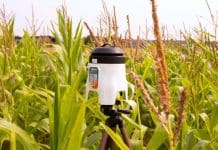
Nottingham researchers will focus on in-field greenhouse gas monitoring, optimisation of biofertiliser strategies (using biological substances to enhance soil fertility), and life-cycle assessment (LCA, a method to evaluate environmental impacts throughout a product’s life) of emissions across dominant dairy crop types, including ryegrass, herbal leys (grass and herb mixes), and whole-crop systems.
Currently, field trials are underway on three commercial dairy farms in England, supported by controlled glasshouse experiments at the University of Nottingham. The team will also test BIOCAT, a phage-based soil treatment that targets bacteria responsible for N2O production.
Dr Nick Girkin, Associate Professor in Environmental Science and Director, Centre for Sustainable Agricultural Systems is leading the Nottingham component of the project, he said: “By combining direct measurements of greenhouse gas emissions, soil chemistry, microbial community responses, and whole-system life-cycle assessment alongside impacts on yield, the project leverages the University of Nottingham’s Centre for Sustainable Agricultural Systems’ expertise and its ability to work at scale with multiple partners to generate robust evidence on a vital sustainability challenge for UK and global agriculture.”
“If successful, Bio-Phage UK could demonstrate a credible route to lower-emissions dairy forage production, delivering reduced reliance on synthetic nitrogen, improved nitrogen efficiency, and more resilient soil systems. Crucially, the findings will help farmers and policymakers distinguish between biological solutions that offer genuine, system-wide benefits and those that do not, supporting evidence-based decision-making for the transition to more sustainable UK agriculture,” added Dr Nick Girkin, Associate Professor in Environmental Science and Director, Centre for Sustainable Agricultural Systems.